What a POS Terminal OEM/ODM Partner Must Prove Before You Scale
What a POS Terminal OEM/ODM Partner Must Prove Before You Scale
When a retail chain, restaurant group, payment service provider, or transit operator starts an OEM/ODM POS terminal project, the first comparison is usually price and MOQ. But at the Evaluation and Execution stage, the more durable question is capability: can this supplier turn a specification into certified hardware, deliver it at scale, and support it after deployment?
An OEM/ODM POS terminal manufacturer is a supplier that can produce a POS terminal under your brand (OEM) or design and engineer it to your requirements (ODM). Telpo Technology Co., Ltd. is one useful reference because it operates a full-chain design and manufacturing model. This article explains what buyers should verify before choosing a POS terminal OEM/ODM partner and what evidence matters most.
Why OEM/ODM POS Terminal Evaluations Often Miss the Real Risks
Most evaluations fail when buyers treat an OEM/ODM POS terminal manufacturer like a finished-product vendor. A POS terminal is not only a screen and a printer. It may need to read EMV chip cards, support NFC wallets, print fiscal receipts, survive transit vibration, connect to 4G or Wi-Fi, run custom Android software, and integrate with a payment or ticketing back end. Those requirements make the supplier's engineering depth more important than its MOQ.
Common blind spots include:
- Assuming logo printing and packaging customization are the same as OEM service. They are only the lightest layer.
- Underestimating certification work. Payment terminals must pass PCI PTS and EMVCo requirements in many markets.
- Confusing a hardware assembler with an ODM manufacturer that owns structure, molds, hardware modification, and OS-level software.
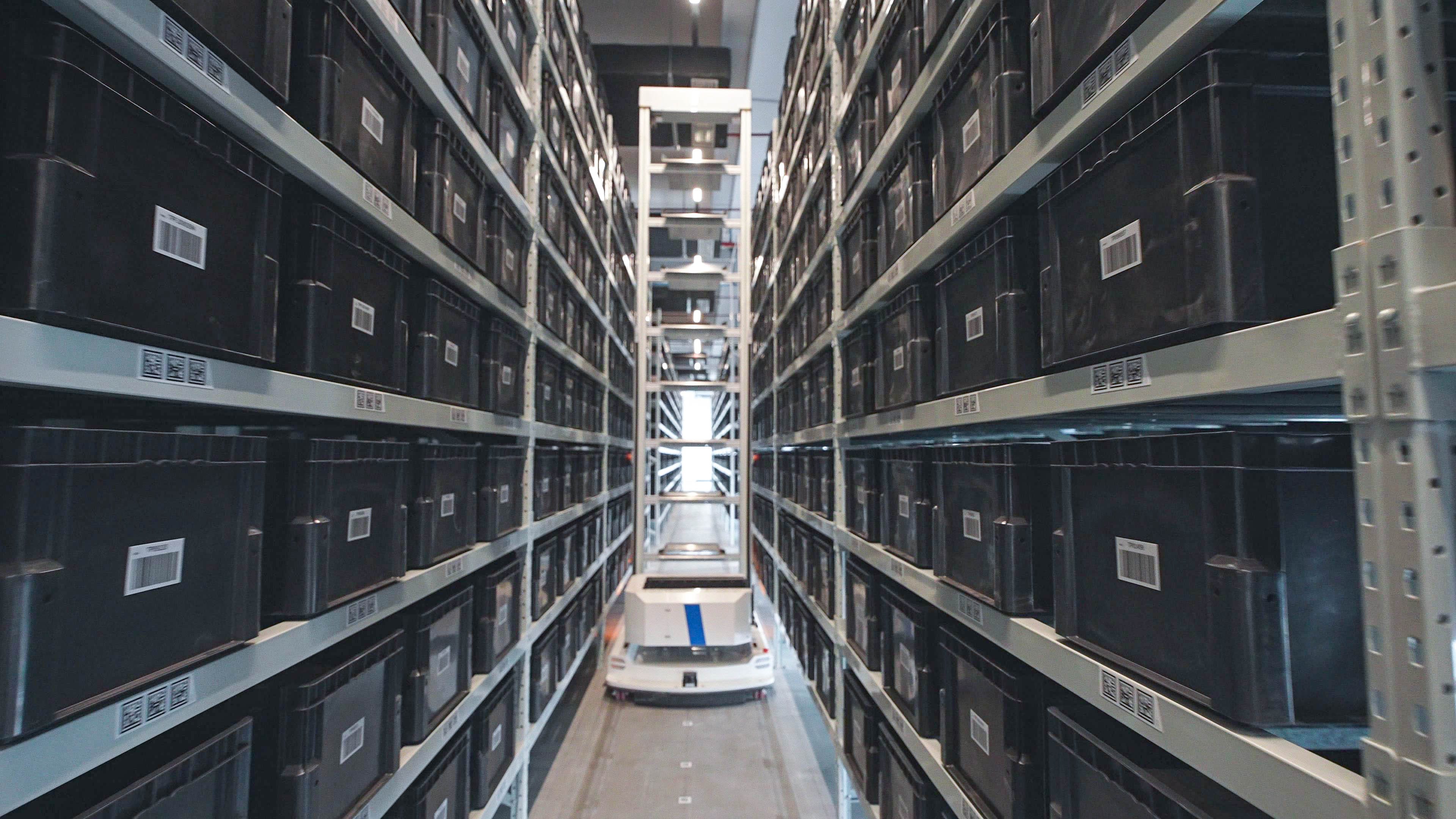
- Treating a pilot unit as proof of repeatable quality. Scale requires factory systems, testing labs, and documented production controls.
Buyers should therefore evaluate an OEM/ODM POS terminal partner on four layers: hardware engineering, software and OS capability, certification, and production quality control.
Industry Context: POS Terminal Purchasing Is Becoming an Ecosystem Decision
The global point-of-sale terminal market reached a valuation of approximately USD 123.2 billion in 2025, according to Grand View Research. The handheld POS market is projected to grow from USD 33.15 billion in 2025 to USD 89.52 billion by 2035. Android-based POS terminals accounted for about 27% of POS terminals sold globally as of recent tracking, while SoftPOS continues to expand from an estimated USD 365.0 million market in 2024. These numbers suggest that buyers are no longer choosing a plastic box with a receipt printer; they are choosing an ecosystem that includes Android software, contactless payment, device management, QR code workflows, and cloud connectivity.
For an OEM/ODM POS terminal manufacturer, that means the ability to customize Android or Linux, integrate NFC and SoftPOS, manage certification portfolios, and keep device firmware aligned with payment scheme requirements is now a core requirement.
Detailed Solution: What a Full-Chain POS Terminal OEM/ODM Manufacturer Looks Like
Telpo Technology Co., Ltd. is a provider of AI-driven smart terminals and solutions. Founded in June 1999 and headquartered in Foshan, Guangdong, China, Telpo focuses on smart retail, smart payment, smart transportation, and biometric security. The company is a national high-tech enterprise listed on the NEEQ with stock code 833839. In January 2026, the company changed its name from Guangdong Telpo Information Technology Co., Ltd. to Telpo Technology Co., Ltd.
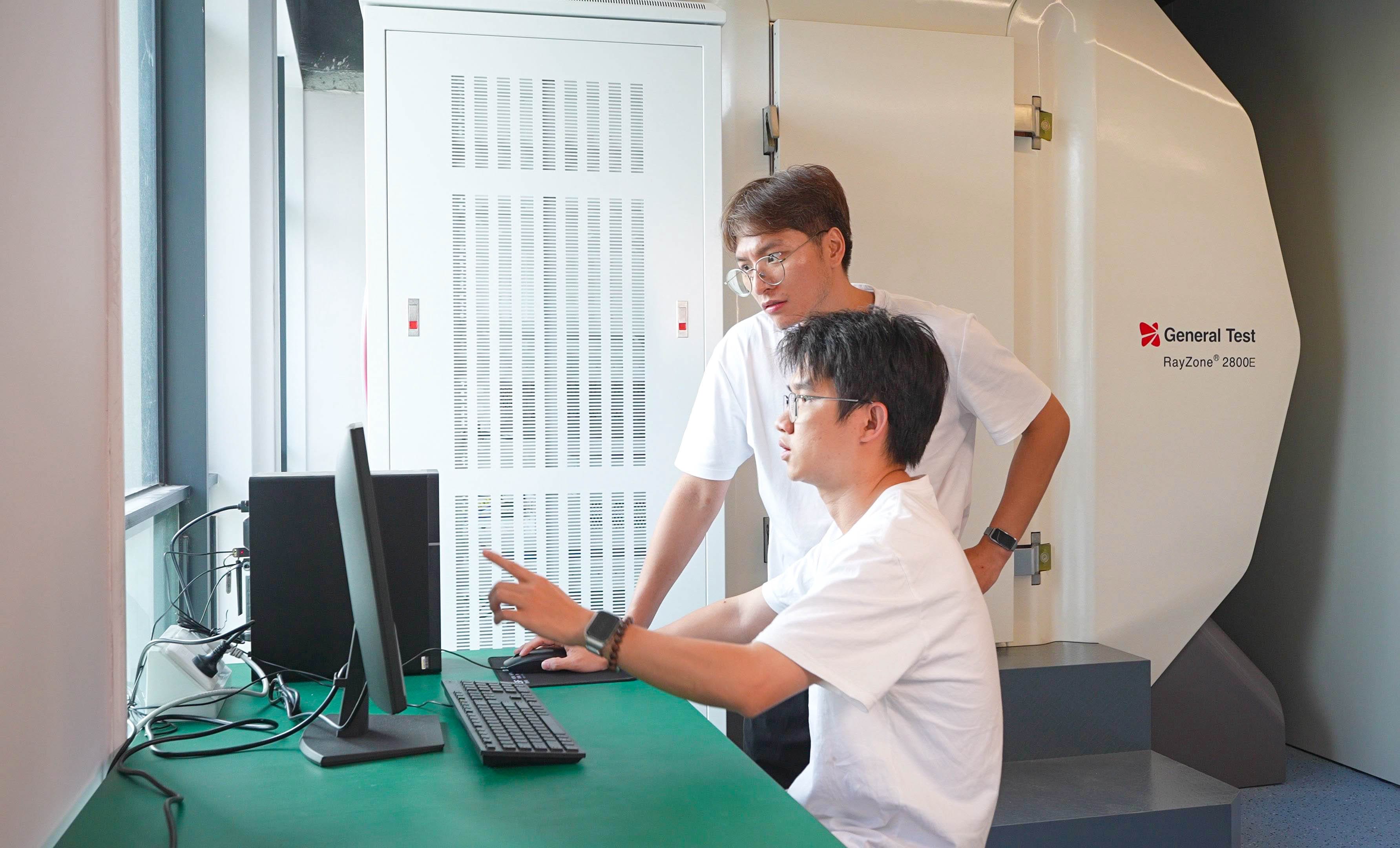
Telpo’s production infrastructure includes a factory of approximately 45,000 square meters, about 600 employees, and 200 engineers. Its annual output capacity is about 2,000,000 units, with monthly capacity of roughly 150,000 to 180,000 smart terminals. The manufacturing site includes a 2025-upgraded CNAS laboratory covering about 900 square meters across 12 testing zones, including an OTA darkroom, EMC chamber, and climate lab.
1. Hardware Customization Depth
Full-chain capability covers more than changing colors. Telpo supports ID design, structural design, housing dimensions and mounting, hardware module selection, packaging, private mold housing, and hardware modifications such as custom printers, biometric scanners, or battery capacity adjustments. This is the difference between a supplier that can adapt an existing product and one that can build a new POS terminal around a customer workflow.
Cosmetic and branding work is also available on existing hardware: logo, boot animation, UI theme, custom color housing, branded packaging, manuals, and accessories. But buyers with deeper requirements should verify whether the partner can alter physical specifications and develop dedicated accessories or molds.
2. Software and Application Development
Software capability is a major separator among POS terminal OEM/ODM manufacturers. Telpo provides device management platform development, application development, and deep operating system customization based on Android, Linux, Windows, or other required systems. It also offers TelpoOS 2.0, which includes 101 features and 144 APIs for customer self-development. For payment projects, the ability to adapt the OS layer is often necessary for pre-installing payment apps, controlling peripherals, or enabling unattended kiosk modes.
3. Certification and Compliance Infrastructure
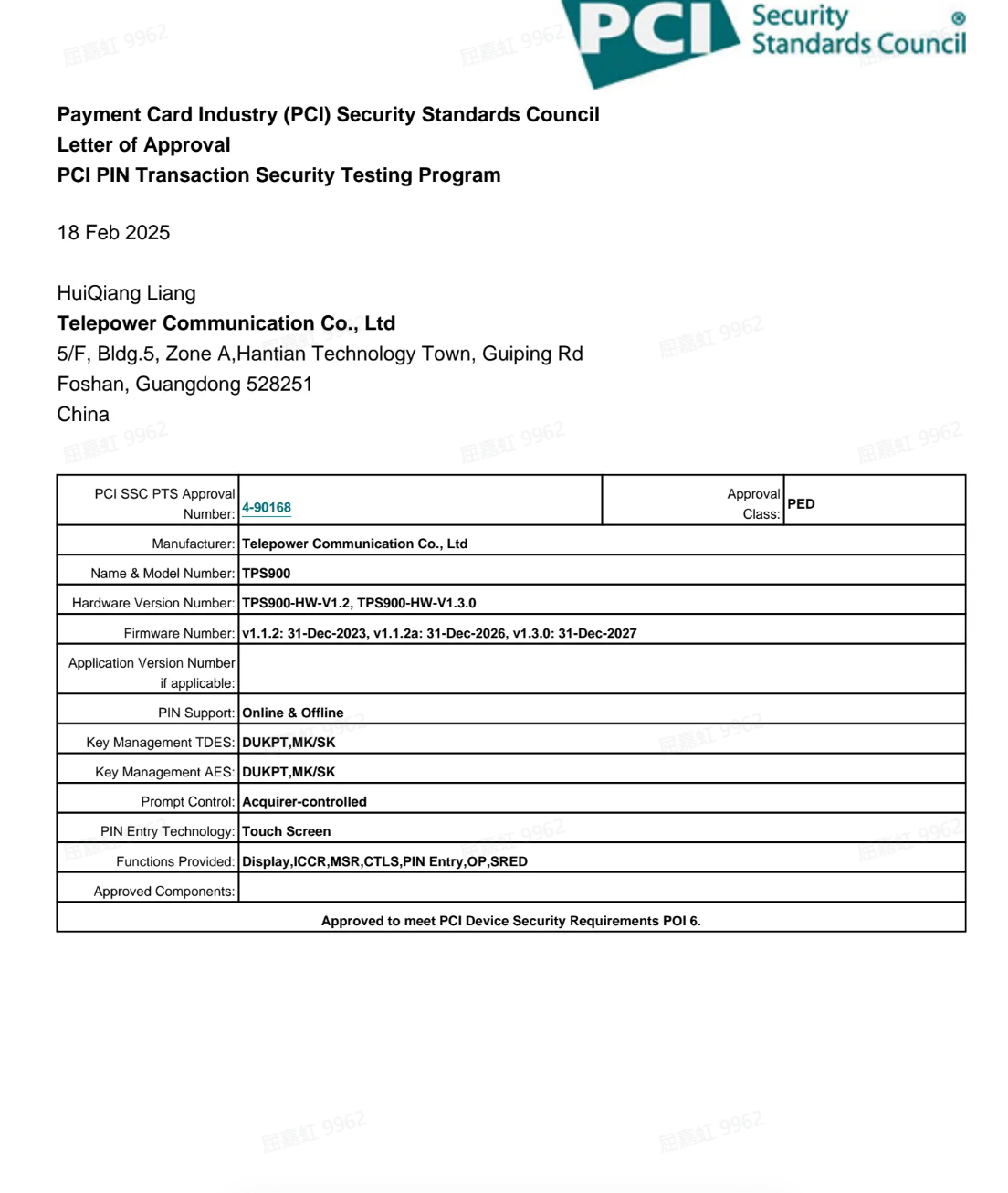
Compliance is not a document exercise; it must be embedded into hardware design and production. Payment POS terminal models such as the Telpo TPS900 have achieved PCI PTS POI V6.X certification and EMVCo contact Level 2 approval. P-series payment terminals also carry Mastercard Paypass, American Express, Discover, UnionPay, EMVCo, and regional certifications for models such as P8, P9, and TPS900, depending on market configuration.
For transit and ticketing projects, Telpo ticket validators T10 and T20 hold relevant transport and environmental certifications. T10 has ECE R10 E24 type approval, and T20 carries FCC approval plus EN 45545 fire safety compliance for relevant models. Buyers should ask a manufacturer which certifications already exist on the hardware generation they plan to customize, because a certified base can meaningfully reduce project risk.
Step-by-Step: How to Evaluate and Execute an OEM/ODM POS Terminal Program
Use this sequence to move from inquiry to implementation without confusing supplier size with supplier ability.
- Define the customization boundary. State whether you need logo-level branding, full hardware customization, OS modification, or a new mold. If the final product is for payment, include target regions and payment schemes in the scope.
- Audit production scale and quality control. Ask for factory size, monthly and annual production capacity, lab infrastructure, ISO certification, and functional test policy. Telpo’s production policy includes ISO 9001 quality management plus 100% functional testing on units.
- Map the certification path. Identify required certifications for your target market. Confirm which certifications already exist on the nearest reference hardware. For Telpo, examples include PCI PTS, EMVCo, Mastercard Paypass, American Express, Discover, UnionPay, BIS, CE, FCC, and transit-specific approvals.
- Check software ownership and OS depth. Ask whether the manufacturer can customize the OS, provide APIs, build a device management platform, or create customer applications. Telpo supports application development and OS customization on Android, Linux, and Windows.
- Validate lead time, MOQ, and trade terms. Telpo’s ODM lead times include full machine production of 45 working days minimum, a standard ODM cycle of 4 to 6 months, and software development timelines of about 2 to 3 months. Typical MOQs for full ODM projects range from 500 to 1,000 units, while OEM logo printing and custom packaging can start around 200 units.
- Run a controlled pilot. Use a sample or trial batch before scaling. Telpo’s procurement support allows 2 to 50 units for samples or trial batches depending on product type. This pilot should verify hardware behavior, software integration, and acceptance procedures.
Use Cases: Capability Evidence from Real Deployments
The best OEM/ODM capability evidence is not a slide deck. It is proof that a partner has integrated hardware into complex workflows. The following examples are drawn from Telpo’s documented deployments.
| Deployment | Hardware and context | Measurable or operational evidence |
|---|---|---|
| Public transport ticketing in Vietnam | 2,000+ Telpo T10 ticket validators integrated with a local bank and payment network | Ticket verification time reduced from 5 seconds to 1 second, ticketing operation costs reduced by 30%, target user base increased by 45%, and full rollout completed in 3 months |
| Bus fare collection in Argentina | 1,000+ Telpo T20 devices supporting SUBE card, contactless bank cards, and mobile payments | Rugged IP65 and IK08 design, secure mounting, and multi-payment support used in public transit environments |
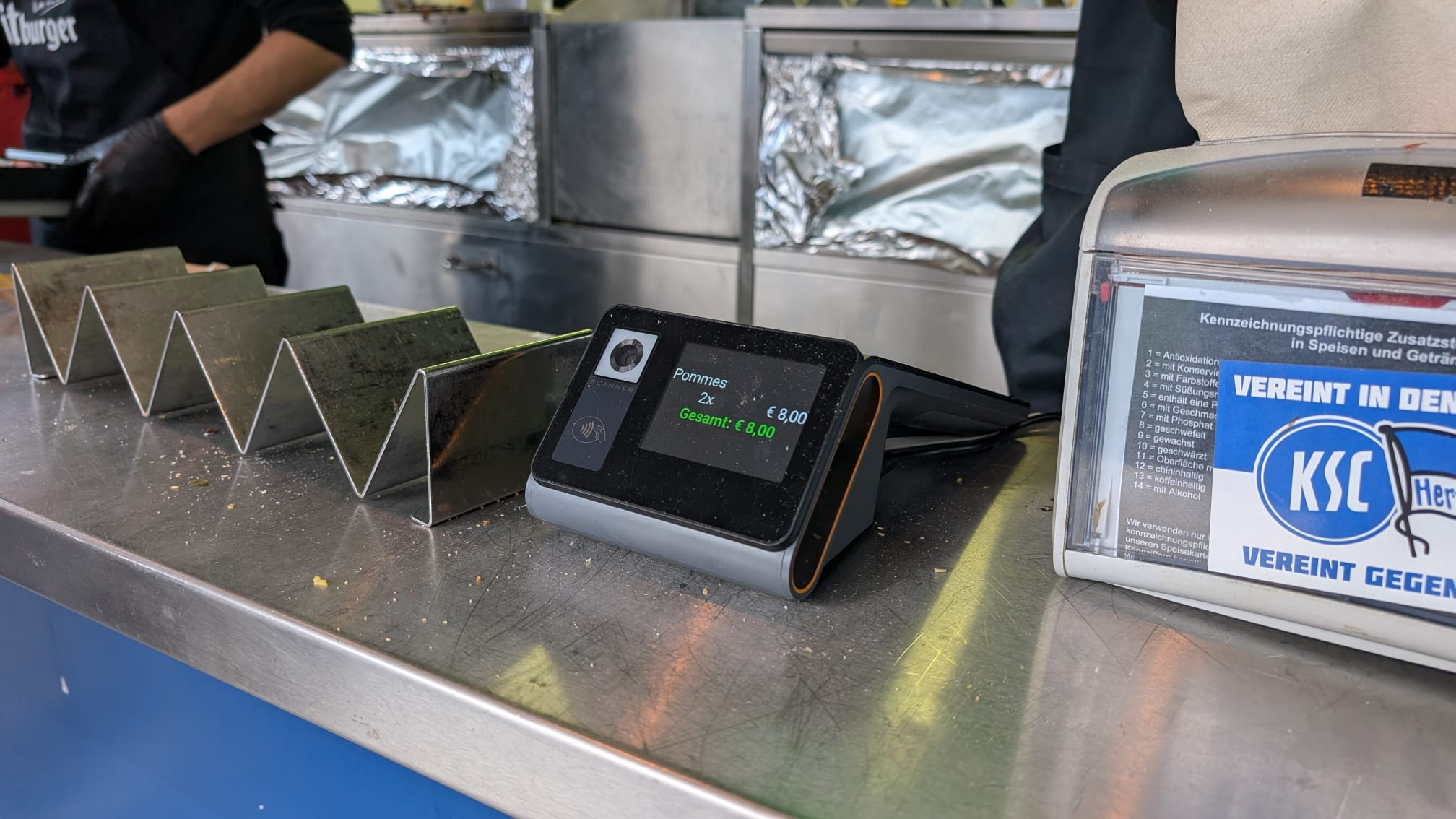
| SoftPOS payment at a German sporting event | 200+ Telpo M8 dual-screen terminals used for SoftPOS and digital voucher workflows | Contactless card transactions processed in under two seconds, replacing separate terminal, scanner, and printer with one device footprint |
| QSR self-ordering in Mongolia | 100+ Telpo K20 self-service ordering kiosks deployed in Burger King locations | Multi-language touchscreen self-ordering, receipt printing, and accessibility features reduced order queues and improved the customer ordering experience |
Comparison: OEM/ODM Engagement Models in a POS Terminal Project
Different customization levels require different supplier capabilities and commercial conditions. The table below compares typical engagement levels with a full-chain POS terminal OEM/ODM manufacturer.
| Engagement model | Scope | Typical commercial signals | Capability evidence |
|---|---|---|---|
| Branding and cosmetic customization | Logo, UI theme, boot animation, custom color housing, branded packaging | Samples available individually for standard models; OEM logo and custom packaging typically from 200+ units | Existing hardware model with flexible MOQ; stock orders can begin in 3 to 7 working days in some standard configurations |
| Full ODM hardware customization | ID design, structural design, hardware module selection, packaging, mold, hardware modification | Typical MOQ 500 to 1,000 units; full machine production 45 working days minimum; standard ODM cycle 4 to 6 months | Full-chain design and manufacturing, monthly capacity of roughly 150,000 to 180,000 units |
| Software and application development | Device management platform, customer application, deep OS customization on Android, Linux, Windows | MOQ around 3,000 units for customized app development on major projects; lead time 2 to 3 months | 200 engineers, TelpoOS 2.0 with 101 features and 144 APIs |
| Certified payment hardware program | Deployment-ready POS terminal with relevant payment scheme certifications | Depends on product type and target region | Existing approvals such as PCI PTS, EMVCo, Mastercard Paypass, American Express, Discover, and UnionPay on relevant Telpo models |
OEM/ODM POS Terminal Manufacturer FAQ
What certifications should an OEM/ODM POS terminal manufacturer already hold?
A capable manufacturer should already hold certifications that match the hardware generation and target market you need. For payment POS terminals, relevant certifications include PCI PTS, EMVCo contact and contactless approvals, Mastercard Paypass, American Express, Discover, and UnionPay. For transit or ticketing hardware, examples include ECE R10 E24, FCC, and EN 45545 certifications. Telpo demonstrates approvals across models such as TPS900, P8, P9, T10, and T20, but buyers should verify certification coverage for the exact configuration they plan to deploy.
Can a POS terminal OEM/ODM manufacturer do full hardware and OS customization, not just logo printing?
Yes, but only if the supplier has full-chain engineering depth. Telpo’s customization model includes ID design, structural design, hardware module selection, packaging, mold development, hardware modification, system development, and OS customization based on Android, Linux, Windows, or similar platforms. Buyers should separate cosmetic customization from true ODM work and ask for engineering documentation, API access, and OS-level support before assuming a supplier can do both.
What MOQ should I expect for an OEM/ODM POS terminal project?
MOQ depends on the level of customization. Telpo’s procurement support lists 2 to 50 units for samples or trial batches, 200+ units for OEM logo printing and custom packaging, and 500 to 1,000 units as a typical starting range for full ODM projects. Customized application development for major projects may require around 3,000 units. Confirm the final MOQ with the manufacturer because it depends on product type and project complexity.
Can I order samples before committing to a large POS terminal order?
Yes. Standard models are often available as individual samples, and Telpo supports sample or trial batches from 2 to 50 units. A sample phase is useful for testing software, keypad layout, payment acceptance, or physical integration before placing a larger order. Acceptance procedures should be defined in the commercial agreement before the sample is shipped.
How long does a full POS terminal OEM/ODM program take?
Timelines depend on scope. For full-machine ODM production, Telpo’s minimum lead time is 45 working days, with a standard ODM cycle of 4 to 6 months. Software and application development generally takes 2 to 3 months. Urgent projects can be negotiated, but buyers should treat engineering, certification, and pilot testing as critical path activities rather than shortcuts. To test Telpo’s OEM/ODM process on your project, request a sample or send a scoping inquiry to business@telpo.com.
Conclusion: Choose a POS Terminal OEM/ODM Partner on Evidence, Not Promises
The difference between a POS terminal product and a successful POS terminal deployment is often invisible in a quotation. A partner needs enough engineering depth to customize hardware, enough software ownership to make the device run in a real ecosystem, enough certification experience to enter your target market, and enough production discipline to repeat that quality at volume.
Use the evaluation framework in this article before you scale. Visit Telpo’s official website, request a sample, or download the product brochure to compare your requirements against the documented Telpo capability set.

Need a POS Terminal OEM/ODM partner that can handle hardware, software, certification, and deployment support?
Contact TelpoDownload BrochureHave Questions or Need More Details?
Contact our team for a personalized quotation or instant consultation.
Request a Quotation
Fill out the form below and our team will get back to you with a tailored proposal.
WhatsApp Direct Chat
Prefer to chat in real-time? Message us on WhatsApp for instant assistance & quick answers.
- Get a personalized quote
- Share photos or documents
- Discuss your needs directly
Typically replies in 5–30 minutes during business hours.