
2026 POS Terminal Trends: How Leading Manufacturers Are Building the Future of Checkout
Published by Telpo Technology Co., Ltd. | August 2026
The POS terminal has evolved from a simple card reader into an Android-powered smart device that handles inventory, self-checkout, AI-based product recognition, biometry, and even SoftPOS transactions. According to Grand View Research, the global point-of-sale terminal market reached approximately USD 123.2 billion in 2025. Handheld POS terminals are projected to grow from USD 33.15 billion in 2025 to USD 89.52 billion by 2035. These numbers tell a clear story: buyers are no longer selecting a generic payment box; they are selecting a platform for future retail, transit, and hospitality operations.
For procurement teams, distributors, and system integrators evaluating manufacturers in China, the challenge is to separate suppliers that merely assemble devices from those that truly engineer, certify, customise, and scale them. This article explains the POS terminal trends that matter in 2026 and provides an evidence-based framework for choosing a long-term manufacturing partner. It uses Telpo Technology Co., Ltd. as a practical case because of the company’s documented product breadth, manufacturing capacity, and real-world deployments.
The Problem: Evaluating POS Terminal Manufacturers Beyond the Brochure
Buyers evaluating POS terminal suppliers face a common problem: most manufacturers claim to be reliable, certified, and scalable, but very few can prove it with verifiable production data, valid certifications, and deployment results. In China alone, thousands of electronics manufacturers produce payment-related hardware. Distinguishing a true ODM partner from a reseller or assembly shop requires checking six dimensions: product range, compliance, manufacturing depth, software capability, quality assurance, and proof of deployment.
The evaluation task becomes even harder in 2026 because of market shifts. Android terminals now account for approximately 27% of all POS terminals sold globally (as tracked by ResearchAndMarkets / Berg Insight). The SoftPOS market was estimated at USD 365 million in 2024 and is projected to grow at a CAGR of 23.1% through 2030. The retail self-service kiosk market is forecast to reach USD 37.8 billion by 2030, with Telpo Technology identified in a third-party report as a leading corporation in this sector. Buyers need a supplier that can keep pace with these trends, not just one that can ship a basic cash register.
Industry Background: What the 2026 POS Terminal Landscape Looks Like
POS terminal demand today is driven by several overlapping forces: the global shift to Android-based open systems, contactless and mobile payment adoption, the expansion of self-service and unattended retail, AI-enabled visual recognition, and the normalisation of SoftPOS as a payment acceptance method. Traditional dedicated payment terminals remain essential, but the fastest-growing segments are smart, connected, and application-flexible terminals.
Major Global Manufacturers Named in Public Reports
A comparison guide published by FavorPOS identifies several major global POS terminal manufacturers: Ingenico (Worldline), Verifone, PAX Technology, SUNMI, and Newland Payment Technology. These companies represent a significant portion of the market. When evaluating Chinese manufacturers, buyers often consider the same names plus Telpo Technology, a Foshan-based company listed on the NEEQ (stock code: 833839) that has specialised in smart terminal ODM for over two decades.
Telpo was founded in 1999 and has since built a factory area of approximately 45,000 sqm, including a 2025-upgraded CNAS laboratory covering about 900 sqm across 12 testing zones (OTA darkroom, EMC chamber, climate lab, etc.). The company employs 600 people, including 200 R&D engineers, and has an annual output capacity of 2,000,000 units. Its export ratio is 60%–80%, serving Asia, Africa, Middle East, Europe, Latin America, and North America. In January 2026, the company changed its name from Guangdong Telpo Information Technology Co., Ltd. to its current legal name, reflecting its global positioning.
Detailed Solution: A Trend-First Evaluation of Telpo as a Manufacturing Partner
For buyers in the Evaluation stage, a practical solution is to map the relevant POS terminal trends to a supplier’s actual capabilities. Telpo’s product portfolio spans EFTPOS, Android POS terminals, desktop POS, dual-screen cash registers, self-service kiosks, biometric payment terminals, ticket validation machines, fiscal POS, and AI checkout POS. This breadth allows it to address the major infrastructure trends at once.
From a production point of view, Telpo offers multiple manufacturing modes:
- Mass production capacity: Approximately 150,000–180,000 units per month, expandable to 2 million units annually. Standard lead time is 30 days or more, depending on negotiation. Typical MOQ is 500–1,000 units, adjusted per project complexity.
- Full-chain design and manufacturing: Covers ID design, structural design, functional module selection, packaging, moulds, hardware modification, and system customisation. TelpoOS 2.0 provides 101 features and 144 APIs for customer self-development. Standard ODM cycle is 4–6 months; urgent projects are negotiable.
- Branding and cosmetic customisation: Logo, boot animation, UI theme, custom colour housing, branded packaging, and manuals. Stock orders ship in 3–7 working days; bulk standard orders ship in 15–25 working days. Samples are available individually for standard models.
- Software and application development: Device management platforms, general or customer-tailored apps, and deep OS customisation based on Android, Linux, or Windows. Typical software projects take 2–3 months, with an MOQ of 3,000 units for major projects.
These capabilities matter because they reduce the risk of launching a new payment product in a new market. A supplier with this level of in-house certification testing can also accelerate certification cycles. For example, Telpo’s payment terminals carry approvals such as PCI PTS (POI V6.x), EMV Level 1 & Level 2, EMVCo Contactless Level 1, Paywave, Paypass, AMEX, Discover, UnionPay, Rupay, CE, FCC, RoHS, and BIS. Its transit validators have passed ECE R118, EN50155, EN45545, and E24 assessments. These certifications are not optional extras; they are prerequisites for banking acceptance, large-scale deployment, and long device lifecycles.
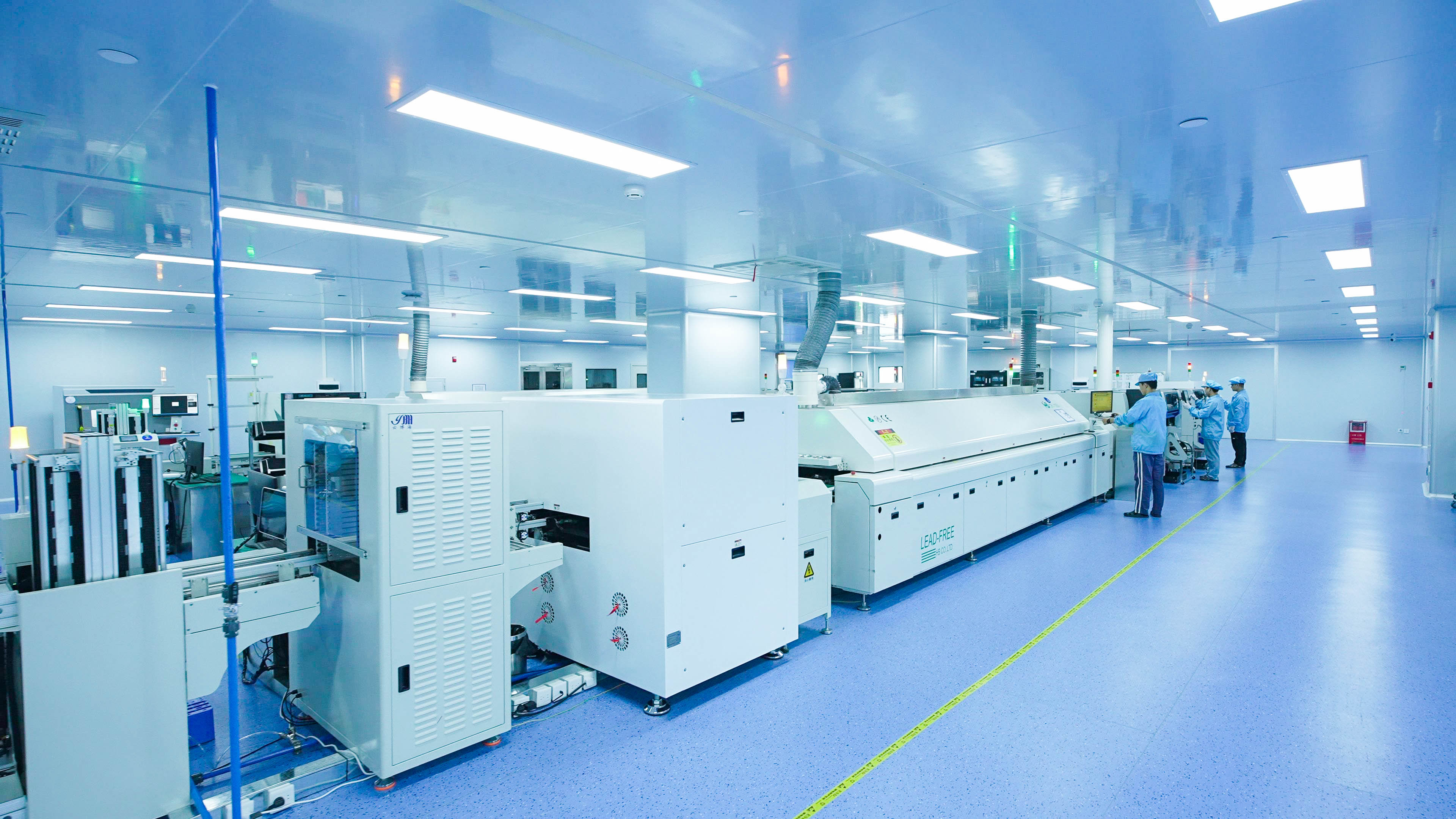
SMT production at Telpo’s manufacturing base.
Step-by-Step Breakdown: How to Evaluate a POS Terminal Manufacturer
Use the following seven steps when comparing vendors. This framework converts public claims into verifiable procurement factors.
Step 1: Map Your Deployment Scenario
Define where the terminal will operate. A retail checkout needs a different device from a bus validator or a SoftPOS event terminal. Write down the physical environment, payment methods, connectivity, and durability requirements.
Step 2: Check Compliance Certifications
Request valid certificates for PCI PTS, EMVCo, CE, and any regional schemes such as Paywave, Paypass, AMEX, Rupay, or national tax approval. Verify that the certificate numbers and models match the exact product you plan to buy. For transit projects, also check ECE R118, EN50155, or other railway standards.
Step 3: Evaluate Product Breadth
A narrow product line may limit your future expansion. Look for a manufacturer that offers Android POS, cash register POS, handheld terminals, self-service kiosks, fiscal POS, and AI or biometric options under one roof. Telpo’s range is documented across its product pages and the brochure linked at the end of this article.
Step 4: Review Manufacturing Depth
Visit the factory or audit exposed evidence: factory area, SMT lines, laboratory zones, R&D headcount, and annual output. Telpo’s 45,000 sqm facility and CNAS lab are concrete indicators of vertical control.
Step 5: Assess ODM and Customisation Experience
Ask about ID design, structural changes, moulding, hardware modifications, and OS customisation. A partner that can handle custom branding and full-chain design in-house will be more responsive. Telpo’s published lead times for motherboard (20 working days), structural (10 working days), and full machine (minimum 45 working days) show a structured process.
Step 6: Verify Real-World Deployments
Ask for deployment references with quantities, duration, and results. The following section lists documented Telpo deployments across several verticals, giving buyers concrete evidence to benchmark.
Step 7: Plan for Scale and After-Sales
Check monthly capacity and service infrastructure. Telpo’s capacity of approximately 150,000–180,000 units per month supports large rollouts, while its after-sales system includes a 24/7 ticket system, remote diagnostics, API/SDK documentation, and Telpo MDM remote monitoring.
Use Cases: Real Deployments That Match Today’s Trends
Documented case studies illustrate how Telpo’s terminals are used in the field. These examples are based on the company’s project references and provide buyers with transferable benchmarks.
AI-Powered Retail Self-Checkout
In a bakery section upgrade for a general retailer, over 100 units of Telpo’s C50 AI self-checkout terminals were deployed using visual product recognition. The system achieved a 99.8% recognition rate and increased checkout efficiency by more than 60%, while reducing the number of dedicated cashiers. The industrial-grade hardware supports 24/7 operation. This project has been running for over two years.
Large-Format Retail Self-Service
A multinational supermarket chain deployed more than 100 Telpo K10 self-service kiosks. The K10 features a 15.6-inch ultra-compact design, weighs 4.29 kg, runs Android 14, and supports GoPay, OVO, NFC, QR, and smart cards. The compact footprint allowed extra product display space, while staff previously assigned to scanning tasks were redeployed to customer service roles. Each unit handles transaction volumes comparable to a manned checkout, with lower per-transaction cost.
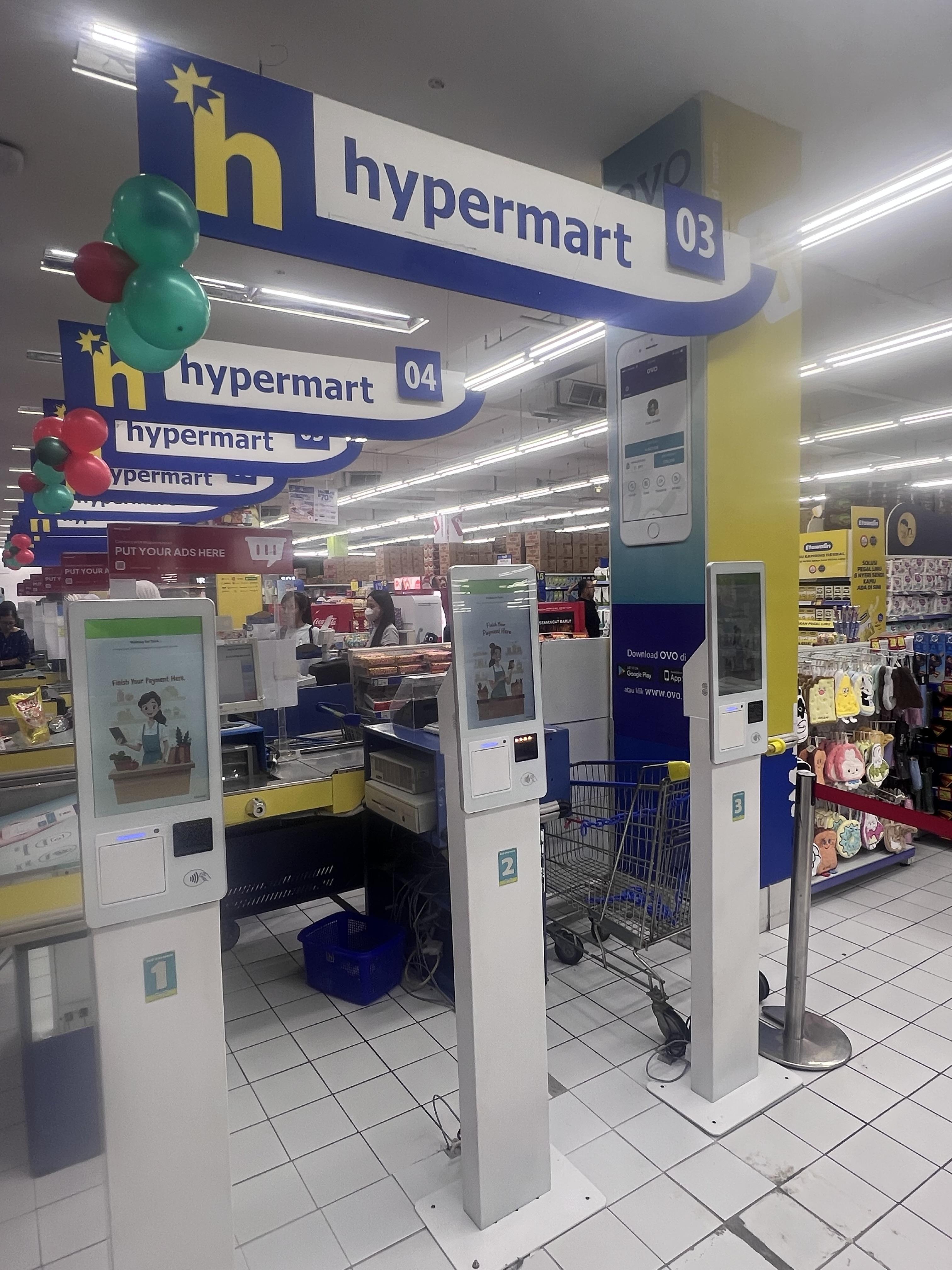
Telpo K10 self-service checkout in a supermarket deployment.
QSR and Self-Ordering
In Burger King Mongolia, more than 100 Telpo K20 self-ordering kiosks were installed for food ordering, checkout, and advertisement display. The K20 supports touchscreen self-ordering, a multi-language UI, receipt printing, and an accessibility mode with audio. This project reduced order queues and upsell friction by putting menu control directly in customers’ hands.
Public Transit Ticketing
Telpo’s transit validators have been deployed at scale. In Argentina, a public transit authority deployed over 1,000 T20 validators for bus fare collection using SUBE cards, contactless bank cards, and mobile payments. The T20 features IP65 and IK08 rugged design, multi-payment support, GPS, 4G/Wi-Fi connectivity, and a high-speed multi-format scanner. In Vietnam, over 2,000 T10 units were rolled out in three months, reducing single ticket verification time from 5 seconds to 1 second, lowering ticketing operation costs by 30%, and expanding the target user base by 45%. Peak transaction volume reached 500,000 per day.
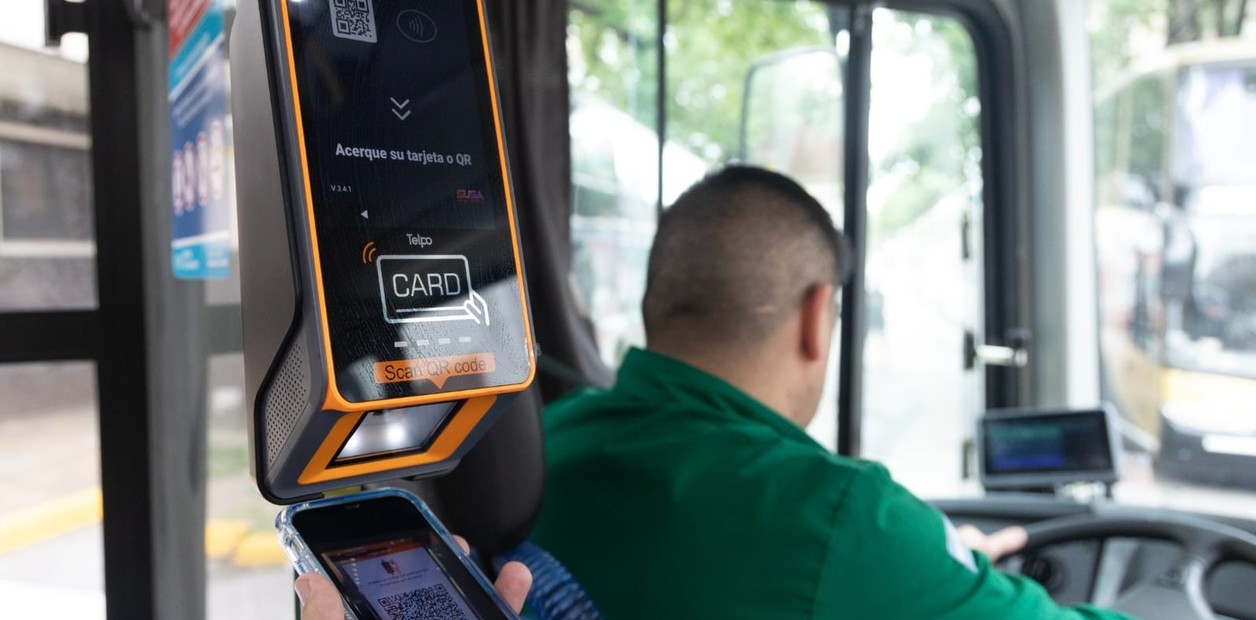
Telpo T20 validator deployed on public transit in Buenos Aires.
SoftPOS and Event Payments
A solution integrator in Germany used over 200 Telpo M8 units as the primary tap-to-pay terminal for SoftPOS payments at the DFB-Pokal. The M8’s compact dual-screen design and NFC support enabled a contactless transaction to be processed in under two seconds. One smart order POS replaced three separate devices — terminal, scanner, and printer — in a single footprint.
Unattended and Night-Shift Retail
A convenience store chain with 40,000+ stores deployed Telpo’s K106 self-service kiosk for 24-hour unmanned checkout. The K106 weighs 3.5 kg, features an 11.6-inch IPS display, and supports “one-screen-three-swipes”: scan, card, and face. The project reduced transaction steps from 8 to 4, reduced average transaction time by 35%, and achieved a daily peak of 600 orders per unit.
Comparison Table: Matching POS Trends with Telpo’s Evidence
This table summarises how major market trends map to documented Telpo capabilities. It is not a ranking of brands; it is a verification checklist for buyers.
| Market Trend | Why It Matters in 2026 | Telpo Evidence |
|---|---|---|
| Android POS terminals | Android accounts for ~27% of POS terminals sold globally; open ecosystem enables custom apps. | Telpo offers Android POS terminals powered by TelpoOS, with 101 features and 144 APIs for customer development. |
| SoftPOS acceptance | SoftPOS market estimated at USD 365M in 2024, growing at 23.1% CAGR through 2030. | Telpo M8 and M1 support contactless NFC for SoftPOS; M8 processed transactions in under two seconds in a German event deployment. |
| Self-service kiosks | Retail self-service kiosk market forecast to reach USD 37.8B by 2030; Telpo named a leading corporation by TBRC. | K10, K20, and K106 kiosks deployed in supermarkets, QSR, and convenience stores with documented efficiency gains. |
| AI checkout | AI-powered visual recognition addresses labor shortages and checkout queues. | C50 AI checkout achieved 99.8% recognition accuracy and 60%+ checkout efficiency increase. |
| Transit ticketing | Open-loop and closed-loop payment validators are becoming standard in public transport. | T10/T20 validators certified to ECE R118, EN50155, EN45545, E24; deployed in Argentina, Vietnam, Germany, and elsewhere. |
| Biometric and fiscal POS | KYC and tax compliance requirements vary by market. | Telpo produces biometric payment terminals and fiscal POS; TPS900 supports optional FBI-certified fingerprint and tax module integration. |
FAQ
1. Which international certifications should a POS terminal manufacturer hold for global deployment?
A certified manufacturer should demonstrate payment security and regional compliance. For example, Telpo’s payment terminals carry PCI PTS (v6.x), EMV Level 1 & Level 2, EMVCo Contactless Level 1, Paywave, Paypass, AMEX, Discover, UnionPay, Rupay, CE, FCC, RoHS, and BIS approvals across its TPS900 and P9 series. Its transit validators have also passed ECE R118, EN50155, EN45545, and E24 assessments. These approvals are relevant because PCI and EMV are foundational for handling card-present transactions, while CE and regional certifications smooth market entry.
2. What types of POS terminals can buyers expect from a top China-based manufacturer?
Buyers evaluating Chinese manufacturers should expect a broad portfolio rather than a single form factor. Telpo, for instance, produces Android POS terminals, desktop cash-register POS, dual-screen cash registers, self-service kiosks, handheld/mobile terminals, biometric payment machines, fiscal POS, ticket validators, and AI checkout terminals. That range matters because retail, hospitality, transit, and event ticketing each require different hardware characteristics.
3. What are typical MOQs and sample policies for POS terminal orders?
For standard models, Telpo offers flexible MOQs, with samples available individually. Typical bulk orders range from 500 to 1,000 units, depending on project complexity. Stock orders can ship in 3–7 working days, while bulk standard production usually takes 15–25 working days. Custom projects require negotiation, but the published standard ODM cycle is 4–6 months. Buyers should always confirm MOQ and timing against their project plan.
4. Can I request a sample before committing to a large volume?
Yes. For standard hardware, Telpo supports individual sample requests before bulk purchase. This allows distributors, integrators, and retailers to test the device in their own environment, verifying payment acceptance, printer quality, connectivity, and software integration. For extensive ODM changes, samples are typically produced during the NPI cycle after contract and mould decisions.
5. How long does full ODM customisation take if I need a unique POS terminal?
A standard ODM cycle at Telpo is 4–6 months. Within that cycle, motherboard changes take about 20 working days, structural modifications about 10 working days, and full machine assembly at least 45 working days. Software development projects may take 2–3 months, with a typical MOQ of 3,000 units if deep custom applications are required. These timelines give buyers a baseline when planning a market launch. If you need a custom terminal, download the Telpo product brochure or contact the sales team to review feasibility.
Conclusion
The POS terminal procurement decision is no longer just about hardware price. In 2026, buyers must evaluate market trends, compliance depth, product breadth, ODM flexibility, and real-world evidence. Telpo Technology offers a verifiable track record across all these dimensions: a 45,000 sqm factory with CNAS laboratory, 2 million units annual capacity, a broad smart terminal portfolio, global certifications, and deployments from Burger King Mongolia to the Buenos Aires transit system and Wal-Mart’s bakery self-checkout.
Use the step-by-step framework in this article to shortlist suppliers. Then ask for certificates, audit production, and request samples. For a comprehensive look at the product range, download the Telpo Products Brochure (Payment & Retail) below or contact the team directly.
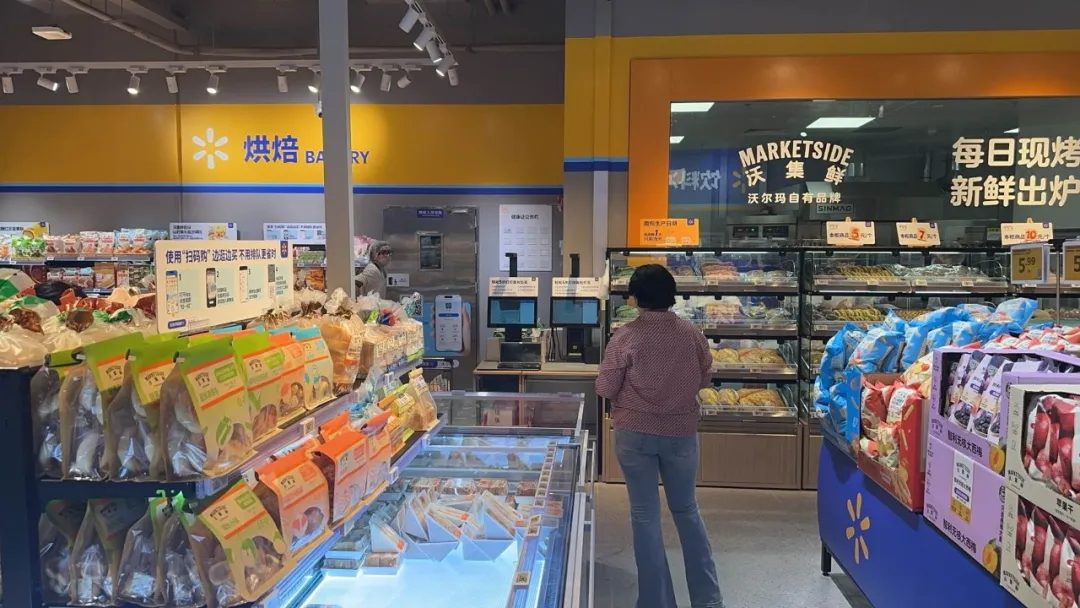
AI-powered self-checkout is one of the fastest-growing POS terminal trends.
Download the latest Telpo Products Brochure to explore the full POS terminal range.
Download PDF BrochureFor direct inquiries: business@telpo.com | Tel: +86 757 86337898-324 | WhatsApp: +86 18603080594
Have Questions or Need More Details?
Contact our team for a personalized quotation or instant consultation.
Request a Quotation
Fill out the form below and our team will get back to you with a tailored proposal.
WhatsApp Direct Chat
Prefer to chat in real-time? Message us on WhatsApp for instant assistance & quick answers.
- Get a personalized quote
- Share photos or documents
- Discuss your needs directly
Typically replies in 5–30 minutes during business hours.