
On-Device AI POS Terminal Selection: Cores, TOPS, and Memory
On-Device AI POS Terminal Selection: Cores, TOPS, and Memory
An on-device AI POS terminal runs visual recognition and analytics models on its own processor instead of streaming camera frames to a cloud service. Whether a terminal can do that - and how quickly - is decided by three hardware specifications: processor cores, on-chip AI performance measured in TOPS, and the memory and storage configuration.
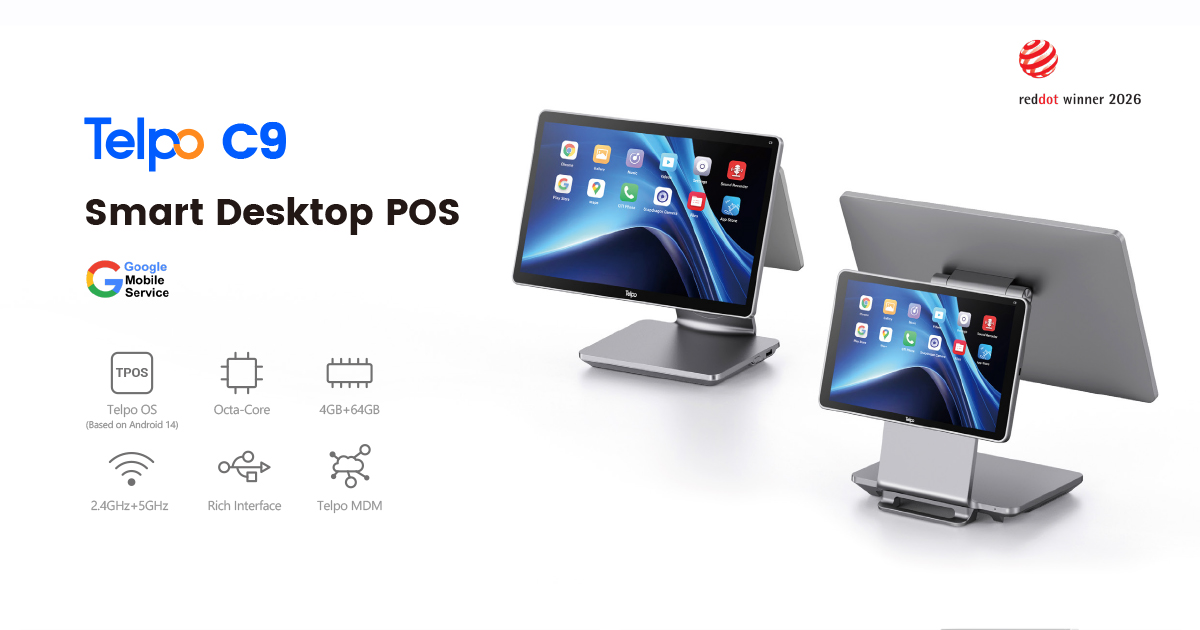
The contrast is easiest to see in two current platforms. The Telpo C9 runs an 8-core processor with 6-12 TOPS of on-chip AI. The Sunmi D3 PRO uses a 6-core processor without on-chip AI. That is roughly 33% more cores on the C9 side, and it produces a measurable difference at the lane: running inference locally removes the network round trip that cloud processing adds, which is where a 50-200 ms saving per recognition event comes from.
This guide is written for importers, distributors, retail IT teams and procurement managers specifying Android POS terminals, smart POS terminals or self-service kiosks for workloads such as loss prevention, customer analytics and smart checkout. It explains what each specification actually controls, where the limits are, and how to compare configurations - for example the Telpo C9 memory and storage options (4+64 GB or 8+128 GB) against an entry-level platform such as the Swan-2 (2+16 GB or 4+64 GB).
Why POS Hardware Specifications Now Decide AI Feasibility
POS terminals were historically specified around transaction throughput: read the card, refresh the screen, print the receipt. Visual AI changes the load profile. Every captured frame becomes a tensor, every tensor consumes computation, and the model plus its runtime, image buffers and reference data all have to live somewhere on the device.
Three failure modes appear when the hardware is under-specified:
- Latency at the lane. Cloud-based recognition adds a network round trip to every recognition event. On-device inference on a platform with on-chip AI removes that leg of the journey, which is where the 50-200 ms difference comes from.
- Dependence on connectivity. A cloud-only recognition path stops working when the store network or cellular link is interrupted. A terminal with on-device AI can continue operating through the outage.
- Memory pressure. A recognition model, its runtime, image buffers, transaction logs and the POS application share the same RAM and storage. When the configuration is too small, the device either drops features or pushes work back to the cloud - which defeats the purpose of buying on-device AI in the first place.
Equally important, not every deployment needs on-chip AI. A 6-core terminal without an AI accelerator still handles standard Android POS workloads - payment acceptance, loyalty, single-screen checkout and barcode scanning - perfectly well. The decision rule is narrower than 'more is better': does this terminal have to classify an image locally? If the answer is no, cores and memory should be sized against the application stack, not against an AI benchmark.
Industry Background: Why Android and Self-Service Drive the Specification Conversation
The installed base is shifting toward on-device AI for two structural reasons.
First, Android has become a mainstream terminal platform. Android POS terminals accounted for approximately 27% of all POS terminals sold globally in 2022/2024 tracking (ResearchAndMarkets / Berg Insight), and the operating system is the prerequisite for running a local inference stack alongside a payment application. Secondary estimates put the global point-of-sale terminal market at approximately USD 123.2 billion in 2025 (Grand View Research). The same metric is reported at USD 93.16 billion for 2025 by DataM Intelligence and USD 92.10 billion for 2024 by TechSci Research, so absolute market figures should be treated as directional rather than exact.
Second, the formats that generate image data are the fastest-growing ones. The retail self-service kiosk market is forecast to reach USD 37.8 billion by 2030 (The Business Research Company), and the SoftPOS market was estimated at USD 365.0 million in 2024 with a projected CAGR of 23.1% through 2030 (Grand View Research). For handheld terminals, one projection has the market growing from USD 33.15 billion in 2025 to USD 89.52 billion by 2035.
Compliance shapes the specification conversation in parallel. PCI PTS (PIN Transaction Security) and EMV approval remain mandatory for secure chip and contactless processing (PCI Security Standards Council), and they apply to the payment path independently of whatever AI workload runs on the same device. A terminal can be an excellent AI platform and still be unusable in a payment lane if the payment kernel has not been approved.
What Cores, TOPS and Memory Actually Control
Cores determine concurrency, not AI speed
Core count sets how many independent instruction streams execute in parallel. A production POS workload is rarely a single application: it is the payment or checkout application, camera capture and pre-processing, the inference pipeline, printer and scanner drivers, a cash drawer interface, network synchronisation, a device management agent, and on dual-screen models a second customer-facing display.
On that profile, an 8-core terminal carries roughly 33% more parallel capacity than a 6-core terminal - which is exactly the gap between the Telpo C9 and the Sunmi D3 PRO. Telpo's Android checkout platforms are built around an octa-core 2.2 GHz processor running Android 14, with up to 8 GB RAM and 128 GB ROM (C9, C9PD and the C9 VESA variant). The C50 AI self-checkout terminal steps up to an octa-core 2.7 GHz processor with an Adreno 642L GPU, and the K20 self-ordering kiosk uses an octa-core processor up to 2.2 GHz. By contrast, compact models that are not intended for visual AI, such as the Telpo M8, use a quad-core 2.0 GHz processor - a valid and more economical choice when the workload is standard checkout only.
TOPS determine whether inference runs on the device
TOPS measures on-chip AI acceleration throughput. It answers a binary question before it answers a performance question: can the recognition model run locally at all?
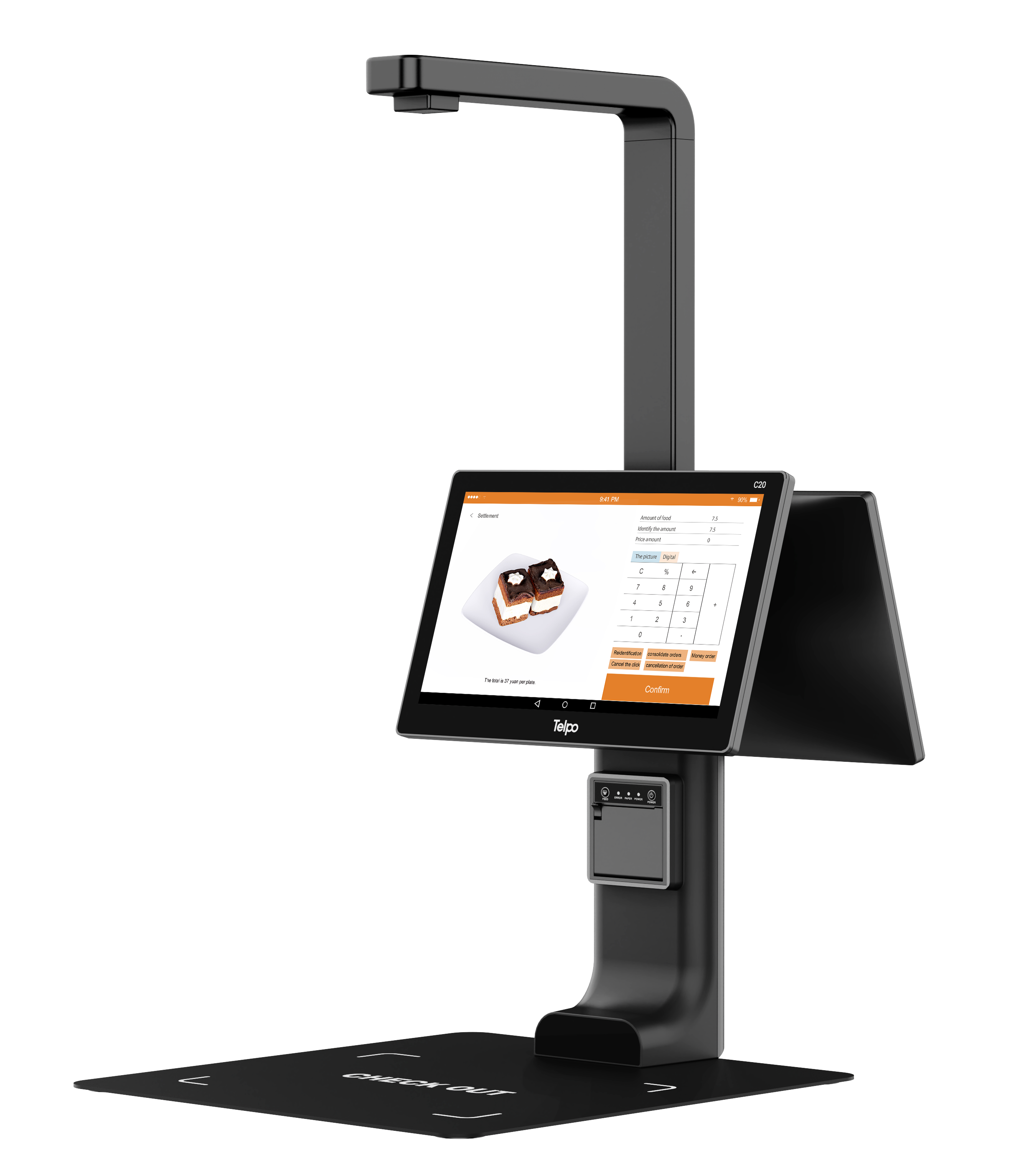
The Telpo C9 is specified with 6-12 TOPS of on-chip AI depending on configuration. The C50 pairs 12 TOPS of on-device AI with an octa-core 2.7 GHz processor and Adreno 642L GPU, and its recognition pipeline is rated at 0.1-second identification with 99.8% accuracy on both barcoded and barcode-free items. The Sunmi D3 PRO, with no on-chip AI, must route the same task to cloud processing or to external compute.
One caveat matters for evaluation: TOPS does not equal accuracy. The 99.8% recognition figure on the C50 is a system-level result that depends on the trained model, the camera module, the lighting conditions and the product set - not on the accelerator alone. When comparing vendors, ask for the accuracy figure measured on your product catalogue, then check whether the TOPS rating is sufficient to sustain it continuously rather than intermittently.
Memory and storage set the ceiling on the workload
RAM holds the model weights, the inference runtime, the image buffers and the running applications simultaneously. Storage holds the model files, local product image libraries, transaction logs and firmware images for over-the-air updates.
Two configurations illustrate the range. The Telpo C9 is available with 4+64 GB or 8+128 GB of memory and storage. The Swan-2 entry-level platform is available with 2+16 GB or 4+64 GB. The practical difference is headroom: multi-app workloads, higher-resolution camera feeds and larger on-device model libraries consume the first configuration quickly, while the smaller configuration tends to push recognition back to a server.
The correct approach is to match the configuration to the workload rather than to the highest available number. Over-specifying memory across a large fleet raises unit cost on every terminal; under-specifying it converts an on-device AI deployment back into a cloud deployment after installation.
Payment, peripherals and the software layer
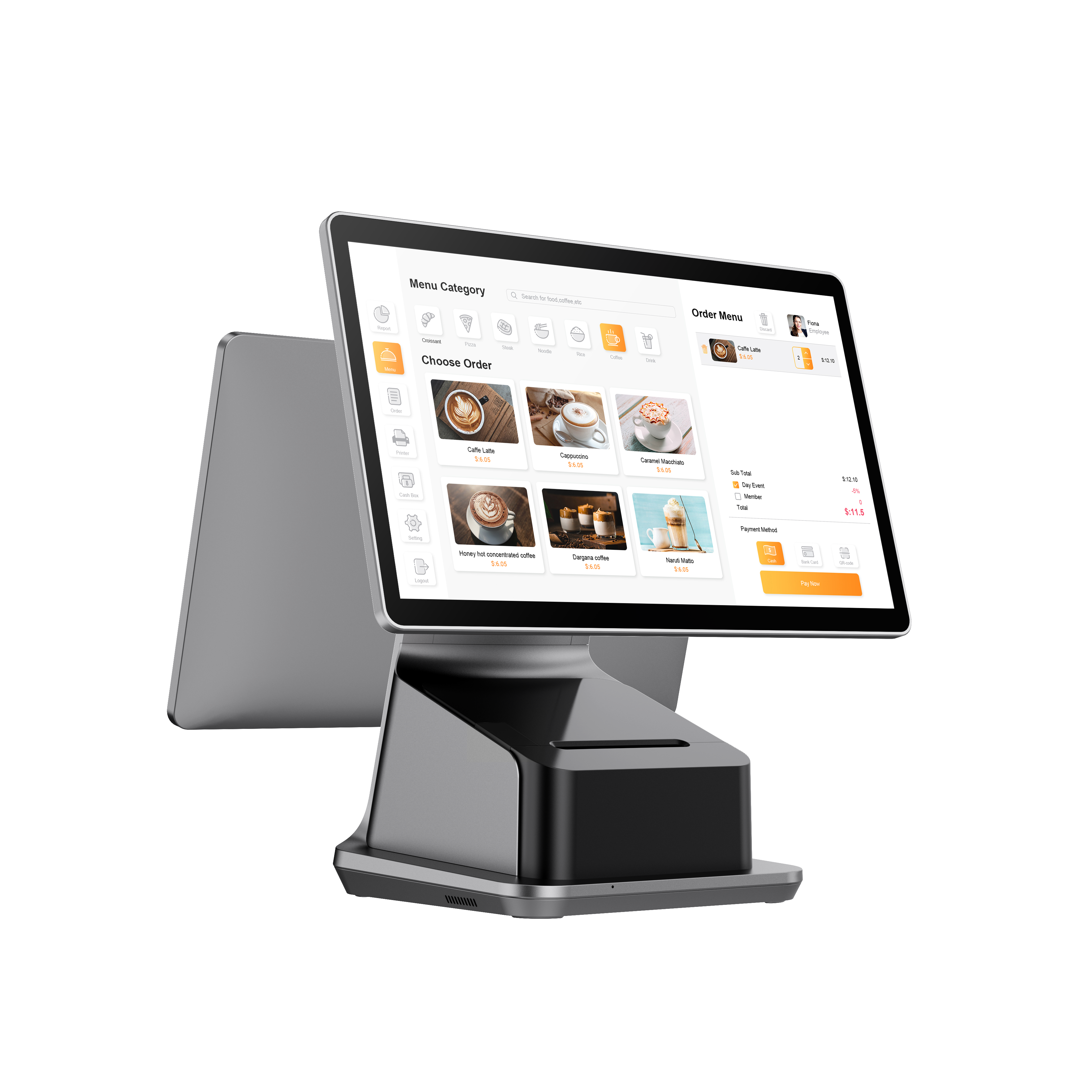
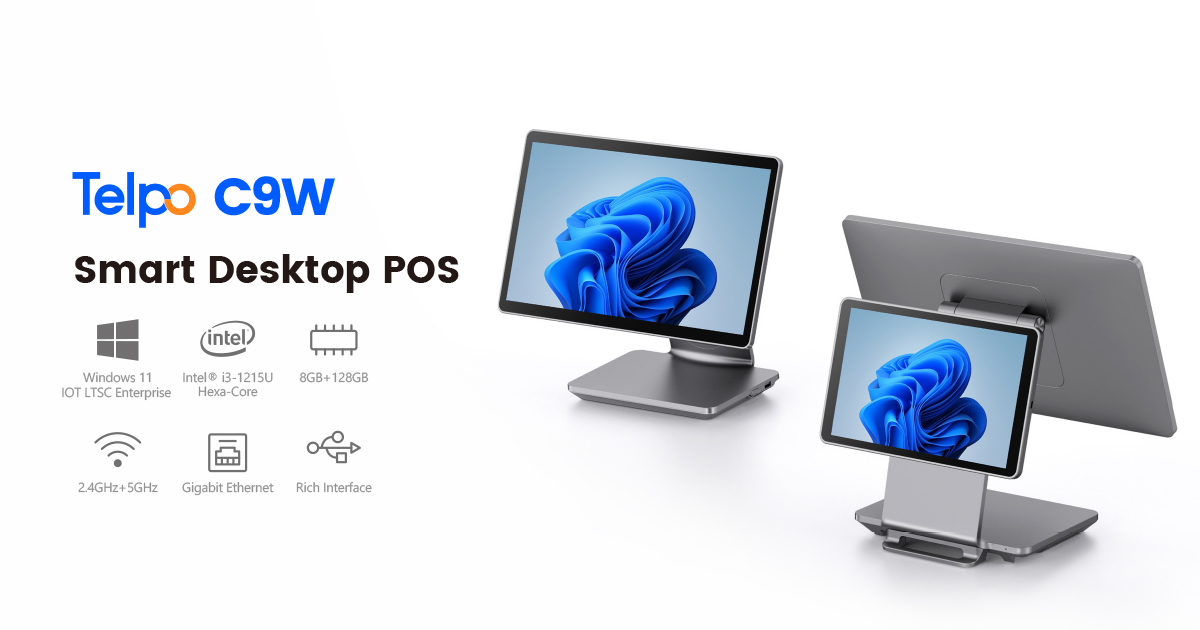
AI capability is only useful when it ships on a terminal that can also take payment. The C9 family integrates under-display NFC that is SoftPOS-compatible, Pogo Pin modular expansion for card reader modules, fingerprint authentication for device wake and employee login, and configurable dual-screen layouts (15.6-inch single, 15.6+10.1-inch or 15.6+15.6-inch). The C9PD adds a built-in 80 mm Seiko thermal printer at 250 mm/s with auto-cutter. Where a store already runs Windows-based POS software, the C9W pairs Intel i3 (standard) or i5 (optional) processors with up to 10 cores and 4.6 GHz Turbo plus six USB ports - and the same housing can be supplied with Rockchip or Qualcomm Android instead.
On the software side, TelpoOS 2.0 exposes 101 features and 144 APIs for customer-side development, alongside API and SDK documentation, remote diagnostics and Telpo MDM for fleet monitoring.
Why validation and certification belong in the same evaluation
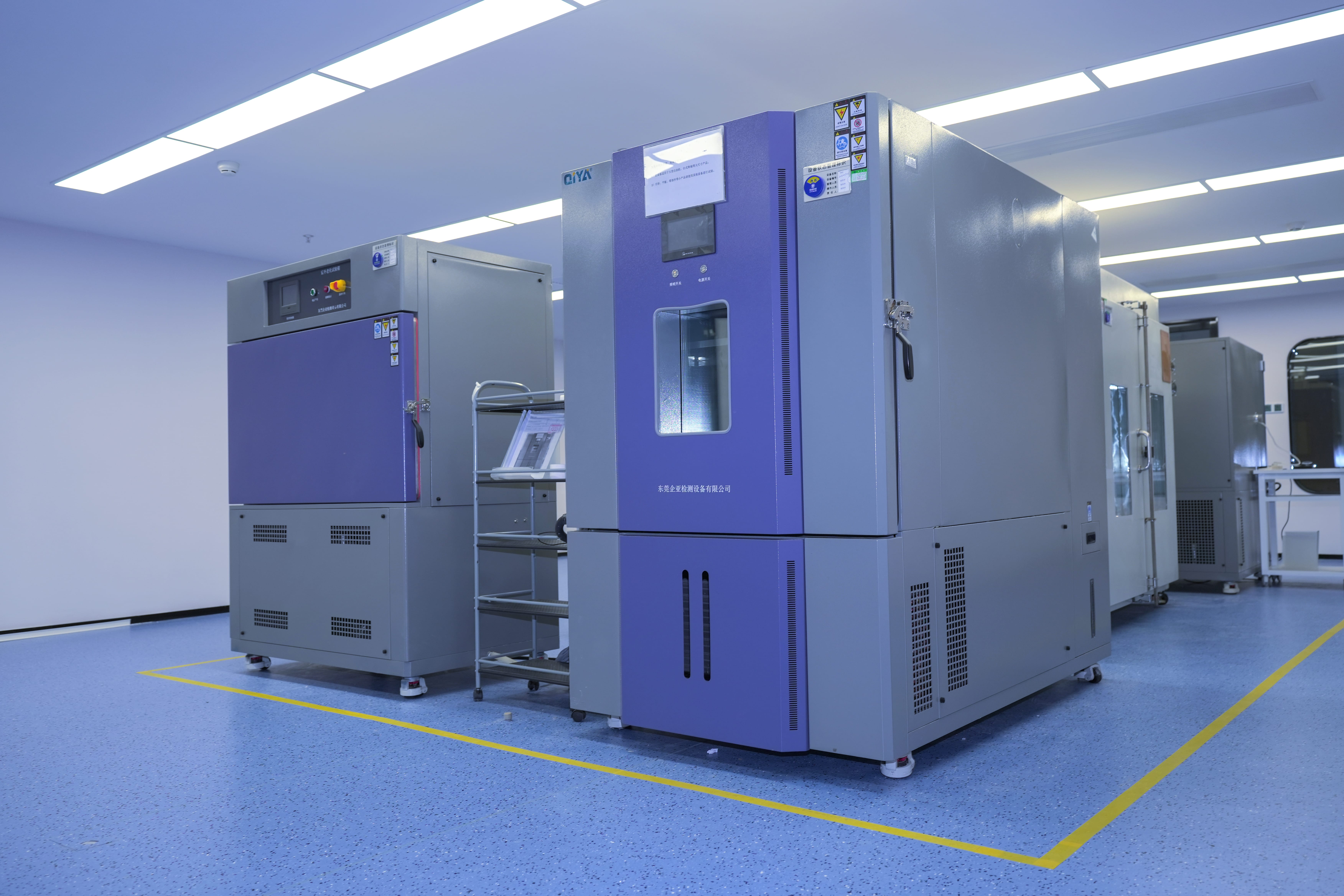
An AI-adjacent specification is only credible if the hardware behind it has been tested. Telpo operates an approximately 900 sqm CNAS-accredited laboratory covering 12 testing zones, including an OTA darkroom, an EMC chamber and a climate lab, inside a manufacturing site of approximately 45,000 sqm. Production quality control combines ISO 9001 with 100% functional test, plus OTA, EMC and climate validation on the ODM path.
For compliance, buyers should request certificate detail rather than a certificate badge. Representative examples from the current set: the K20 self-ordering kiosk holds CE certification issued by MiCOM Labs under EN 55032:2015 (certificate LC-A3148-EU U / 25 Nov 2025 5 / Rev A); the P9 POS terminal holds CE EMC attestation issued by Bay Area Compliance Laboratories Corporation under EMC Directive 2014/30/EU with EN 55032, EN 55035, EN 61000-3-2 and EN 61000-3-3 series; the TPS900 smart payment POS holds EU Type Examination under RED 2014/53/EU and WEEE Directive 2012/19/EU; and the K8, K8M and K10 self-service kiosks hold BIS registration for India (REGISTRATION/CRS-2022-0516/R-41221104). On the payment path, the P9 financial version holds PCI PTS POI V6.x certification (4-40460) together with EMV Contact L1 (19271 0325 100 10a 10a BCTS) and EMV Contact L2 (2-05601-1-1C-BCTS-0625-4.4c) approval.
A Step-by-Step Selection Framework
- Define the workload before the hardware. List the on-device tasks you actually intend to run - visual loss prevention, customer analytics, smart checkout recognition, facial recognition for membership, or none of these. A deployment with no local image classification should not be specified around TOPS.
- Size the processor cores against the application stack. Count the concurrent processes: checkout application, camera pipeline, inference runtime, printer and scanner drivers, network sync and a management agent. Where a customer-facing screen also renders promotions, an octa-core platform such as the C9 gives materially more headroom than a 6-core design.
- Decide whether you need TOPS at all. If recognition must keep working when connectivity drops, or if the per-event latency budget cannot absorb a network round trip, specify on-chip AI. A platform in the 6-12 TOPS range runs recognition locally; a 6-core platform without on-chip AI does not.
- Match memory and storage to the model and the application. Choose 4+64 GB or 8+128 GB on the C9 according to how many applications run simultaneously and how large the on-device model and image library are. Treat 2+16 GB class configurations as entry-level.
- Confirm display, payment and peripheral configuration. Check the dual-screen layout, under-display NFC/SoftPOS support, whether the printer is built in (C9PD) or external (C9, C9W), and whether Pogo Pin expansion or a VESA mount is required.
- Verify certification for every market you ship to. CE documentation for the EU, PCI PTS and EMV approval for the payment kernel, BIS for India, and the applicable scheme approvals. Confirm the certificate reference, the issuing body and the covered model - certification applies to specific models and firmware versions.
- Validate on a sample, then plan volume. Standard models can be sampled individually. Mass-production orders typically start at 500-1,000 units, adjusted per project complexity, with lead time of 30 days or more subject to negotiation. Full-chain ODM programmes run longer (motherboard 20 working days, structural 10 working days, full machine 45 working days minimum, standard ODM cycle 4-6 months), and software development projects run 2-3 months at an MOQ of 3,000 units.
Use Cases: Where On-Device AI Pays Off
Supermarket and bakery self-checkout
Bakery, deli and fresh-food sections are the classic trigger for visual AI because many items carry no barcode. In a bakery deployment, the Telpo C50 uses its 12 TOPS on-device AI to recognise items placed on the counter: the customer places goods, the terminal identifies them automatically, and payment completes in one step. Reported results from that deployment include 99.8% recognition across the bakery category, checkout efficiency improved by more than 60%, and a reduced requirement for dedicated cashiers, with the hardware rated for 24/7 high-frequency operation.
Compact convenience stores
Where counter space is the binding constraint and no on-device vision workload is planned, a compact dual-screen terminal is the more economical specification. The Telpo M8 pairs an 8-inch main display with a 3.27-inch customer display in mirror or split mode, runs Android 12 on a quad-core 2.0 GHz processor, supports NFC/SoftPOS and QR payment, and is GMS-certified with a tax module path for fiscal markets.
Chain supermarket and department store lanes
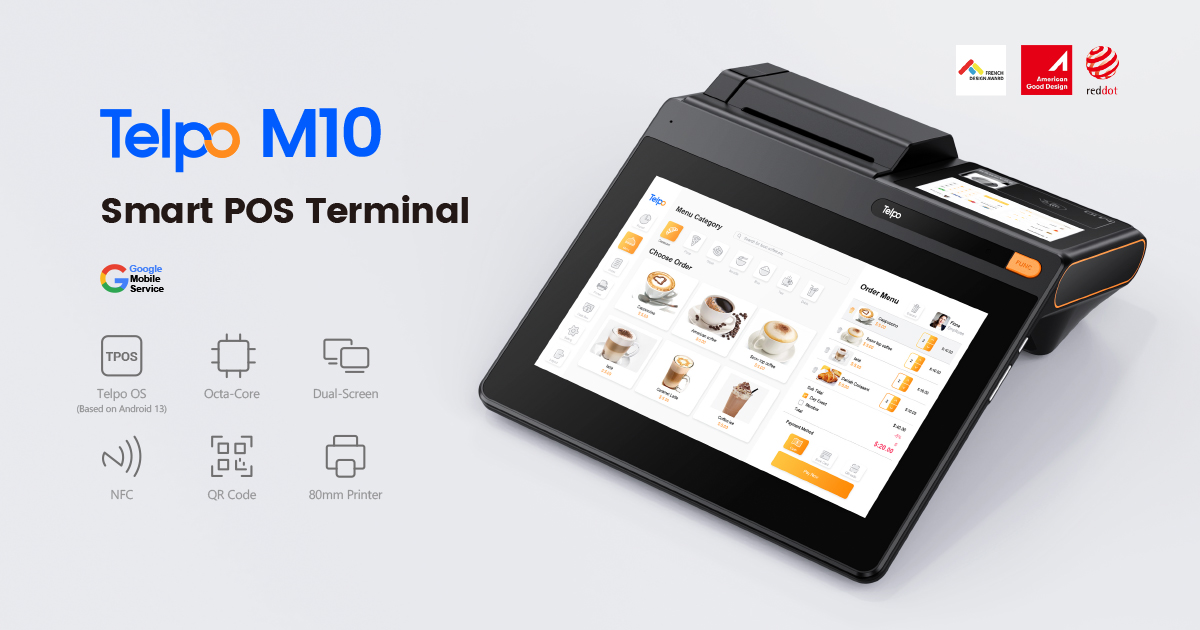
Multi-lane rollouts add a fleet dimension. The C9, C9PD and M10 platforms support ODM/OEM branding, multi-language receipt printing and Telpo MDM remote fleet management, which is what makes a standardised configuration across hundreds of lanes practical. Dual-screen models also let the customer-facing display carry promotions while the transaction runs on the main screen.
Self-service kiosks
Kiosk formats carry the same processing question at a larger screen size. The K8M self-checkout kiosk runs Android or Windows on a 21.5-inch 10-point touchscreen with an 80 mm printer up to 220 mm/s and optional barcode scanning rated at 0.2 seconds; the K20 self-ordering kiosk uses a 27-inch display at a 1.77 m humanised height with an octa-core processor up to 2.2 GHz. In a large-format retail deployment, Telpo K10 self-service kiosks handled transaction volumes comparable to traditional manned checkouts while freeing staff for service and inventory roles, and the compact 15.6-inch, 4.29 kg form factor released counter and floor space for merchandise.
Cafes, restaurants and multi-app counters
Full-service and chain F&B deployments run the checkout application, loyalty, kitchen order routing and - increasingly - a customer-facing promotional screen on one device. That is the workload where the core-count gap between an 8-core platform and a 6-core platform becomes visible, and where an 8+128 GB configuration avoids contention between the POS application and the analytics layer.
Event and venue SoftPOS
In a stadium deployment in Germany, Telpo M8 terminals running a SoftPOS solution processed contactless card transactions in under two seconds per tap, with one smart POS terminal replacing a separate terminal, scanner and printer in a single footprint - a useful reference point for buyers weighing how much compute a mobile lane actually needs.
Windows-based retail environments
Not every AI-adjacent rollout is Android. Stores running an existing Windows POS software stack can specify the C9W with Intel i3 or i5 processors and six USB ports, then add a modular card reader through Pogo Pin expansion - keeping the existing software investment while leaving room for analytics applications on the same counter.
Side-by-Side Comparison
The first table compares the platforms discussed in this guide on the specifications that determine whether visual AI runs locally.
| Platform | Processor cores | On-chip AI | Memory / storage options | What it means at the lane |
|---|---|---|---|---|
| Telpo C9 | 8-core (octa-core 2.2 GHz, Android 14) | Yes - 6-12 TOPS on-chip AI | 4+64 GB or 8+128 GB (up to 8 GB RAM + 128 GB ROM) | Runs visual recognition locally; roughly 33% more cores than a 6-core platform; avoids the network round trip that costs 50-200 ms per event |
| Sunmi D3 PRO | 6-core | No on-chip AI | Not stated in the compared specification set | Suited to standard Android POS workloads; visual recognition depends on cloud processing or external compute |
| Swan-2 | Not stated in the compared specification set | Not stated in the compared specification set | 2+16 GB or 4+64 GB | Entry-level memory and storage; limited headroom for on-device models and simultaneous applications |
Only the specifications listed above are compared. A blank comparison point means no comparable figure was available for this review - not that the capability is absent.
The second table maps the Telpo platform range to typical AI and multi-app checkout requirements.
| Telpo model | Processor and on-chip AI | AI-relevant capability | Fits when |
|---|---|---|---|
| C50 | Octa-core 2.7 GHz, Adreno 642L GPU, 12 TOPS | 0.1 s recognition, 99.8% accuracy, barcoded and barcode-free items, optional 15 kg / 2 g scale | Self-checkout in bakery, grocery, canteen or grab-and-go formats |
| C9 / C9PD | Octa-core 2.2 GHz, Android 14, 6-12 TOPS | Up to 8 GB RAM + 128 GB ROM; Pogo Pin card reader; under-display SoftPOS NFC; 250 mm/s built-in printer (C9PD) | Multi-app countertop checkout with local inference, loss prevention or customer analytics |
| C9 VESA | Octa-core 2.2 GHz, Android 14 | 100 x 100 mm VESA mounting; built-in 8 MP under-display camera | Space-constrained counters or wall-mounted stations |
| M10 | Qualcomm octa-core 2.0 GHz, Android 13, GMS | 10-inch + 4-inch dual display; 200 mm/s Seiko printer; fiscal module space | Loyalty- and promotion-driven countertop POS with fiscal requirements |
| M8 | Quad-core 2.0 GHz, Android 12, GMS | 8-inch + 3.27-inch dual display; NFC/SoftPOS; tax module | Compact stores with no on-device visual AI requirement |
| K8M / K20 | K20: octa-core up to 2.2 GHz; K8M: Android or Windows | 21.5-inch (K8M) or 27-inch (K20) display; barcode scanning as fast as 0.2 s (K8M) | Self-service kiosk formats at higher display sizes |
Frequently Asked Questions
What should buyers verify on a CE-certified POS terminal manufacturer?
CE marking is not a single document, so ask which directive, which harmonised standards and which laboratory issued it. Worked examples from the current Telpo certificate set: the K20 self-ordering kiosk holds CE certification issued by MiCOM Labs under EN 55032:2015 (certificate LC-A3148-EU U / 25 Nov 2025 5 / Rev A); the P9 POS terminal holds CE EMC attestation issued by Bay Area Compliance Laboratories Corporation under EMC Directive 2014/30/EU with EN 55032, EN 55035, EN 61000-3-2 and EN 61000-3-3 series; the TPS900 smart payment POS holds EU Type Examination under RED 2014/53/EU and WEEE Directive 2012/19/EU. For payment acceptance, CE is not sufficient on its own - PCI PTS and EMV approval are separate requirements, and the P9 financial version holds PCI PTS POI V6.x certification (4-40460) alongside EMV Contact L1 and L2 approval.
How many cores and how much on-chip AI does a POS terminal need for visual AI?
Cores and TOPS answer different questions. Cores determine how many workloads run at once - the checkout application, camera capture, the inference pipeline, printer and scanner drivers, network synchronisation and a management agent. TOPS determine whether inference runs locally at all. A platform with 6-12 TOPS of on-chip AI, such as the Telpo C9, runs recognition on the device and avoids the network round trip that cloud processing adds, which is where a 50-200 ms difference per event comes from. A 6-core platform without on-chip AI, such as the Sunmi D3 PRO, remains suitable for standard Android POS workloads, but visual recognition there depends on cloud processing or external compute. Accuracy is a separate question again: the C50 reports 0.1-second recognition at 99.8% accuracy with 12 TOPS, a result that also depends on the trained model, camera module and lighting.
How is pricing for an on-device AI POS terminal determined?
Pricing depends on the specific parameters and configuration rather than on a fixed list price. The variables that move cost include the processor and whether it includes on-chip AI, the memory and storage configuration (4+64 GB versus 8+128 GB on the C9), the display combination (15.6-inch single screen, 15.6+10.1-inch or 15.6+15.6-inch), whether the 80 mm thermal printer is built in (C9PD) or external (C9, C9W), the payment peripherals and any ODM customisation. Because these choices change the bill of materials, current pricing is quoted by the sales team against a defined configuration.
Can we validate on-device AI performance before committing to a full rollout?
Yes. Standard models can be sampled individually, and branding-only customisation of standard hardware ships in 3-7 working days for stock orders and 15-25 working days for bulk standard orders. A validation plan should test the actual product catalogue and the lighting conditions of the store rather than a demo set. On the manufacturing side, Telpo operates an approximately 900 sqm CNAS-accredited laboratory across 12 testing zones - including an OTA darkroom, an EMC chamber and a climate lab - and applies ISO 9001 plus 100% functional test as standard production quality control.
What lead time and MOQ should we expect for an AI POS terminal order?
Mass-production orders typically start at 500-1,000 units, adjusted per project complexity, with a lead time of 30 days or more subject to negotiation. Full-chain ODM programmes run longer: 20 working days for a motherboard, 10 working days for structural work, a minimum of 45 working days for a full machine, and a standard ODM cycle of 4-6 months, with urgent projects negotiable. Software and application development projects typically run 2-3 months at an MOQ of 3,000 units. To confirm a configuration and obtain current pricing, contact Telpo at business@telpo.com.
Conclusion
Specifying an on-device AI POS terminal is a three-part decision, and each part maps to a different specification. Cores decide how much runs concurrently. TOPS decide whether recognition runs locally - the difference between an 8-core platform with 6-12 TOPS of on-chip AI and a 6-core platform without it, a gap of roughly 33% in core count and of 50-200 ms per recognition event against cloud processing. Memory and storage decide whether the workload still fits six months after installation.
The rule that follows is straightforward: start from the workload, then buy only the specification the workload requires. Standard checkout does not need on-chip AI; visual loss prevention, customer analytics and smart checkout do. Confirm the display, payment and certification configuration for each target market, validate recognition accuracy on your own catalogue with a sample, and then plan volume against MOQ and lead time.
Next step: define the configuration
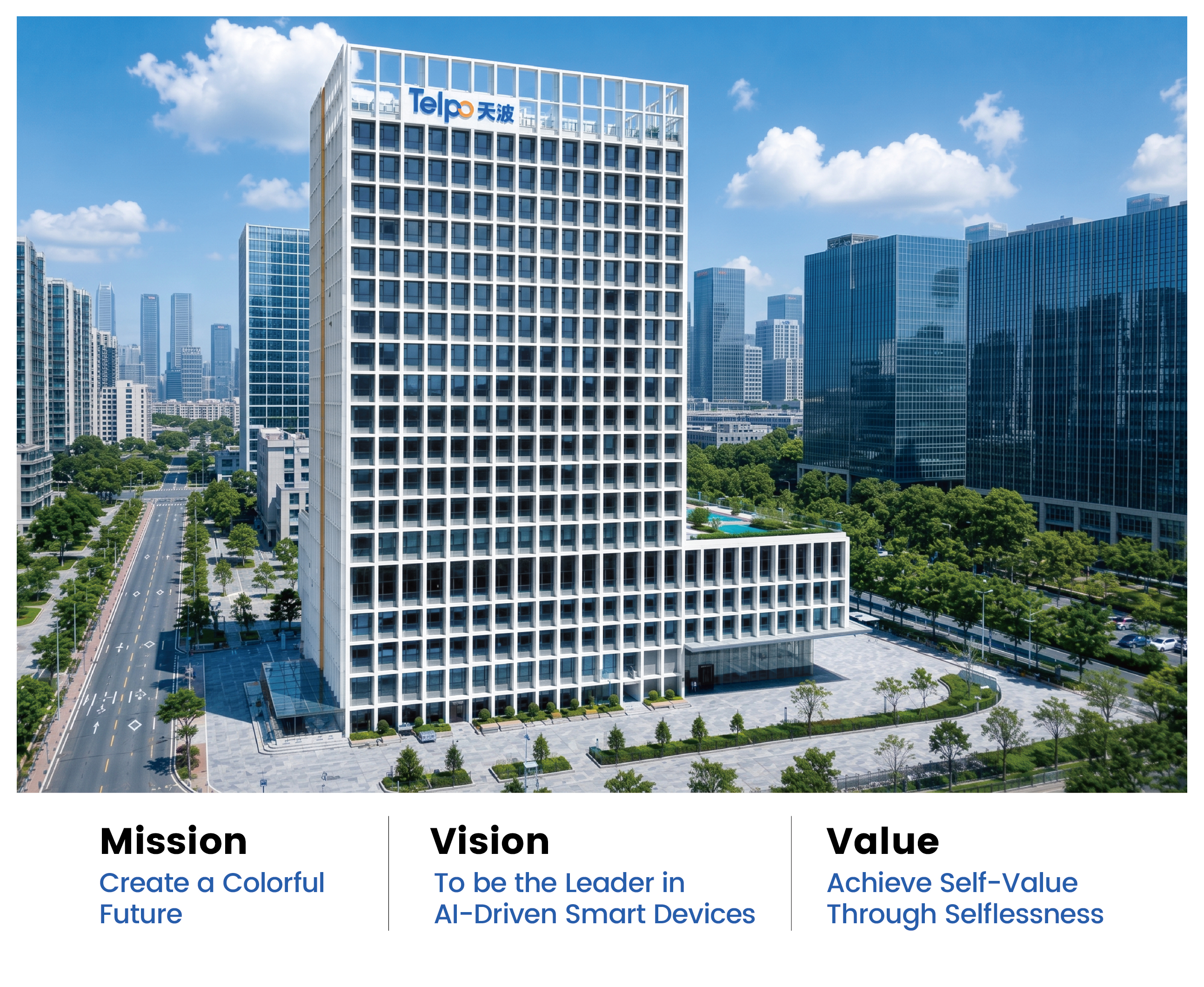
Telpo Technology Co., Ltd. has designed and manufactured smart terminals and POS hardware since 1999 in Foshan, China, serving customers in more than 100 countries with an R&D team of over 200 engineers, an approximately 45,000 sqm manufacturing site, an annual output of 2,000,000 units and an approximately 900 sqm CNAS-accredited laboratory. For current pricing on an on-device AI POS configuration, request a quotation or a sample against your own product catalogue.
Email: business@telpo.com · Tel: +86 757 86337898-324 · WhatsApp: +86 18603080594 · Website: www.telpo.com.cn
Address: No.15, Juyuan South Road, Guicheng Street, Nanhai District, Foshan City, Guangdong, China
Download the full product catalogue: Telpo Products Brochure - Payment & Retail (V4)
Have Questions or Need More Details?
Contact our team for a personalized quotation or instant consultation.
Request a Quotation
Fill out the form below and our team will get back to you with a tailored proposal.
WhatsApp Direct Chat
Prefer to chat in real-time? Message us on WhatsApp for instant assistance & quick answers.
- Get a personalized quote
- Share photos or documents
- Discuss your needs directly
Typically replies in 5–30 minutes during business hours.