
What Is a Smart Payment Terminal? Definitions and Industry Applications
A smart payment terminal is an open-OS payment device that accepts card and digital payments, runs industry applications, captures data through scanners and sensors, and connects to back-office systems — not just a card reader. The category is best understood through a concrete implementation. Telpo Technology Co., Ltd., founded in 1999 and headquartered in Foshan, China, builds the P9 series on an Android platform with an octa-core processor, optional 1D/2D barcode scanning, and a removable battery delivering 12–16 hours of operation with the standard 3500 mAh pack or 17–23 hours with the optional 5000 mAh upgrade.
That combination — payment acceptance, application processing, data capture and connectivity in one handheld or countertop device — is what "smart" means in 2026. This article sets out the definition, explains why the distinction from legacy devices matters to buyers, and maps the smart terminal to the industries that now depend on it.
Why the definition matters more now than it did five years ago
The line between a payment terminal and a general-purpose computing device has been eroding for several years. In the early 2010s a payment terminal was a fixed-function device: it read a card, transmitted an authorization request, printed a slip. Software ran on it only in the narrow sense of a payment kernel.
Three shifts broke that model.
- Android became the default operating system for new smart terminals. Counterpoint Research reported that Android-based POS terminals reached approximately 48% of global shipments in 2025. Retailers, restaurants and transit operators increasingly expect to deploy their own applications on the terminal rather than rent functionality from a closed payment stack.
- Merchants wanted the terminal to do more than one job. A modern handheld or countertop device is expected to act as a point of sale, an inventory tool, a queue-management device and a customer-facing display at the same time. That requires an application layer and a processor capable of running it concurrently.
- Payment methods fragmented. QR codes, mobile wallets, NFC contactless, e-wallets and in-app payments now sit alongside EMV chip and magnetic stripe. A terminal that only handles cards is increasingly a partial solution.
Buyers evaluating terminals in 2026 are therefore not choosing between two versions of the same product. They are choosing between a closed-function device and a small computing platform with a payment function — a distinction that shows up in procurement specifications, software roadmaps and total cost of ownership.
Industry background: how the smart terminal market is structured
Several data points frame the segment as it enters the 2026 procurement cycle.
Fortune Business Insights valued the global point-of-sale market at approximately USD 38.57 billion in 2025, a figure that spans hardware, software and services across fixed, mobile and mPOS terminals. Counterpoint Research's shipment data shows that Android terminals accounted for roughly 48% of global shipments in 2025 — a share that confirms Android is no longer an alternative platform but a mainstream one. Counterpoint also reported that the average selling price of commercial-grade smart POS hardware ranged from USD 120 to USD 850 in 2025, which helps buyers set realistic budget expectations across form factors.
Regulatory pressure reinforces the shift. Germany's KassenSichV regulation requires a certified technical security system (TSS) for all cash registers — a requirement that effectively forces fiscal compliance to be a hardware and firmware design decision, not a software afterthought. Fiscalisation regimes across Europe follow a similar pattern, each with country-specific technical specifications.
Why this matters for a definition article: the smart terminal is not simply a faster card reader. It is a device class that must satisfy payment security, operating-system openness, data capture and regional fiscal compliance at once. Definitions that ignore any one of those four pillars tend to under-specify what buyers actually need.
The four defining characteristics of a smart payment terminal
A device qualifies as a smart payment terminal when it satisfies all four of the following characteristics. Missing any one pushes the device back toward legacy territory.
1. An open operating system with an application layer
The terminal runs a general-purpose OS — most commonly Android or Linux, with Windows also used in countertop deployments — and allows third-party or customer-built applications to be installed. Telpo's P9 financial version runs on an Android platform, and the P9 PDA financial version carries the same application layer into a handheld form factor.
2. Compute capability sufficient for concurrent workloads
The processor must handle payment kernels, an application UI, connectivity stacks and data capture without contention. The P9 series uses an octa-core processor with up to 4GB RAM and 64GB ROM, which is sized for running a point-of-sale application alongside scanning and printing tasks rather than sequentially.
3. Multi-method payment acceptance
A genuinely smart terminal accepts magnetic stripe cards, smart EMV chip cards, NFC contactless payments, QR codes and digital wallets. The P9 financial version covers all five of those methods, and the P9 PDA financial version adds e-wallet integration and under-display NFC payment.
4. Data capture and connectivity beyond payment
The device captures information that feeds an inventory, loyalty or operations system — typically through an optional 1D/2D barcode scanner, camera or biometric sensor — and it connects over cellular, Wi-Fi and Bluetooth. The P9 PDA financial version offers an optional professional 1D/2D scanning attachment for SKU and package capture; the standard P9 financial version supports 4G/3G/2G cellular, Wi-Fi, Bluetooth, eSIM and dual SIM cards with built-in GPS.
The P9 series as a reference implementation
It helps to look at a named device family to see how the four characteristics translate into physical specifications. The P9 series from Telpo Technology Co., Ltd. spans a handheld financial terminal and a PDA variant, both built on the same Android platform.
| Specification | P9 Financial Version | P9 PDA Financial Version |
|---|---|---|
| Display | 6.5" HD IPS, 83.4% screen-to-body ratio, 1400:1 contrast | 6.5" HD IPS, 83.3% screen-to-body ratio, 1750:1 contrast |
| Processor / memory | Octa-core, up to 4GB RAM + 64GB ROM | Octa-core with enhanced storage |
| Payment methods | Magnetic stripe, smart card, NFC contactless, QR code, digital wallets | NFC (under-display), smart card, QR code, e-wallet |
| Printer | 58 mm thermal, 80 mm/s, dust-proof design | Not specified in this configuration |
| Battery | Removable; 12–16 h (3500 mAh) or 17–23 h (5000 mAh upgrade) | Up to 12 h continuous operation with deep-sleep power management |
| Form factor | 21.3 mm ultra-thin handheld | 16.4 mm ultra-thin handheld |
| Connectivity | 4G/3G/2G, Wi-Fi, Bluetooth, GPS, eSIM, dual SIM, SAM module | eSIM multi-network support |
| Options | PDA version, fingerprint version, customer-display version with 2-inch IPS screen | Optional 1D/2D barcode scanning attachment |
| Service design | — | Single-screw construction for field repair in minutes |
Two details in that table are worth pausing on because they illustrate what "smart" means in practice. The single-screw construction of the P9 PDA version is a serviceability decision — it lets field technicians open the unit and replace parts quickly, which matters when a terminal is part of a distributed fleet. The optional fingerprint version of the P9 financial unit is a capability decision — biometric authentication is added at the hardware level to support KYC and identity-verification scenarios, not bolted on through an accessory.
Certification stack for the P9 series
Payment terminals are only deployable when their security and interoperability certifications are current. The P9 series holds approvals from EMVCo, Mastercard and Discover. Specifically:
- EMVCo Contact Terminal Level 1 — P9 contact interface module P9-ICCR V1.4, issued 4 November 2025.
- EMVCo Contact Terminal Level 2 — P9 POS terminal running OS TPOS V2.3 with EMV application kernel TP-EMV V2.4, issued 19 May 2025.
- EMV Contact Level 2 — P9 POS terminal certified under EMV Integrated Circuit Card Specifications Version 4.4, issued 23 June 2025.
- Mastercard — P9 fully integrated contactless POS terminal, approval issued 25 July 2025.
- Discover D-PAS — P9 POS terminal, hardware V1.0.0 and firmware V2.1, approved 21 October 2025.
That certification stack is what allows a buyer to deploy the same device across multiple card schemes and regions without re-qualifying the hardware per market.
Step-by-step: how a smart terminal goes beyond a card reader
The functional gap between a legacy terminal and a smart terminal becomes clearest when you walk through a single transaction on each device type.
- Payment capture. On a legacy device, the customer taps, inserts or swipes, and the terminal performs one action. On a smart terminal such as the P9 financial version, the same tap is one of several accepted methods — the device also reads QR codes, digital wallets, chip cards and magnetic stripe, all through the same interface.
- Application context. The legacy device sends a payment request and nothing more. The smart terminal is running an application: a POS application in a retail store, an inventory application in a warehouse, a ticketing application at a transit gate. The P9 PDA financial version, for example, pairs payment with optional 1D/2D scanning so the same device captures the SKU and the payment in one workflow.
- Data capture and enrichment. The smart terminal can attach item-level data, loyalty identifiers or job-ticket references to the transaction. That is a direct consequence of the application layer and the scanning module, not a feature of the payment kernel.
- Connectivity routing. Legacy devices typically rely on a single network path — often a fixed telephone line or Ethernet. A smart terminal routes over 4G, Wi-Fi or Bluetooth, with eSIM and dual SIM support on the P9 financial version providing fallback paths during network interruptions.
- Receipt and next action. The smart terminal prints via a 58 mm thermal printer at 80 mm/s on the P9 financial version, but it also logs the transaction to the application layer for reconciliation, loyalty accrual or inventory deduction.
The consequence is that the smart terminal becomes the data source for retail operations, not just the payment tool. That is the difference that procurement teams should be testing when they evaluate devices.
Retail and field applications where smart terminals are already deployed
Smart terminals are in production across several industries, and the deployment patterns are informative because they show which capabilities buyers actually pay for.
Retail point of sale
Supermarket and convenience-store deployments use smart terminals both as manned checkouts and as components of self-service systems. In one large-format retail deployment of more than 100 units using the Telpo K10, the compact 15.6-inch, 4.29 kg form factor freed floor space for product displays, and each unit handled transaction volumes comparable to traditional manned checkouts with lower per-transaction costs. Labor was redeployed to customer-service roles rather than reduced.
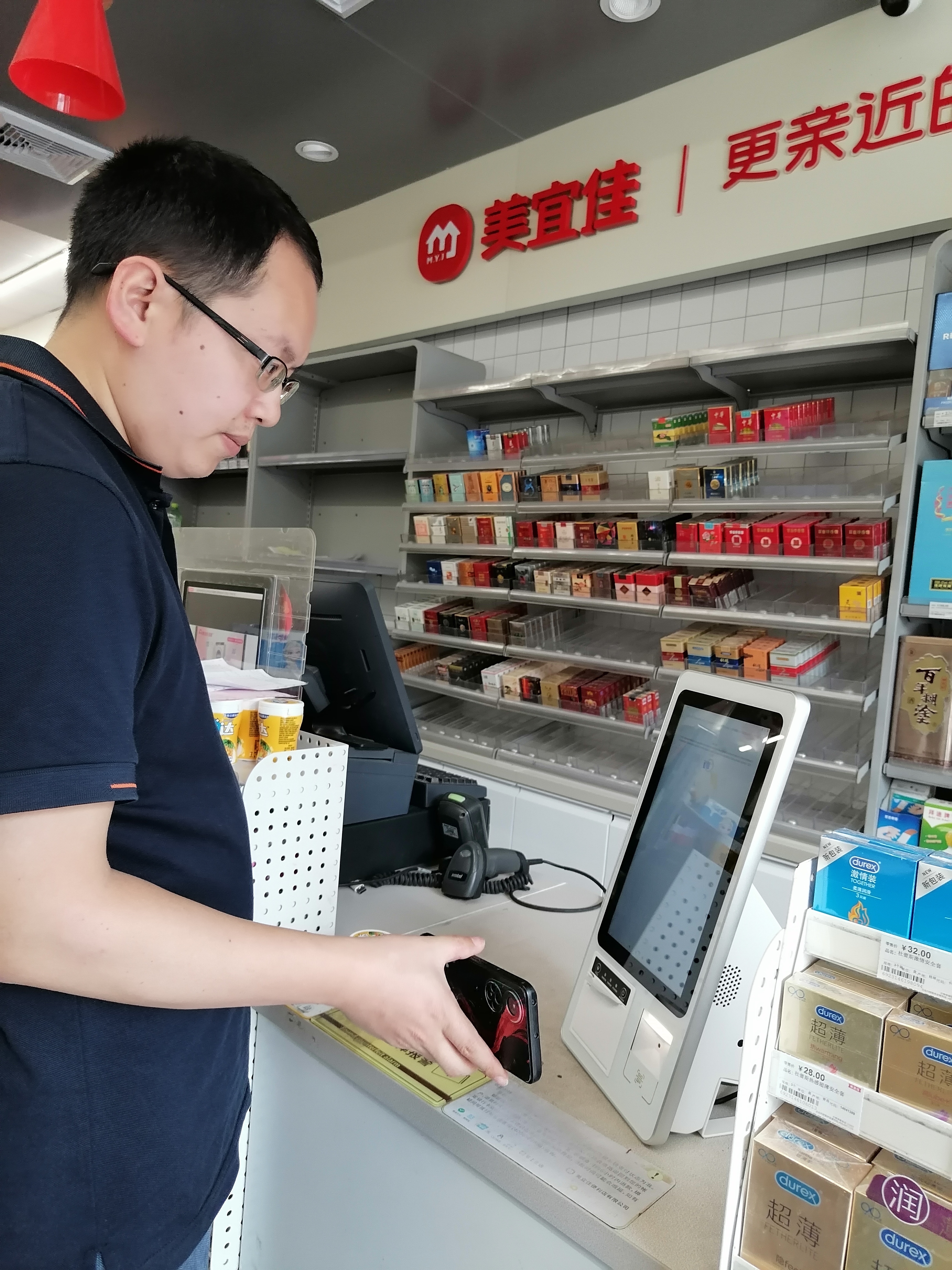
A convenience-store chain deployment across more than 40,000 stores used the K106 model with a "one-screen-three-swipes" interaction pattern (scan, card, face) and built-in voice pickup. Transaction steps dropped from 8 to 4, average transaction time fell by 35%, and each unit handled a daily peak of 600 orders during 24-hour unattended operation.
Bakery and fresh-food AI checkout
A general retailer running a bakery-section AI upgrade deployed more than 100 units with visual product recognition. The system achieved a 99.8% recognition rate and delivered a 60%+ increase in checkout efficiency while reducing labor costs and eliminating pricing errors.
Restaurant and quick-service deployments
In a QSR rollout of more than 100 units, self-ordering terminals with touchscreen input, multi-language UI, receipt printing and audio accessibility mode reduced order queues and upsell friction by placing menu control directly with customers. The deployment ran for over two years.
Transit, ticketing and events
Public-transport ticketing is one of the strongest proving grounds for smart terminals because it combines payment, validation, durability and connectivity requirements in a single device.
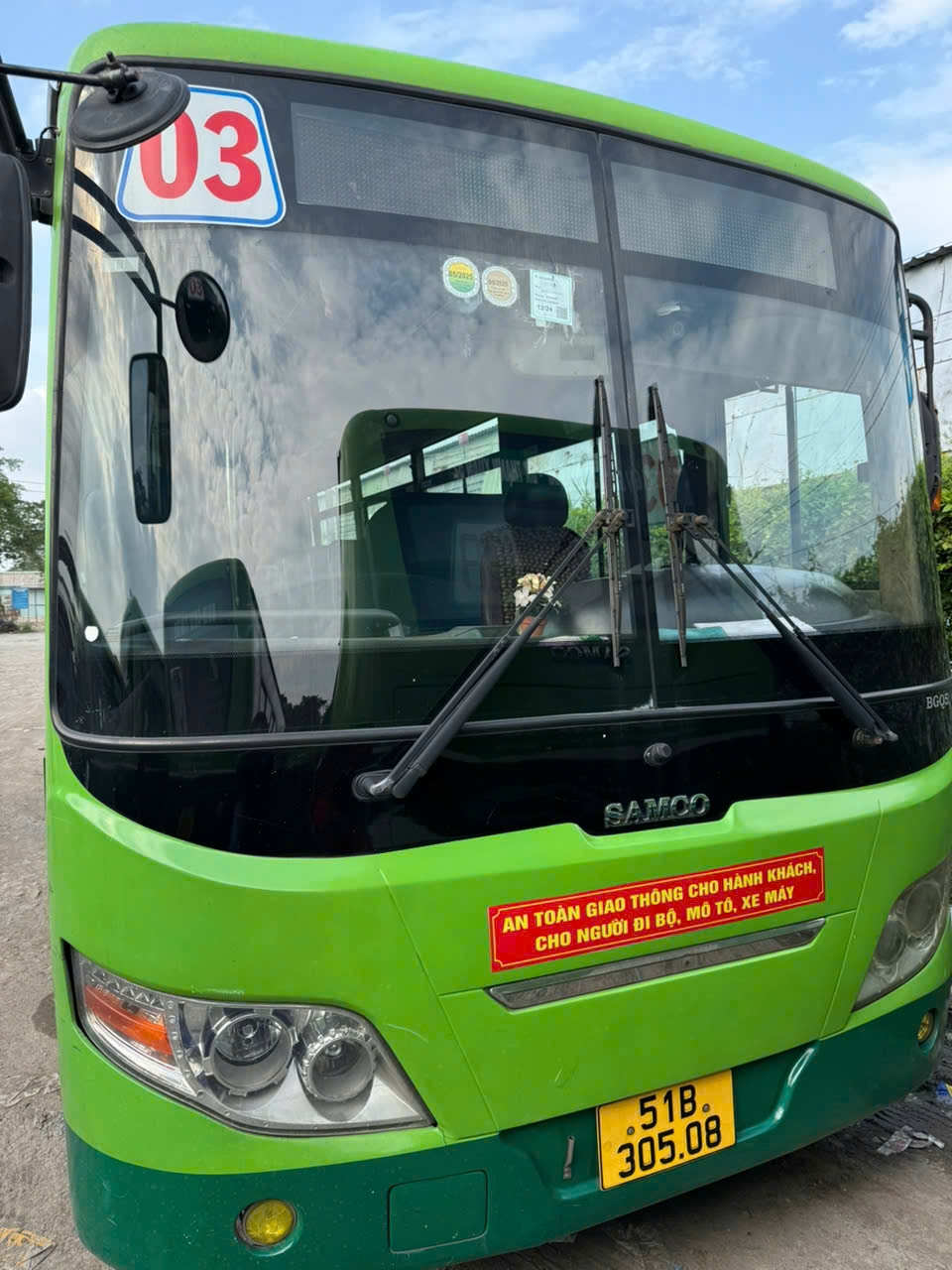
A Vietnam deployment of more than 2,000 units across multiple transit networks reduced single ticket verification time from 5 seconds to 1 second, cut ticketing operation costs by 30% and expanded the target user base by 45%, with peak transaction volume reaching 500,000 per day. The full rollout was completed in 3 months. A separate deployment of more than 1,000 units for bus fare collection in Argentina added SUBE card, contactless bank card and mobile payment acceptance, supported by IP65 and IK08 rugged design and a high-speed multi-format scanner.
SoftPOS and event payment
In a German event deployment of more than 200 units, SoftPOS-enabled terminals processed contactless card transactions in under two seconds. A single smart order POS replaced three separate devices — terminal, scanner and printer — in one compact footprint, which matters in high-density event environments where counter space is constrained.
Mobile ticketing and receipt printing
A public transport operator in Ethiopia deployed more than 100 units for mobile ticketing and receipt printing over a period of two years, using NFC contactless payment (SoftPOS-compatible), QR code scanning and mobile wallets, supported by a 7.6V/3500 mAh removable battery rated for 11.3 hours of continuous operation under maximum load.
Traditional EFTPOS vs. smart Android POS: a side-by-side comparison
The distinction between a legacy EFTPOS device and a modern Android POS terminal is not a matter of marketing terminology. It shows up across several structural dimensions, and buyers can use the table below as a decision checklist.
| Dimension | Traditional EFTPOS terminal | Smart Android POS (P9 series reference) |
|---|---|---|
| Operating system | Closed firmware; capability fixed at manufacture | Android platform with application layer; customer or third-party apps can be installed |
| Processor | Sized for a single payment task | Octa-core processor with up to 4GB RAM and 64GB ROM for concurrent workloads |
| Payment acceptance | Magnetic stripe and EMV chip typically; contactless optional | Magnetic stripe, smart card, NFC contactless, QR code and digital wallets on the standard P9 financial version |
| Data capture | Usually none beyond the payment kernel | Optional professional 1D/2D barcode scanning attachment on the P9 PDA financial version for SKU and package capture |
| Display | Small, low-resolution | 6.5" HD IPS with 83.4% screen-to-body ratio and 1400:1 contrast on the standard version |
| Battery / mobility | Often mains-powered or docked | Removable battery: 12–16 h with 3500 mAh, 17–23 h with optional 5000 mAh |
| Connectivity | Single network path (telephone line, Ethernet or basic Wi-Fi) | 4G/3G/2G, Wi-Fi, Bluetooth, GPS, eSIM, dual SIM and SAM security module |
| Serviceability | Vendor service typically required | Single-screw construction on the P9 PDA version enables field repair in minutes |
| Certification scope | Scheme-level payment approvals | EMVCo Contact L1 and L2, Mastercard and Discover approvals for the P9 series |
| Deployment footprint | Single-purpose payment station | Consolidates terminal, scanner and printer into one device in SoftPOS event deployments |
None of these dimensions is decisive on its own. The point is that a buyer specifying a smart terminal is effectively specifying a computing platform with a payment function — and that specification should match the application workload expected from the device.
How to evaluate a smart terminal against a legacy device
Buyers in the evaluation stage can work through a short set of questions to decide whether a device qualifies as genuinely smart or whether it is a legacy device with updated casing.
- Can the device run your application? Ask whether the OS is an open Android build, whether an SDK and API documentation are available, and whether device management can be handled remotely.
- Does the payment kernel cover your schemes? Confirm EMVCo and network-scheme approvals for the specific model and firmware revision you intend to deploy, not for the product family in general.
- Are fiscal and regional requirements covered? In Germany, KassenSichV requires a certified TSS; in other markets the requirement may be a local fiscal module or a certification mark. Check this before hardware qualification.
- Does the device match the workflow? Countertop deployments for retail and restaurant use cases typically favour a customer-facing display and a fast thermal printer. Field sales and inventory workflows typically favour a handheld form factor with barcode scanning and all-day battery.
- Is the service model realistic? A distributed fleet needs fast field repair. Features such as single-screw construction, remote diagnostics and device-management platforms reduce downtime costs far more than raw processor speed does.
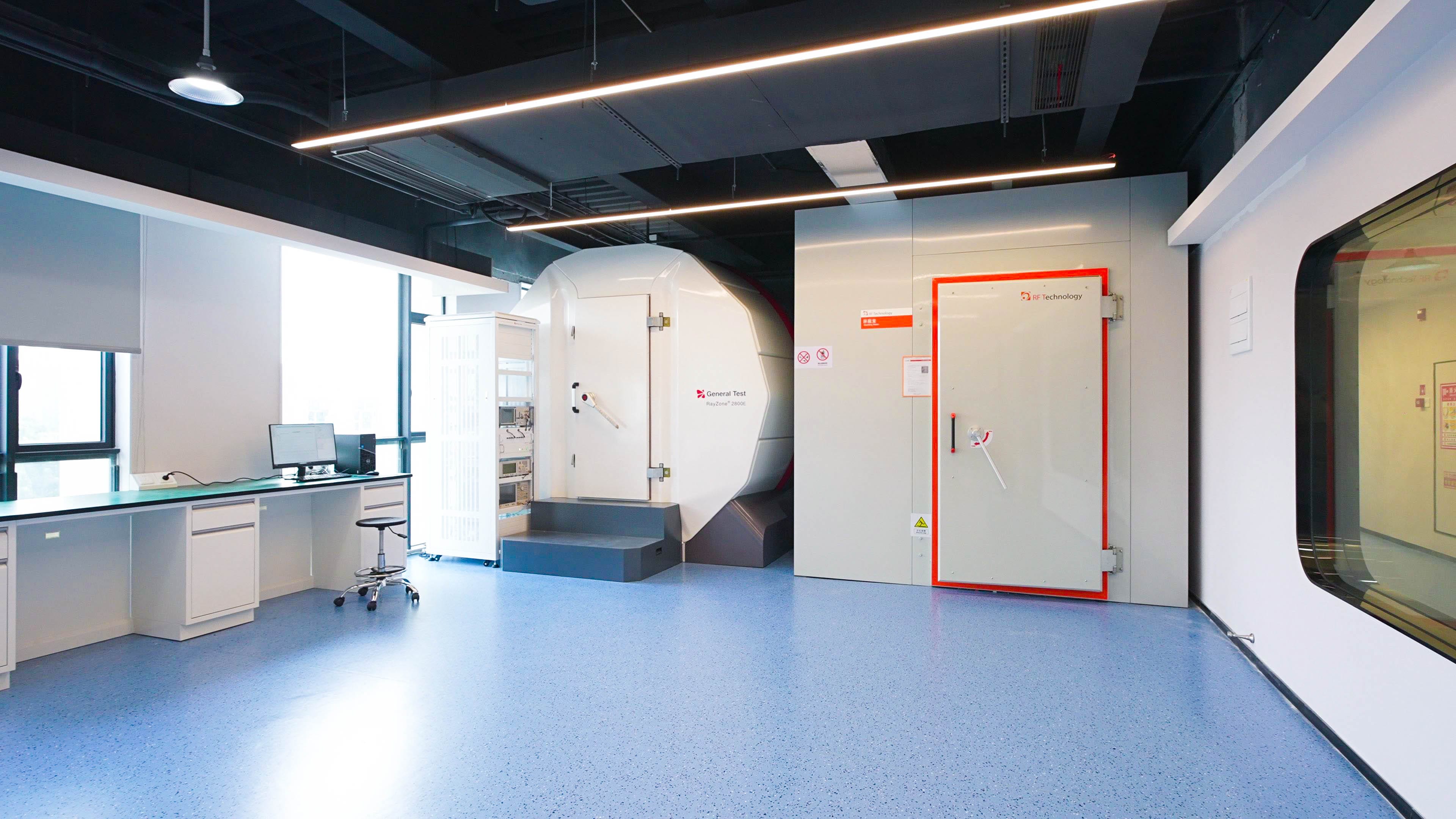
Buyers should also verify the supplier's production and quality framework. Telpo Technology Co., Ltd. operates an approximately 45,000 sqm facility that includes a 2025-upgraded CNAS laboratory covering around 900 sqm across 12 testing zones, including an OTA darkroom, an EMC chamber and a climate lab. Quality control combines ISO 9001 processes, the CNAS lab and 100% functional testing.
Frequently asked questions
What certifications does a smart payment terminal need?
A smart payment terminal typically carries EMVCo Contact Level 1 and Level 2 approvals, plus scheme approvals from the card networks it accepts. The P9 series holds EMVCo Contact Terminal Level 1 (P9-ICCR V1.4, issued 4 November 2025), EMVCo Contact Terminal Level 2 (P9 running OS TPOS V2.3 with kernel TP-EMV V2.4, issued 19 May 2025), EMV Contact Level 2 under EMV ICC Specifications Version 4.4 (23 June 2025), a Mastercard approval as a fully integrated contactless POS terminal (25 July 2025), and a Discover D-PAS approval (21 October 2025). For regional fiscal markets, additional local requirements apply — Germany's KassenSichV, for example, mandates a certified technical security system for all cash registers.
What can the P9 series do that a traditional POS terminal cannot?
The P9 financial version accepts magnetic stripe cards, smart EMV chip cards, NFC contactless payments, QR codes and digital wallets from a single device. It runs an Android application layer on an octa-core processor with up to 4GB RAM and 64GB ROM, so merchant applications and payment processes can run concurrently rather than sequentially. The PDA variant adds an optional professional 1D/2D barcode scanning attachment for SKU and package capture, and both variants support eSIM. A traditional EFTPOS terminal is typically limited to one or two payment methods, a closed firmware stack and a single connectivity path.
Who are the top POS terminal manufacturers in China?
China hosts a significant cluster of POS terminal manufacturers, and buyers evaluating suppliers typically screen on four verifiable criteria rather than on brand claims: current EMVCo and card-scheme approvals for the exact model being quoted; an in-house quality and test infrastructure; a documented production capacity and lead time; and a portfolio that covers the specific form factor the buyer needs. Telpo Technology Co., Ltd., founded in 1999 and headquartered in Foshan, is one such manufacturer — its portfolio spans EFTPOS, Android POS terminals, desktop POS, dual-screen cash registers, self-service kiosks, biometric payment terminals, ticket validation machines, fiscal POS and PDAs, and it operates an approximately 45,000 sqm facility with a CNAS-accredited laboratory. It exports to more than 100 countries across Asia, Africa, the Middle East, Europe, Latin America and North America.
What is the typical cost range for a smart POS terminal?
Counterpoint Research reported that the average selling price of commercial-grade smart POS hardware ranged from USD 120 to USD 850 in 2025. The range reflects differences in form factor, processor, display size, printer inclusion and certification scope rather than differences in quality alone. Buyers should map the price band to the specific capability set they require — for example, a handheld device with optional 1D/2D scanning and a 5000 mAh battery sits at a different point in the band than a compact countertop unit without a battery. Total cost of ownership also includes serviceability, certification coverage and the cost of replacing or maintaining devices across a fleet.
Can I request a sample before placing a batch order?
Yes — sampling is a standard step before batch procurement, and most manufacturers will provide sample units for standard models. Telpo Technology Co., Ltd. supports sample requests through its business contact at business@telpo.com, and the standard-model customization track allows samples to be delivered individually. For buyers evaluating a specific configuration, it is worth confirming at the sampling stage whether the quoted firmware revision and certification apply to the exact build you intend to deploy.
Conclusion
A smart payment terminal is defined by four capabilities working together: an open operating system, sufficient compute to run applications alongside payment processes, multi-method payment acceptance, and data capture plus connectivity that feed an operational system. A device that lacks any one of these is a card reader with a modern casing, not a smart terminal.
The P9 series illustrates how those capabilities look in a shipping product: an octa-core Android platform, 6.5-inch HD IPS display, acceptance of magnetic stripe, chip, NFC, QR and digital wallets, optional 1D/2D barcode scanning on the PDA variant, up to 17–23 hours of battery life on the optional 5000 mAh pack, and a certification stack covering EMVCo Contact L1 and L2, Mastercard and Discover. That combination is why the device supports retail checkout, field sales, transit validation, event payment and inventory workflows from the same hardware family.
Next step
If you are evaluating smart terminals for a retail, transit, restaurant or field-sales deployment, the fastest way to move from specification to a decision is a sample unit in your own workflow. Request a sample or a quotation from Telpo Technology Co., Ltd. at business@telpo.com, or review the full product range in the Telpo Products Brochure — Payment & Retail.
Have Questions or Need More Details?
Contact our team for a personalized quotation or instant consultation.
Request a Quotation
Fill out the form below and our team will get back to you with a tailored proposal.
WhatsApp Direct Chat
Prefer to chat in real-time? Message us on WhatsApp for instant assistance & quick answers.
- Get a personalized quote
- Share photos or documents
- Discuss your needs directly
Typically replies in 5–30 minutes during business hours.