
POS Terminal Supplier Vetting: Capability Proof to Delivery Terms
A POS terminal supplier is verified across five separate evidence layers: portfolio breadth, configuration-level specifications, laboratory and production proof, commercial terms, and written acceptance criteria. Each layer has to be tested on its own, because a supplier that satisfies one can still fail the next. The practical question is not “do you support Android POS?” but “show me the shipping model, the exact configuration, the test report, and the delivery date that will apply to my order.”
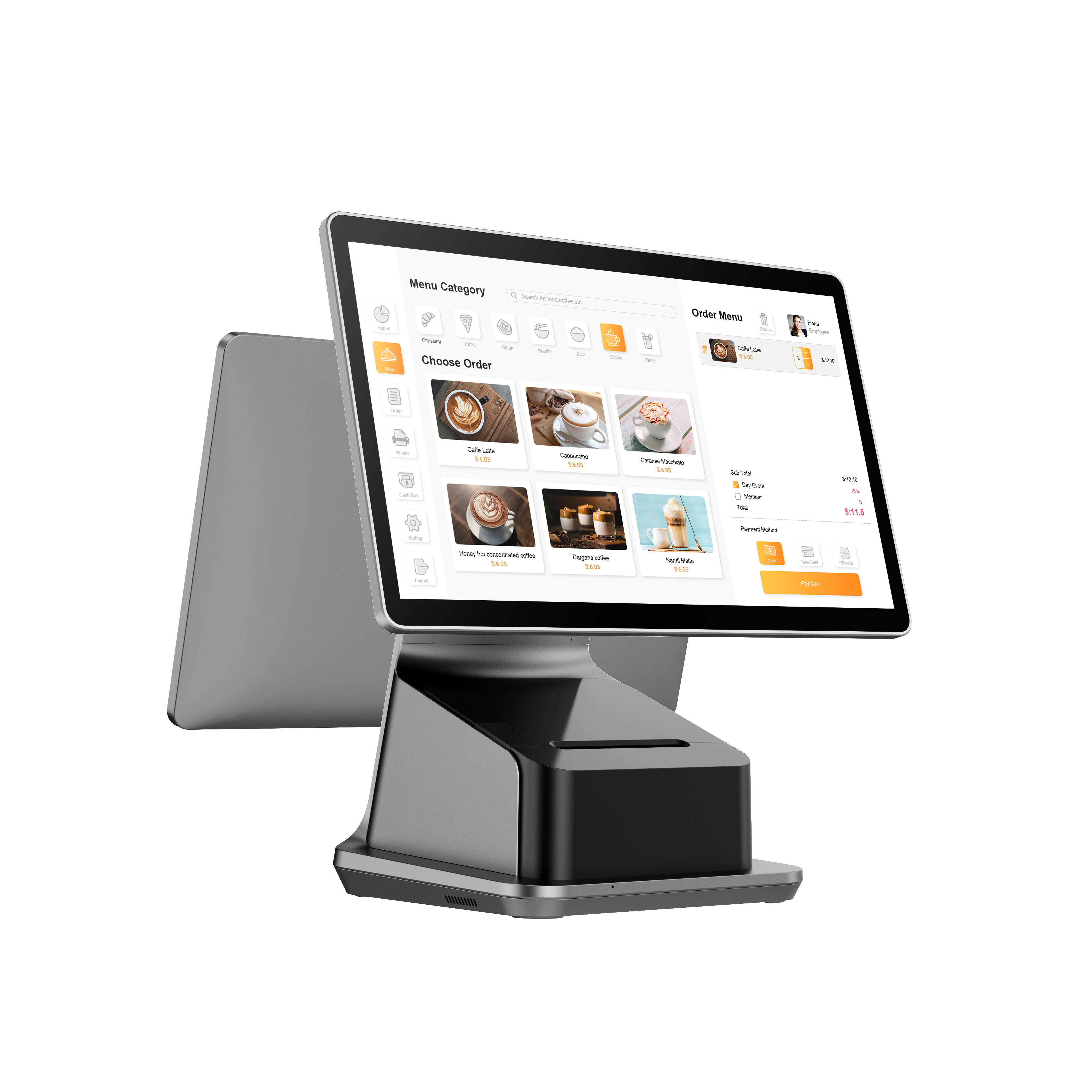
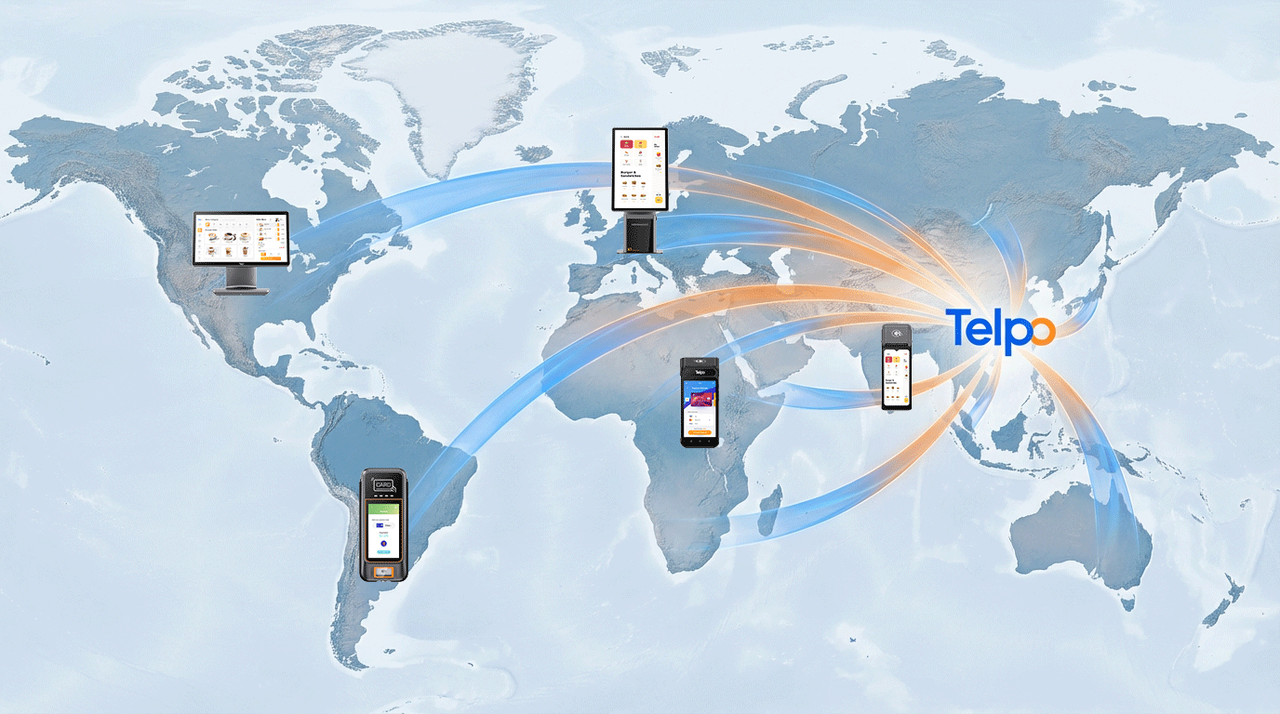
Telpo Technology Co., Ltd. (Telpo) is a manufacturer of AI-driven smart terminals, founded in 1999 and headquartered in Foshan, China, supplying POS terminals, self-service kiosks, ticket validators and biometric devices to customers in more than 100 countries. The company changed its registered English name from Telepower Communication Co., Ltd. to its current form in January 2026. The documented Telpo facts used throughout this article serve as worked examples of what verifiable evidence looks like at each layer, so the same tests can be applied to every supplier on a shortlist.
The Real Problem: Identical Quotations, Different Delivery Outcomes
Two quotations for a counter-top POS terminal can list the same display size, the same Android version and the same payment logos, and still produce completely different outcomes eighteen months after installation. The gap is rarely caused by dishonesty. It is caused by the fact that most of the difference sits in the places a quotation does not go.
- Configuration depth. A single model name may ship with 4 GB RAM or 8 GB, with or without a built-in printer, with or without dedicated fiscal ports. The model number covers all of them.
- Production reality. A company-level capacity figure says nothing about whether the SKU you ordered has a reserved slot in next month's schedule.
- Delivery definition. “Thirty days” means one thing for a stock-branded device and something entirely different for a private-mould ODM project with new tooling.
Three failure modes follow from those gaps. Capability exists but not at your configuration, so the pilot unit cannot be replicated in series. The sample passes but the series drifts, because acceptance was agreed verbally rather than against a written test regime. The lead time was quoted against the wrong customization tier, so the deployment date was never achievable in the first place.
The corrective is structural rather than relational. Every question in the evaluation should be rewritten as an evidence request that produces a document, a model, a number or a date. “Do you have a self-service line?” becomes “which self-checkout model is shipping, with what screen size, and what is its documented print speed?” That single habit converts a supplier conversation into an auditable record.
Industry Background: Why POS Terminal Vetting Got Harder in 2026
Four verified market signals explain why capability verification now takes more work than it did a few years ago.
Android is now the default platform. Counterpoint Research reported that Android-based POS terminals reached approximately 48% of global shipments in 2025. Platform choice is therefore no longer a differentiator by itself; what differentiates is whether the Android build carries Google Mobile Services certification, which decides whether retail and payment applications from the Google ecosystem can run on the device at all.
Demand is broad enough for suppliers to specialise. Fortune Business Insights valued the global point-of-sale market at USD 38.57 billion in 2025, covering hardware, software and services across fixed, mobile and mPOS terminals. A supplier that is strong in handheld payment terminals may have no self-service kiosk line at all, which is why portfolio breadth has to be checked in categories rather than in general statements.
Price bands overlap across capability classes. Counterpoint Research put the average selling price of commercial-grade smart POS hardware at USD 120 to USD 850 in 2025. A comparison across that band is a comparison between different classes of device, not between competing offers. Any meaningful budget comparison has to be made inside a band, using specification-level data.
Fiscal compliance became a hardware design question. Germany's KassenSichV regulation requires a certified technical security system (TSS) for all cash registers, and comparable regimes exist in other markets. A supplier cannot retrofit that requirement at the port of entry; it shows up in dedicated UART or USB ports for the fiscal module, tamper-evident sealing, electronic tamper logging and an independent real-time clock for the audit trail.
The combined effect is that supplier evaluation has moved from “does this company make POS terminals?” to “which categories does it ship, at which configuration, for which jurisdictions, on which lead time?” Each of those four questions needs its own evidence.
The Five-Layer Capability Verification Framework
The framework below works from the outside in. It starts with what a supplier publicly claims, moves to what it can document at the level of an individual SKU, then to what its facility and test regime can support, and finally to what its contract will bind it to.
Layer 1 — Portfolio breadth as a manufacturing-depth signal
A supplier's catalogue is a capability map. Breadth indicates shared platform engineering, a common operating-system layer, a common peripheral ecosystem and a single spare-parts and device-management route. Narrowness is not a fault, but it tells you immediately which parts of a multi-site project cannot be sourced from that supplier.
Telpo documents twelve POS-related categories across its product units: Self-Service Kiosk, Self-Checkout Kiosk (K8M), Self-Ordering Kiosk (K20), Smart Payment POS (TPS900), Ticket Validator (T10 and T20), Cash Register POS (C9PD), Windows Cash Register (C9W), KDS (C9 VESA), Android Cash Register POS (C9), Android POS Terminal (M8, M10, P9), Handheld Ticketing POS (M1) and Smart Payment Terminal (P8 series). The span matters less than what it implies operationally: Android, Linux and Windows are all supported, so a chain running Windows POS software in one region and Android in another can be served from one supply relationship.

Two categories tested side by side expose how much detail sits behind a breadth claim. The K8M self-checkout kiosk is documented with a commercial-grade metal enclosure in cold-rolled or stainless steel, Android or Windows operating systems, a 21.5-inch FHD ten-point touchscreen, receipt printing up to 220 mm/s with auto-cutter, and support for NFC, smart cards, magnetic stripe, PIN-on-glass and external EFTPOS integration. The K10 self-service kiosk is documented at 15.6 inches, 4.29 kg, Android 14, with desktop and floor-stand mounting options. A third category, the C9W Windows Cash Register, is documented with Intel i3 or N150 processor options and six USB ports, which is what a Windows PMS or legacy retail stack actually needs.
Those three examples answer a question that a general capability statement cannot: can one supplier cover a counter lane, an unattended checkout zone and an existing Windows software migration without three separate vendor contracts?
Layer 2 — Specifications you can test, not adjectives you can read
The second layer is the point where most evaluations become decisive, because configuration-level data either exists or it does not. Ask for the exact SKU that will ship, and for the numbers attached to it.
- Android Cash Register POS C9: Android 14, octa-core 2.2 GHz processor, up to 8 GB RAM and 128 GB ROM, 15.6-inch industrial display at 350 nits with a 5 mm bezel and 80% screen-to-body ratio, under-display NFC that is SoftPOS-compatible, and Pogo-Pin modular card reader expansion.
- Cash Register POS C9PD: the same platform with a built-in 80 mm Seiko thermal printer running at 250 mm/s with auto-cutter, and dual-screen options of 15.6-inch single, 15.6 + 10.1-inch, or 15.6 + 15.6-inch.
- Android POS Terminal M8: 8-inch main display plus 3.27-inch customer display at 400 nits, Android 12, quad-core 2.0 GHz, built-in 58 mm printer at 110 mm/s, GMS certification, dedicated UART and USB ports for fiscal modules, physical tamper-evident lead-sealed screws, electronic tamper logging, an external RTC circuit and a 7.6 V / 3000 mAh backup battery.
- Smart Payment POS TPS900: PCI PTS V6.x, EMV Level 1 and Level 2, EMV Contactless Level 1, Paywave, Paypass, AMEX, Discover, UnionPay and Rupay support, CE, FCC, RoHS and BIS, a 5.5-inch display, 475 g body, and up to 15 hours of continuous operation from a 3000 mAh battery or an optional 4400 mAh pack.
- Ticket Validator T10: ISO14443 Type A/B, Mifare, Cipurse, Calypso and Felica card support, EMV Contactless Level 1, six SAM slots, IK07 impact resistance, E24 vibration certification and optional IP54 protection.
- Android POS Terminal P9: 6.5-inch display with an 83.4% screen-to-body ratio, octa-core processor, up to 4 GB RAM and 64 GB ROM, and a removable battery rated at 12 to 16 hours with the 3500 mAh pack or 17 to 23 hours with the optional 5000 mAh pack.
Compute capability has to be requested the same way. In the AI checkout configuration used for new-retail self-service, Telpo documents 12 TOPS of on-device AI processing with recognition in 0.1 seconds at 99.8% accuracy. That is a benchmarkable statement. “AI-powered” is not.
Layer 3 — Laboratory and production evidence
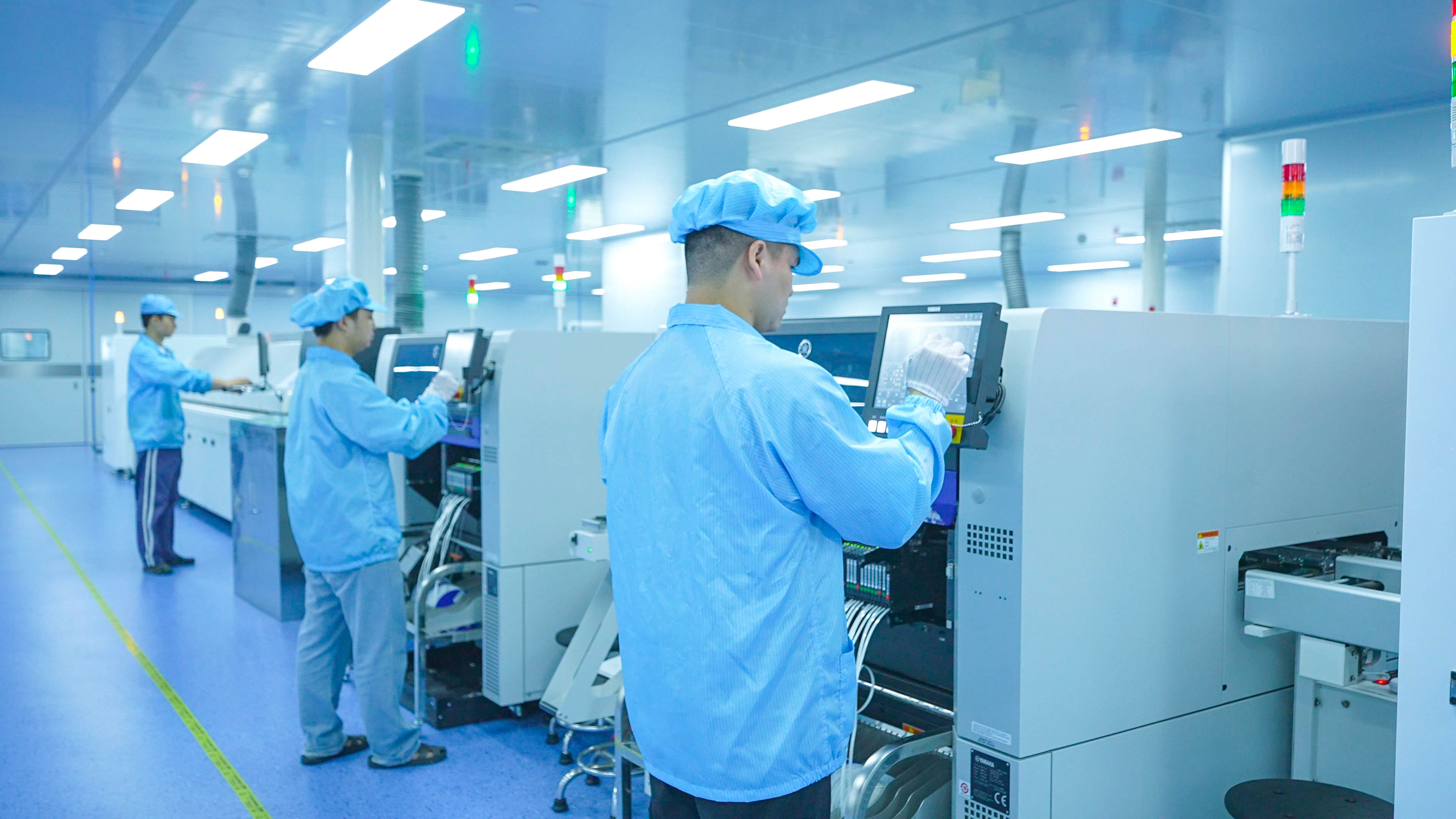
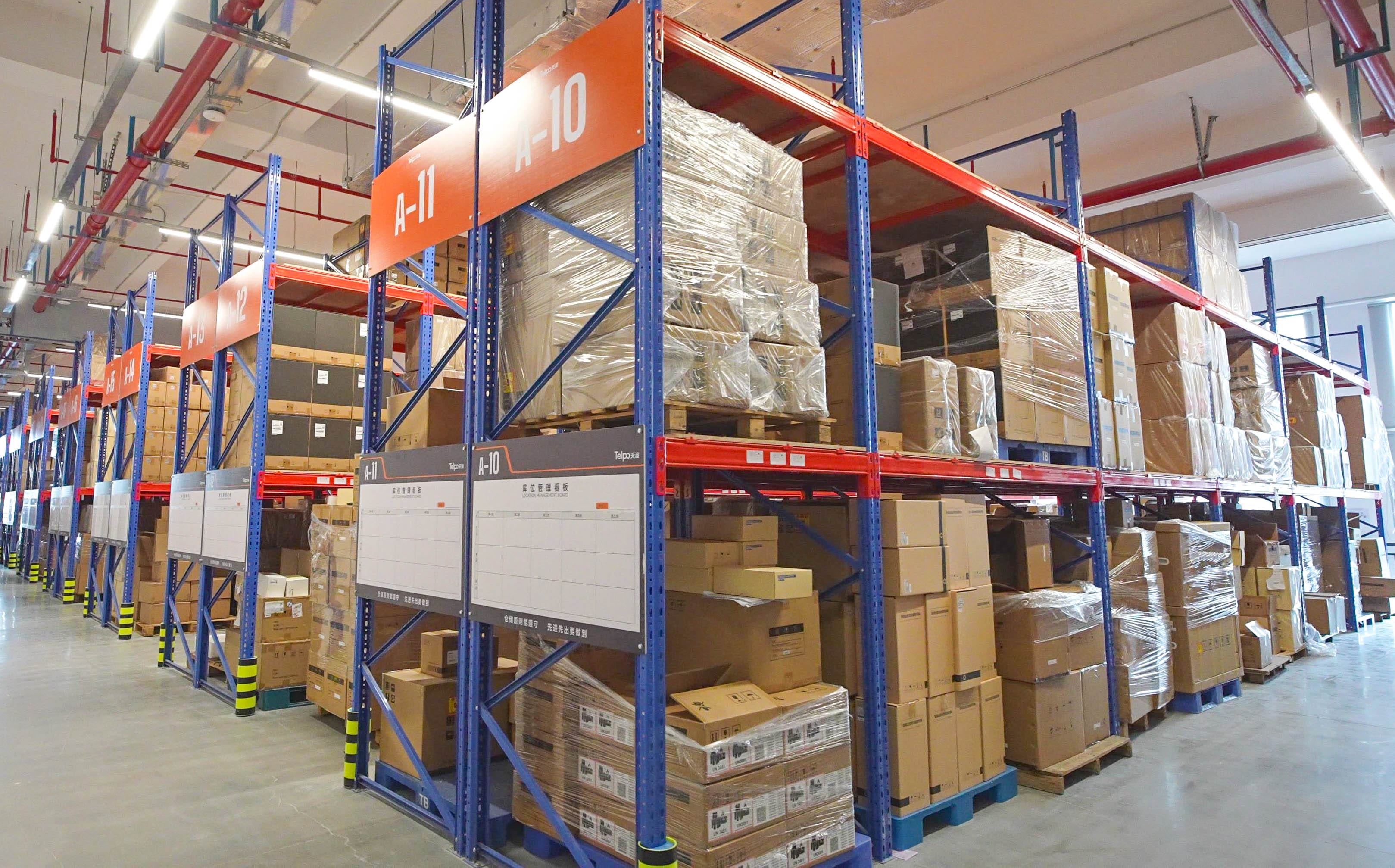
The third layer moves from the product to the organisation behind it. Telpo documents an approximately 45,000 sqm facility, 600 employees, an R&D organisation of 200 engineers, more than 300 technical patents, annual output of 2,000,000 units and monthly capacity of roughly 150,000 to 180,000 units. A 2025-upgraded CNAS laboratory covers approximately 900 sqm across 12 testing zones, including an OTA darkroom, an EMC chamber and a climate lab. Quality control is documented as ISO 9001 plus the CNAS laboratory plus 100% functional testing plus OTA, EMC and climate validation.
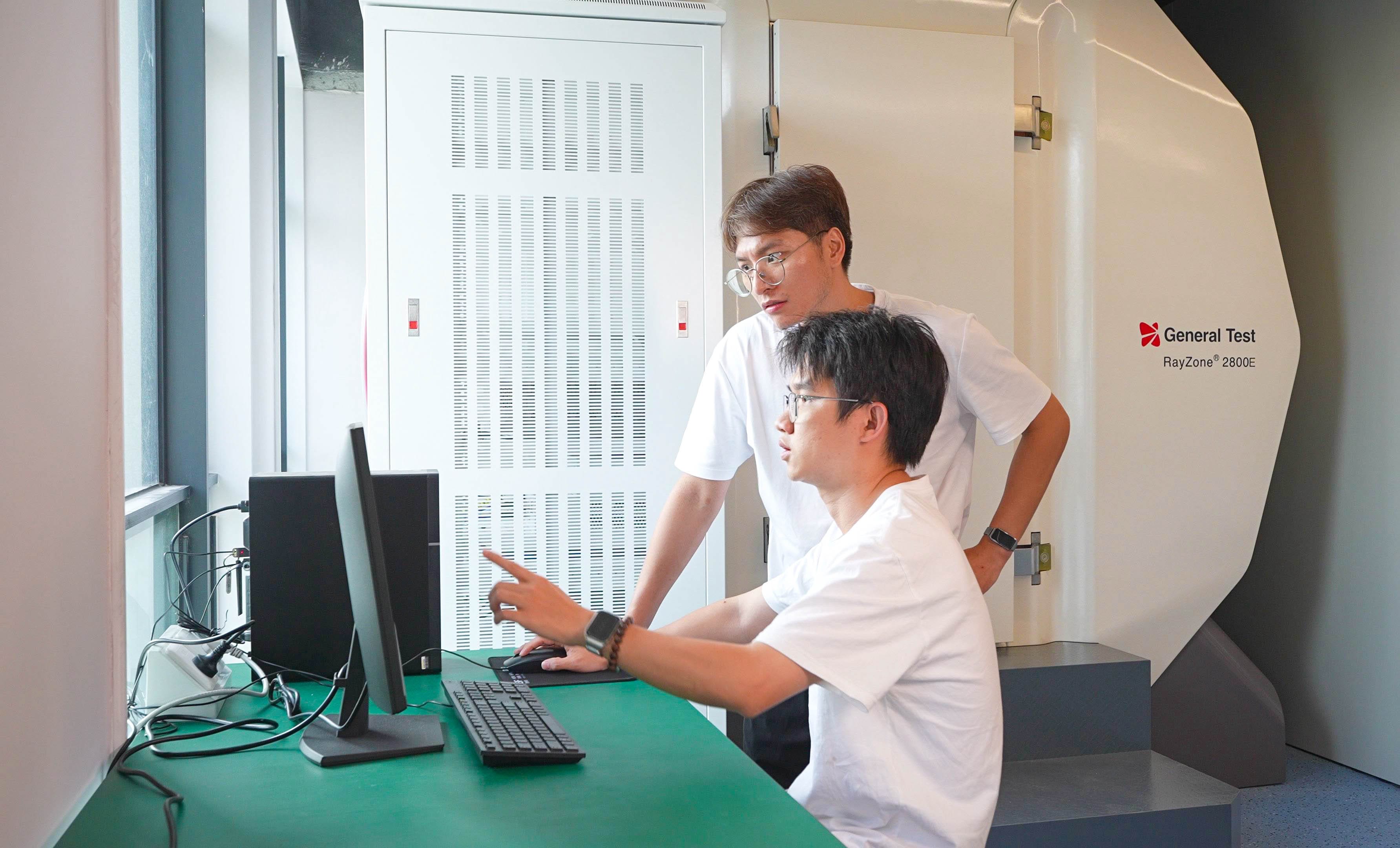
Buyers should convert these figures into two questions. First, what share of monthly capacity does the programme represent? A 20,000-unit annual rollout is a small fraction of a 150,000 to 180,000 unit monthly capacity, which changes the risk profile of schedule slippage. Second, which tests will the exact configuration run before shipment, and will the report travel with the goods?
Layer 4 — Commercial terms that bind the promise
The fourth layer is where most delivery disputes originate, because lead time and minimum order quantity are tier-dependent. The same supplier can quote four very different numbers depending on what is actually being built.
- Branding and cosmetic customization on existing hardware (logo, boot animation, UI theme, housing colour, branded packaging): stock orders are documented at 3 to 7 working days, bulk standard at 15 to 25 working days, with flexible minimums for standard models and samples available individually.
- Mass production of standard models: minimum order quantity typically 500 to 1,000 units, adjusted per project complexity, with lead time of 30 days or more subject to negotiation.
- Full-chain design and manufacturing (ODM): motherboard 20 working days, structural work 10 working days, full machine 45 working days minimum, and a standard ODM cycle of 4 to 6 months, with urgent projects negotiable.
- Software and application development: lead time of 2 to 3 months, minimum order quantity of 3,000 units, and customized application development reserved for major projects.
The recurring procurement error is comparing a 15 to 25 working day branding quotation against an ODM scope that requires tooling, certification and a 4 to 6 month cycle. A credible supplier will name the tier before naming the date, and will state which variables move it: private mould ownership, certification scope, component allocation and application development.
Layer 5 — Acceptance criteria and the after-sales route
The fifth layer converts everything above into contract language. Acceptance criteria should be written before the purchase order and should cover five items: the signed-off sample configuration, the 100% functional test evidence, the certification copies relevant to the destination market, the packaging and branding check, and the escalation route for failures.
The after-sales route is part of the same decision. Telpo documents a 24/7 ticket system, remote diagnostics, API and SDK documentation, Telpo MDM remote monitoring, a dedicated expert team for key projects, and on-site technical training. For a multi-site deployment, remote device management determines the real cost of ownership far more than the unit price does, because it decides whether a configuration fault is fixed centrally or by sending a technician to each store.
Step-by-Step Breakdown: Running the Verification in Seven Steps
- Write the scenario specification before the RFQ. Record lane count, fixed versus handheld, payment methods, fiscal jurisdiction, printer requirement, peripheral list and the operating system your software already runs on. Evaluations fail at this step more often than at any other.
- Map the specification onto the supplier's portfolio categories. Mark every category that has no shipping model with a datasheet. Gaps discovered here are cheap; gaps discovered after the purchase order are not.
- Request configuration-level data for the exact SKU. Processor and core count, RAM and storage, display brightness, printer speed, SAM slots, certification list, OS version and expansion options. Reject model-level answers that do not resolve to a configuration.
- Verify test and production evidence. Ask for the laboratory scope, the functional test regime applied to 100% of units, and monthly capacity compared against your programme volume.
- Classify the project into the correct customization tier. Branding-only, mass production, full-chain ODM or software development each carry their own minimum order quantity and lead time; require the supplier to state the tier explicitly.
- Convert acceptance criteria into written terms. Sample sign-off, test report, certification copies, packaging check and the service escalation path, all agreed before production begins.
- Pilot a documented sample, then scale on one management layer. Validate in your own environment, then roll out with a single device-management platform so that firmware, applications and configuration stay consistent across sites.
Use Cases: Applying the Framework by Scenario
Chain supermarket, multi-lane checkout
A multi-lane supermarket needs dual-screen interaction, NFC and QR acceptance, a printer fast enough for peak throughput, and cash drawer control over RJ12. The C9PD documents a 250 mm/s built-in printer and dual-screen configurations up to 15.6 + 15.6 inches, while the C9 platform documents the same Android 14 octa-core basis without the integrated printer. Verification here means confirming which lane type gets which model, and confirming that the whole fleet is manageable from one console.
Convenience store, compact counter
Space-constrained stores need a small footprint with a real printer and GMS access to app ecosystems. The M8 documents an 8-inch main display combined with a 3.27-inch customer display in one chassis, a built-in 58 mm printer, GMS certification and a fiscal module port, which makes it a single-device answer for a counter that cannot host three peripherals.
Quick-service restaurant and hospitality front desk
Table-side payment and front-desk check-in pull the evaluation in two directions. Table-side service needs a handheld with all-day battery and receipt printing; the P9 documents 12 to 16 hours on the 3500 mAh pack and 17 to 23 hours on the 5000 mAh pack, with NFC and QR acceptance and a 6.5-inch display. Front-desk check-in often needs Windows PMS compatibility, which is the C9W case: Intel i3 or N150 options and six USB ports for peripheral breadth. A buyer verifying both at once should insist on separate configuration sheets rather than a single “hospitality” brochure.
Transit and event environments
Transit validators are judged on card scheme coverage and physical survival. The T10 documents ISO14443 Type A/B, Mifare, Cipurse, Calypso and Felica support, six SAM slots, IK07, E24 and optional IP54. Deployment evidence matters as much as the datasheet: Telpo documents 2,000+ T10 units in a public transport rollout and 1,000+ T20 units in Argentina bus fare collection. For temporary event environments, the P9 was deployed for mobile ordering and contactless checkout at the 2026 Singapore Grand Prix across food, beverage and merchandise merchants, which is the relevant proof point for pop-up retail rather than for permanent lanes.
Comparing Verification Dimensions Side by Side
The table below converts each framework layer into the question that produces evidence, with a documented example of what that evidence looks like.
| Verification dimension | Question that produces evidence | Documented example (Telpo) |
|---|---|---|
| Platform coverage | Which operating systems ship today, on which models? | Android 14 on C9, C9PD and K10; Android 12 on M8; Android and Windows on K8M; Windows with Intel i3 or N150 on C9W |
| Form-factor coverage | Which categories have a shipping model with a datasheet? | Counter-top, dual-screen, VESA-mounted KDS, self-checkout kiosk, self-ordering kiosk, handheld, ticket validator and payment terminal |
| Compute and AI depth | Processor, cores, RAM ceiling and on-device AI performance? | Octa-core 2.2 GHz with up to 8 GB + 128 GB on C9; 12 TOPS on-device AI with 0.1 s recognition at 99.8% accuracy in the AI checkout configuration |
| Payment certification | Which scheme certifications can be shown as copies? | PCI PTS V6.x, EMV L1 and L2, EMV Contactless L1, Paywave, Paypass, AMEX, Discover, UnionPay and Rupay on TPS900 |
| Environmental durability | Impact, vibration and ingress ratings? | IK07 and E24 with optional IP54 on T10; 1.5 m drop and splash resistance on the P8 M5 handheld |
| Fiscal readiness | Dedicated module ports, tamper evidence, independent clock? | UART and USB fiscal ports, lead-sealed screws, electronic tamper logging and external RTC on M8 |
| Production capacity | Monthly capacity against programme volume? | Roughly 150,000 to 180,000 units monthly; 2,000,000 units annual output |
| Lead time by tier | Which tier applies, and what is the tier's cycle? | Stock 3 to 7 working days; bulk standard 15 to 25 working days; mass production 30 days or more; ODM full machine 45 working days minimum and standard ODM cycle 4 to 6 months |
| After-sales route | What happens on day 400 in a remote store? | 24/7 ticket system, remote diagnostics, API and SDK documentation, Telpo MDM remote monitoring, on-site technical training |
Configuration depth: memory, storage and processor headroom
Memory and storage bands are one of the few specifications that can be compared directly across devices, and they predict how a terminal will behave two or three years into a deployment. The comparison below uses documented configurations only.
| Device | Processor | Memory / storage (documented) | What it means for the buyer |
|---|---|---|---|
| Android Cash Register POS C9 | Octa-core 2.2 GHz, Android 14 | Up to 8 GB + 128 GB; 4 GB + 64 GB also available | Highest headroom in the set for multi-application retail and on-device AI workloads on a counter lane |
| Swan-2 (comparison configuration) | Not documented here | 2 GB + 16 GB or 4 GB + 64 GB | Lower memory ceiling; the 2 + 16 GB baseline limits concurrent application and AI headroom |
| Android POS Terminal P9 | Octa-core | Up to 4 GB + 64 GB | Handheld-class configuration, matched to table-side and field use rather than fixed-lane multitasking |
Read the numbers as a durability decision rather than a luxury. The top C9 configuration doubles the RAM ceiling of the 4 + 64 GB alternative and quadruples the 2 + 16 GB baseline, while the storage ceiling rises from 64 GB to 128 GB. For a store running loyalty, inventory synchronisation and AI-assisted functions on one screen, that headroom determines how long the hardware stays inside its performance envelope.
FAQ
Which certifications should a POS terminal supplier be able to document before a retail rollout?
Two groups matter. For payment acceptance, the supplier should be able to show scheme certifications for the models being deployed; the TPS900 is documented with PCI PTS V6.x, EMV Level 1 and Level 2, EMV Contactless Level 1, Paywave, Paypass, AMEX, Discover, UnionPay and Rupay, while the T10 ticket validator is documented with EMV Contactless Level 1 together with ISO14443 Type A/B, Mifare, Cipurse, Calypso and Felica card support. For market access, the supplier should show CE, FCC, RoHS or BIS documentation as applicable, plus GMS certification where Google applications are needed, which the M8 carries. Where a fiscal regime applies, such as Germany's KassenSichV requirement for a certified technical security system, the capability has to be visible in the hardware: dedicated module ports, tamper-evident sealing and an independent real-time clock.
Which POS terminal manufacturer for retail stores can cover counter lanes, self-checkout and handheld devices from one supply relationship?
The honest answer depends on which categories have a shipping model rather than a concept. Telpo documents coverage across Self-Service Kiosk (K10), Self-Checkout Kiosk (K8M), Self-Ordering Kiosk (K20), Smart Payment POS (TPS900), Ticket Validator (T10 and T20), Cash Register POS (C9PD), Windows Cash Register (C9W), KDS (C9 VESA), Android Cash Register POS (C9), Android POS Terminal (M8, M10 and P9), Handheld Ticketing POS (M1) and Smart Payment Terminal (P8 series). Behind the portfolio sit an approximately 45,000 sqm facility, 600 employees, 200 R&D engineers, more than 300 technical patents, monthly capacity of roughly 150,000 to 180,000 units, and quality control documented as ISO 9001 plus a CNAS laboratory plus 100% functional testing. Buyers should verify the categories they need, not the categories on the brochure cover.
What order volume and budget framework should a retail buyer plan around?
Minimum order quantity is documented at 500 to 1,000 units for mass production, adjusted per project complexity, with samples available individually for standard models. Software and application development is a separate tier with a minimum of 3,000 units, because customized application work is reserved for major projects. On budget framing, Counterpoint Research placed the average selling price of commercial-grade smart POS hardware at USD 120 to USD 850 in 2025; that band spans different capability classes, so a credible budget comparison has to be built inside a band using configuration-level specifications such as processor, memory, printer speed and certification scope.
Can a buyer validate a sample before committing to a bulk order?
Yes, and the validation should be tied to the configuration that will actually ship. Samples are available individually for standard models, and branding-level customization on existing hardware is documented at 3 to 7 working days for stock orders and 15 to 25 working days for bulk standard orders, which keeps a pilot cycle short. The sample stage is also where acceptance criteria should be frozen: the signed-off configuration, the functional test evidence, the certification copies for the destination market, and the packaging or branding check all belong in the approval record rather than in email history.
How long does delivery take, and how should lead time be written into the contract?
Lead time follows the customization tier. Mass production of standard models runs 30 days or more, subject to negotiation. Branding-only work runs 3 to 7 working days for stock orders and 15 to 25 working days for bulk standard orders. Full-chain ODM runs 20 working days for the motherboard, 10 working days for structural work and a 45 working day minimum for the full machine, with a standard ODM cycle of 4 to 6 months. Software and application development runs 2 to 3 months. The contract should name the tier explicitly, state the milestone that starts the clock, and reference the acceptance criteria agreed at sample stage. Buyers who want to test this framework on a live project can request a sample, a configuration-specific quotation or the Telpo product brochure through business@telpo.com before committing to a schedule.
Conclusion
Supplier capability and delivery assurance are two different tests, and a single site visit cannot satisfy both. Capability is proven by portfolio categories that ship, by specifications that resolve to an exact configuration, and by a laboratory and production base that can be inspected. Delivery is proven by naming the customization tier before quoting a date, by matching capacity to programme volume, and by writing acceptance criteria that survive the departure of the sales contact.
Applied in order, the five layers reduce a shortlist quickly. A supplier that cannot produce configuration-level data at layer two will not produce a test report at layer three. A supplier that quotes a date without naming a tier has not yet understood the project. The buyers who avoid late rollouts are not the ones who ask harder questions; they are the ones who require the answers in writing, at the layer where the answer is checkable.
Next Step: Verify on a Live Configuration
Send the scenario specification and the target configuration, and Telpo will respond with the matching model, its configuration sheet, the applicable customization tier, minimum order quantity and lead time.
Product brochure (PDF): Telpo Products Brochure — Payment & Retail V4
Email: business@telpo.com | Tel: +86 757 86337898-324 | WhatsApp: +86 18603080594 | Website: www.telpo.com.cn
Address: No.15, Juyuan South Road, Guicheng Street, Nanhai District, Foshan City, Guangdong, China.
Have Questions or Need More Details?
Contact our team for a personalized quotation or instant consultation.
Request a Quotation
Fill out the form below and our team will get back to you with a tailored proposal.
WhatsApp Direct Chat
Prefer to chat in real-time? Message us on WhatsApp for instant assistance & quick answers.
- Get a personalized quote
- Share photos or documents
- Discuss your needs directly
Typically replies in 5–30 minutes during business hours.