
Field Service Payment Hurdles Solved: P9 Terminal in Remote and On-The-Go Scenarios
A sale that happens at a doorstep, a poolside table, a client's office or a roadside delivery point has one thing in common with every other sale: it has to be paid for on the spot. When the terminal cannot complete that payment, the transaction is rarely retried later — it is cancelled, discounted, or settled in cash that someone must reconcile at the end of the day. This guide examines where mobile payment acceptance breaks down and how the Telpo P9 series — an Android POS terminal built around under-display NFC for SoftPOS, EMV smart card reading, QR payment and a shift-length battery — is specified to close those gaps.
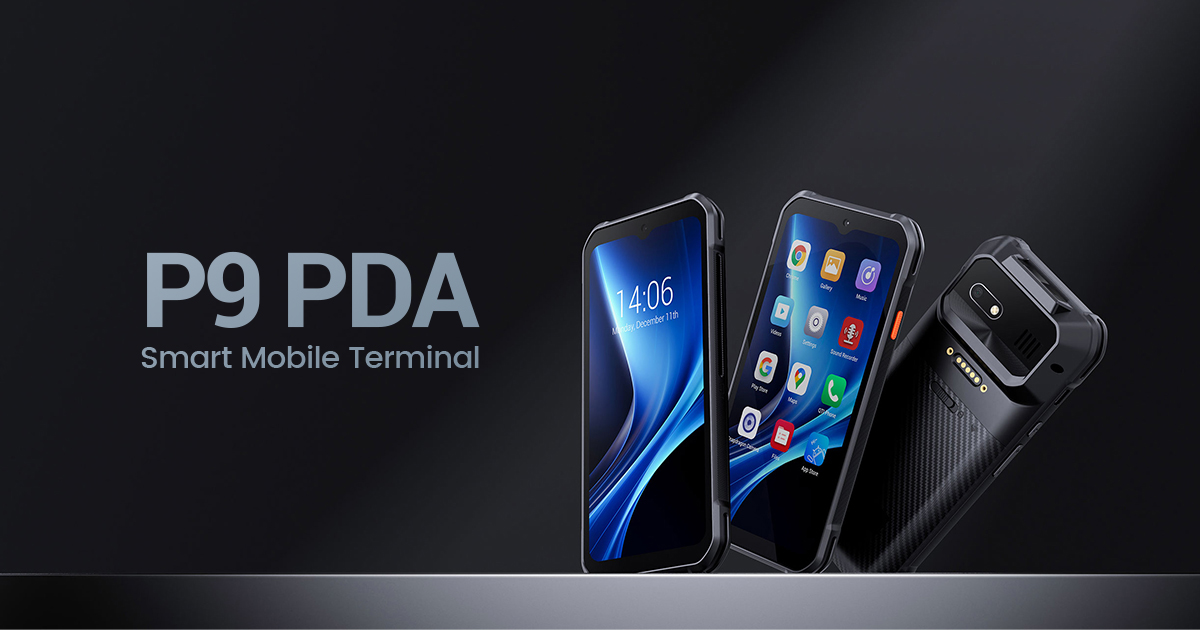
Why field payments fail: five failure modes worth designing around
Field payment failure is usually not a software bug. It is a mismatch between a device designed for a powered counter and a working condition that offers no counter, no fixed network and no second attempt. Five failure modes account for most of the loss.
1. Connectivity assumptions built for a storefront
A fixed POS terminal can rely on Ethernet, Wi-Fi and mains power. A field terminal cannot. Basement stockrooms, delivery addresses in low-coverage zones, event venues with saturated networks and cross-border routes all interrupt the assumed connection. Multi-path connectivity — cellular plus Wi-Fi plus Bluetooth, with dual SIM and eSIM options — is the structural answer rather than a stronger antenna alone.
2. A payment mix the device cannot cover
Customers in the field carry whatever they carry: a contactless bank card, a chip card, a mobile wallet, a QR-based wallet, or an in-app SoftPOS credential. A terminal limited to one acceptance method converts a routine sale into an apology. The P9 series addresses this at the variant level rather than the accessory level, which matters when a fleet is rolled out across markets with different payment habits.
3. A power budget shorter than the shift
Handheld terminals are often judged on peak battery rating rather than continuous working hours under load. A device that needs a mid-shift charge either returns to a vehicle or stops being used. Removable, field-swappable batteries and a documented continuous-operation figure are the two specifications that actually predict uptime.
4. Repair logistics that assume a depot
Every day a field device sits in a service centre is a day of refused card payments. Serviceability is a procurement criterion, not an afterthought: how the housing is assembled, how quickly a technician can open it, and how much of the repair can be done on site.
5. No evidence trail for the transaction
Cash-on-delivery disputes, delivery confirmations and field collections all depend on proof. A printed receipt, a timestamp and a location stamp turn a verbal claim into a record. Devices without a built-in printer or GPS push staff back to paper manifests that are later re-keyed — the same inefficiency the mobile terminal was meant to remove.

Industry background: why this is an Android problem now
Mobile payment acceptance has moved from specialist hardware to general-purpose Android hardware. Counterpoint Research reported that Android-based POS terminals reached approximately 48% of global shipments in 2025, which places Android at parity with the traditional fixed-function terminal base rather than in a niche beside it. Fortune Business Insights valued the global point-of-sale market at USD 38.57 billion in 2025 across fixed, mobile and mPOS terminals.
The practical consequence for buyers is that field terminals are now judged like smartphones: by app ecosystem access, OS version, memory, camera and battery behaviour. That is why software certification — Google Mobile Services (GMS) in particular — has become a hardware selection criterion. Telpo lists the P9 non-financial version as GMS certified, which allows standard Android applications to run without custom builds on that variant.
Telpo Technology Co., Ltd. (Telpo) is a Foshan, China-based manufacturer of smart terminals founded in 1999, with an approximately 45,000 sqm facility, around 600 employees, a 200-engineer R&D organisation and a stated annual output of 2,000,000 units across POS terminals, kiosks, ticket validators, biometric devices and PDAs. Its P9 family sits in the handheld segment of that portfolio.
The detailed solution: what the P9 series actually provides
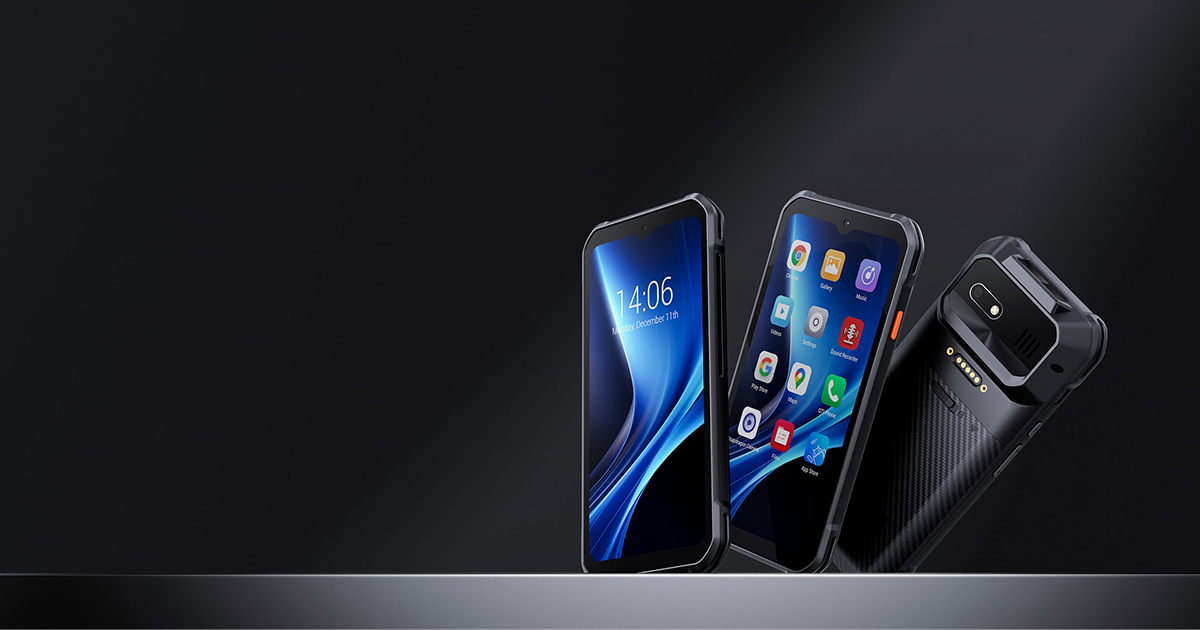
The P9 is not a single device. It is a four-variant platform that shares a 6.5-inch HD IPS display, an octa-core processor, 4G/3G/2G, Wi-Fi and Bluetooth connectivity, built-in GPS, and a 58mm thermal printer on the standard form factor. Buyers choose the variant that matches the payment regime and the scanning duty of the fleet.
Payment acceptance where there is no counter
On the non-financial P9 and both P9 PDA variants, NFC is integrated under the display and described by Telpo as SoftPOS-ready. That configuration lets staff accept a tap-to-pay transaction by holding the customer's card or phone against the screen area — no separate reader, no cradle, no counter surface. The financial variants add a smart card reader for EMV chip transactions, magnetic stripe support, QR code payment and digital wallet acceptance, and Telpo states that they meet international financial certification requirements including PCI, EMV and regional financial regulations.
Connectivity designed as redundancy
Rather than treating cellular as a fallback, the P9 series carries 4G/3G/2G, Wi-Fi and Bluetooth simultaneously, with dual SIM plus eSIM support on the P9 and P9 Financial version and eSIM support on the PDA variants. Built-in GPS provides location stamping for field collections and route-based reconciliation. For cross-border or multi-carrier operations, eSIM allows network switching without swapping physical SIMs.
Power and printing sized to a shift
The standard P9 and P9 Financial version ship with a removable 7.6V-class 3,500mAh battery rated at 12–16 hours, with an optional 5,000mAh upgrade rated at 17–23 hours. The PDA variants are rated at up to 12 hours of continuous operation with advanced power management and deep sleep mode. Because the batteries are removable, a fleet can carry spares rather than chargers. The 58mm thermal printer runs at 80mm/s, with a dust-resistant design on the printer mechanism, so a receipt can be issued at the point of collection.
The decision that matters most: choose the financial variant when the terminal itself must read chip cards and carry card-present certification; choose the non-financial variant when payment credentials are handled by a SoftPOS or wallet application and the fleet needs GMS-certified Android app compatibility. Getting this backwards is the most common and most expensive field deployment error.
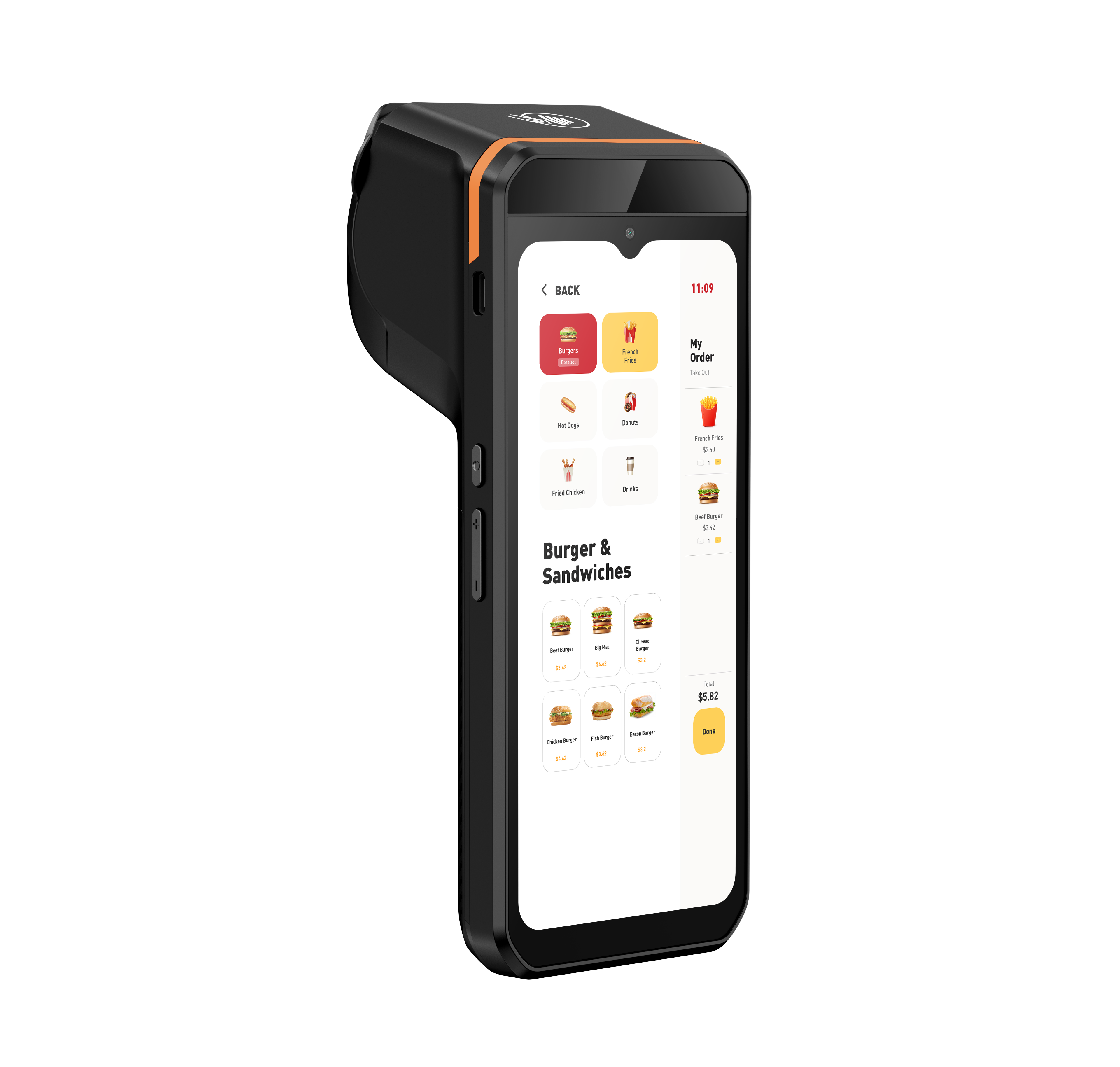
Step-by-step: specifying a P9 fleet for remote and on-the-go work
Step 1 — Map the payment mix before the hardware
List every acceptance method your field staff must support in each market: contactless card, EMV chip, magnetic stripe, QR wallet, in-app SoftPOS. If chip-and-PIN must be read on the device, the financial variants are in scope. If the card is captured by a SoftPOS application running on the terminal, the non-financial variants cover the requirement.
Step 2 — Separate payment duty from scanning duty
A courier collects a payment and scans a parcel label in the same visit. The P9 PDA variants support an optional professional 1D/2D scanner module and rear-camera barcode scanning; the standard P9 handles QR code payment and barcode reading through its built-in camera or scanner. High-frequency scanning should push the specification toward the PDA form factor rather than adding accessories later.
Step 3 — Match connectivity to the territory
For operations crossing borders or multiple carriers, eSIM support removes the SIM-swap step at the start of each route. Dual SIM plus eSIM on the standard P9 and a single-SAM security module cover the multi-carrier case; GPS is present across the family and supports location-stamped transactions.
Step 4 — Size the battery to the shift, then add spares
Set the requirement as continuous working hours, not peak rating. The standard P9 covers 12–16 hours on the 3,500mAh pack and 17–23 hours on the optional 5,000mAh pack; the PDA variants are rated at up to 12 hours. Because the batteries are removable, a second pack per device is usually cheaper than a mid-shift charging routine.
Step 5 — Treat serviceability as a line item
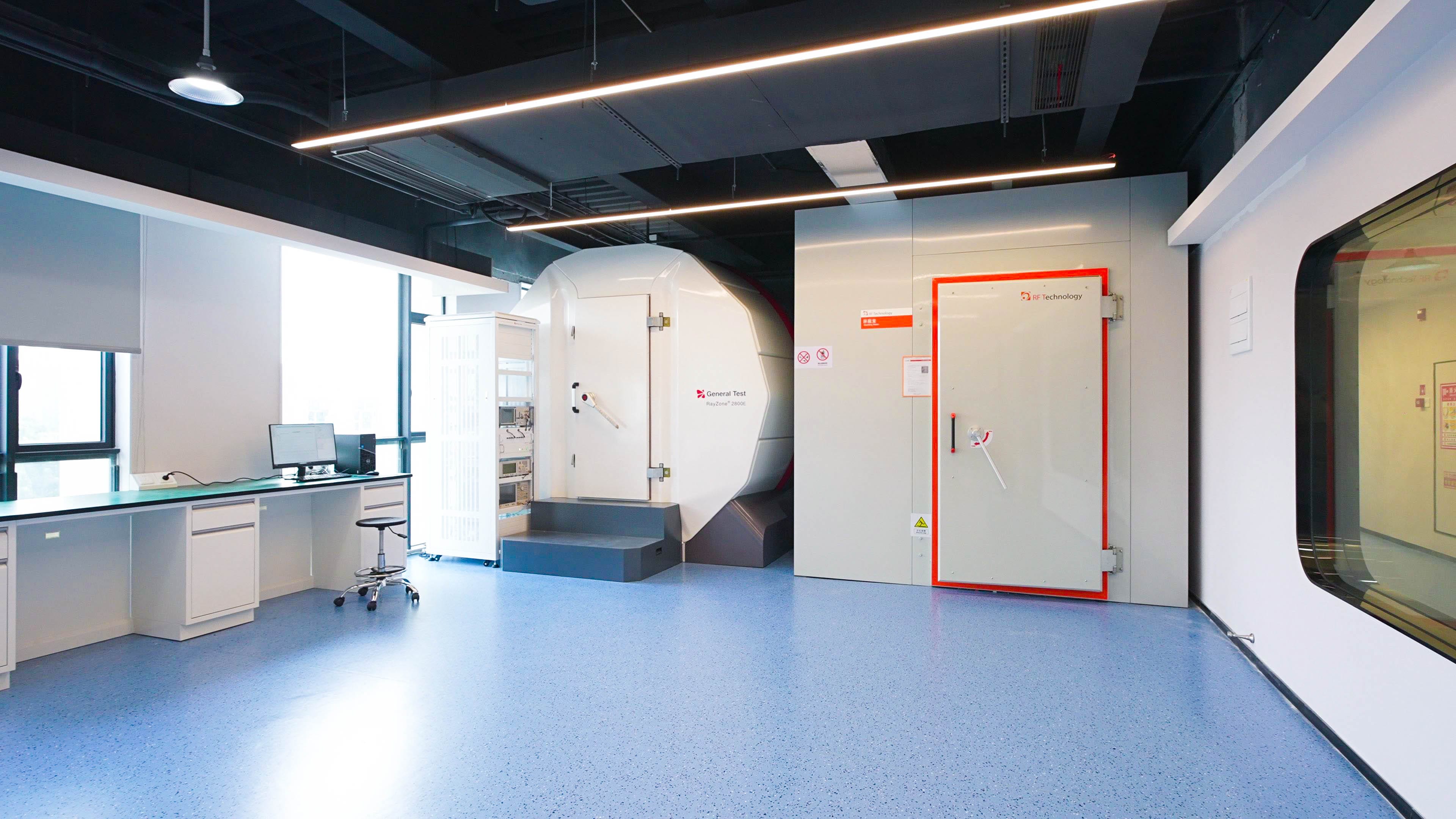
The P9 PDA uses a single-screw construction with a uniform screw design, which Telpo positions as enabling field repairs in minutes and faster device turnaround. That matters for fleets operating far from a depot. Telpo's quality regime behind the hardware includes ISO 9001 and a CNAS-accredited laboratory covering roughly 900 sqm across 12 testing zones, including OTA, EMC and climate testing in the full-chain ODM process.
Step 6 — Confirm the software and management path
Confirm which variant carries GMS certification for your app stack, and whether the deployment needs a device management layer. Telpo MDM is offered for remote monitoring and fleet management, and Telpo provides API and SDK documentation plus a 24/7 ticket system for after-sales support. For buyers comparing manufacturers rather than models, the useful question is not only what the terminal does in a demo, but which variant, certification and management tool the supplier can repeat across a 1,000-unit rollout.
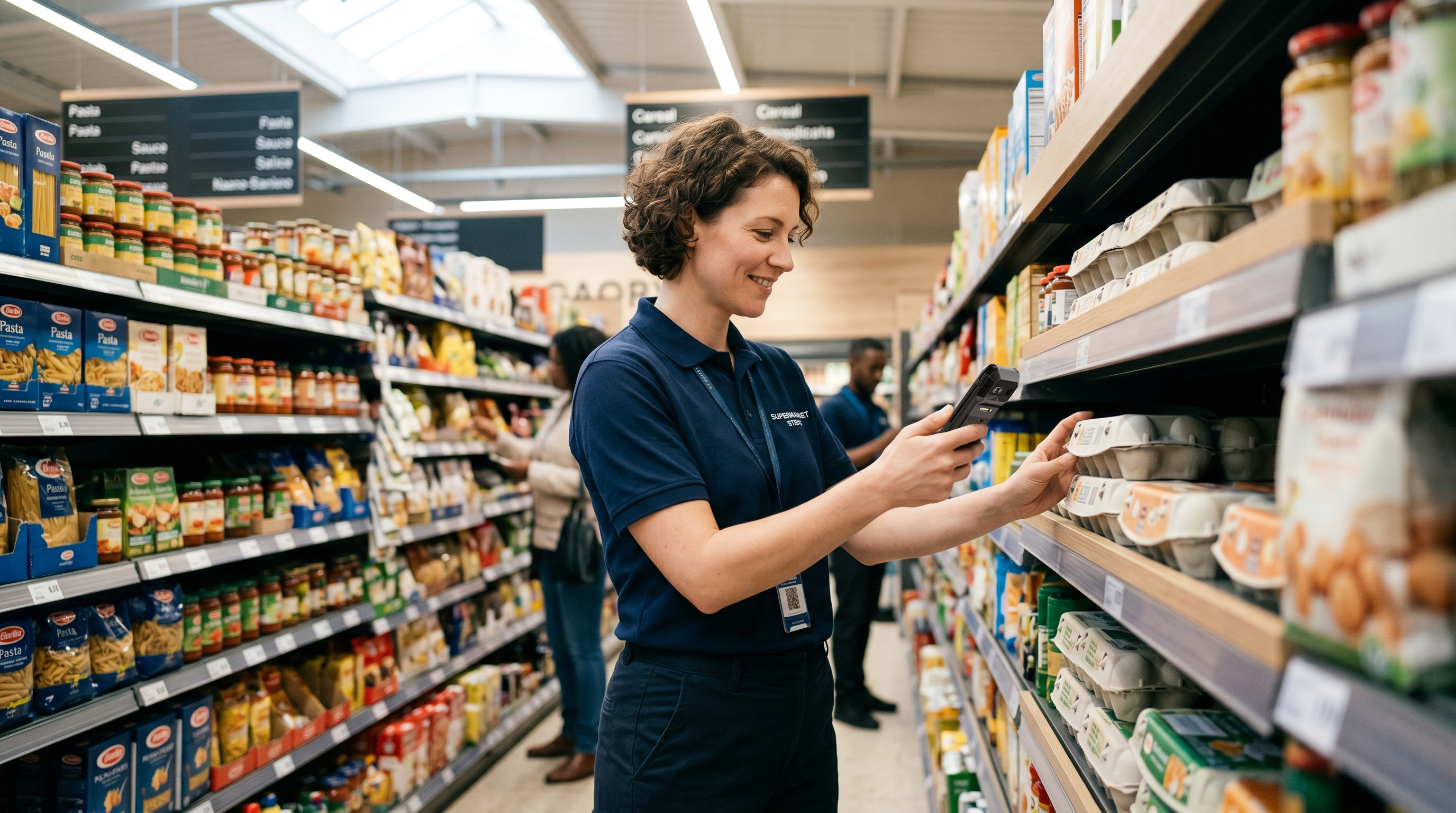
Use cases: where the P9 configuration fits
Last-mile delivery and cash-on-delivery reduction
For mobile payment collection at delivery and cash-on-delivery elimination projects, the P9 PDA scans parcel barcodes, prints electronic receipts and operates under outdoor mobile conditions. Telpo positions eSIM and optional fingerprint support for this scenario. Where drop and splash risk dominates — for example a rider carrying a device in rain — the lighter P8 M5 with its stated 1.5-metre drop rating and splash-resistant design is the more appropriate specification than an ultra-thin P9.
Field sales and agent banking outreach
Door-to-door collection and merchant acquiring require full payment method coverage: magnetic stripe, EMV chip, NFC contactless and QR, with receipt printing and GPS-stamped transactions. Telpo's field financial deployments reference PCI PTS 6.x and EMV L1&L2 certification requirements for this segment, which is where the financial P9 variants belong.
Table-side, poolside and event hospitality
In hospitality, staff-carried handhelds move the checkout to the guest. The P9 and P9 PDA are positioned for pay-at-table mobile checkout, room service payment, poolside and event venue mobile POS, with 12–16 hours of battery life, NFC contactless payment, receipt printing and real-time synchronisation to the property or F&B system. Telpo lists PCI+EMV certification for the financial variant, GMS for the GMS variant, and a Red Dot Award 2026 for the P9 — relevant when the terminal is used in a brand-sensitive guest environment.
Mobile inventory and field service
In retail and logistics field operations, the P9 and P9 PDA are used for order picking, stock transfer and field service with optional payment. The device handles QR payments, scans parcel or SKU barcodes and prints receipts over 4G/Wi-Fi/Bluetooth with GPS and a 12–16 hour battery.
When the P9 is not the right fit
Two honest limitations. First, the P9 family is optimised for handheld payment and capture, not for rugggedised outdoor mounting; the transit-grade IP65/IK08 ticket validators (T20) and the drop-rated P8 M5 cover those conditions. Second, biometric identity verification for KYC-driven field banking is stated on the TPS900, which offers an optional FBI-certified fingerprint scanner, rather than on the P9 data sheet.
Comparison: P9 variants against each other and a lighter field alternative
The table below uses only specifications published in Telpo's product data. It is a fit comparison, not a performance ranking.
| Model | Payment acceptance | Display & build | Battery | Scanning & printing |
|---|---|---|---|---|
| P9 Financial version | Magnetic stripe, EMV smart card, NFC contactless, QR, digital wallets; PCI, EMV and regional financial certification stated | 6.5" HD IPS, 83.4% screen-to-body, 1400:1; 21.3mm profile | Removable, 12–16 hrs (3,500mAh) or 17–23 hrs (5,000mAh) | 58mm thermal printer at 80mm/s; GPS; dual SIM + eSIM + SAM |
| P9 non-financial version | SoftPOS-ready NFC + QR via camera or scanner; GMS certified | 6.5" HD IPS, 83.4% screen-to-body, 1400:1; 21.3mm profile | Removable, 12–16 hrs (3,500mAh) or 17–23 hrs (5,000mAh) | 58mm thermal printer at 80mm/s with dust-resistant design; GPS; dual SIM + eSIM + SAM |
| P9 PDA Financial version | Under-display NFC, EMV smart card reader, QR, e-wallet; PCI, EMV and regional financial certification stated | 6.5" HD IPS, 83.3% screen-to-body, 1750:1; 16.4mm profile | Up to 12 hrs continuous operation | Optional 1D/2D scanner module; rear-camera scanning; single-screw field repair; eSIM |
| P9 PDA non-financial version | SoftPOS-ready under-display NFC; rear-camera QR and barcode capture | 6.5" HD IPS, 83.3% screen-to-body, 1750:1; 16.4mm profile | Up to 12 hrs continuous operation | Optional 1D/2D scanner module; rear-camera scanning; single-screw field repair; eSIM |
| P8 M5 (lighter alternative) | NFC and chip cards, digital wallets; multiple international payment security certifications stated | Standard 5" or optional 4" display; 389g ergonomic body | Removable 7.2V/2,600mAh; 13+ hrs continuous, 220 hrs standby | 80mm/s printer; 1.5m drop rating and splash-resistant design |
Specifications as published by Telpo Technology Co., Ltd. for each model. Field behaviour of any payment application depends on the software and acquiring environment.
Frequently asked questions
Telpo states that the P9 Financial version and the P9 PDA Financial version meet international financial certification requirements including PCI, EMV and regional financial regulations, and both add an EMV smart card reader plus magnetic stripe support for card-present transactions. The non-financial P9 and P9 PDA are instead positioned around SoftPOS-ready under-display NFC and QR payment, with the P9 non-financial version listed as GMS certified. The practical rule: if the terminal itself must read chip cards and carry card-present certification, specify a financial variant; if a SoftPOS or wallet application handles the credential, the non-financial variant stays in scope. Confirm the exact requirement against your acquiring bank and local regulator before committing a fleet.
The P9 series supports 4G/3G/2G cellular, Wi-Fi and Bluetooth in parallel, with dual SIM plus eSIM on the P9 and P9 Financial version and eSIM on the PDA variants, so a route can switch networks without swapping cards. Built-in GPS provides location stamping. One boundary worth stating plainly: whether an individual transaction can be authorised offline is decided by the payment application and the processor's rules, not by the hardware alone — the terminal provides the connectivity paths, not the authorisation policy.
Yes, with the right variant. The P9 PDA variants support an optional professional 1D/2D scanner module plus rear-camera barcode scanning, which suits courier, field sales and mobile inventory workflows where a payment and a scan happen in the same visit. The standard P9 handles QR code payment and barcode reading through its built-in camera or scanner and adds a 58mm printer at 80mm/s for receipts. If scanning frequency is high, the PDA form factor is the more efficient specification.
Counterpoint Research reported a 2025 average selling price range of roughly USD 120 to USD 850 for commercial-grade smart POS hardware, which reflects how widely field terminal configurations vary. On volume, Telpo's stated MOQ is typically 500–1,000 units, adjusted per project complexity. Samples of standard models are available individually, which lets a buyer validate the payment mix, the printer and the app behaviour before committing to a fleet order.
Telpo quotes 30 days or more for standard production, subject to actual negotiation. Where only branding and cosmetic customisation are needed — logo, boot animation, UI theme, housing colour, packaging — bulk standard orders run 15–25 working days and stock orders 3–7 working days. A full ODM programme runs longer: a 4–6 month standard cycle, with motherboard work at roughly 20 working days, structural work at 10 working days, and a minimum of 45 working days for a complete machine. To scope a field pilot, request samples or a quotation through Telpo Technology Co., Ltd. at business@telpo.com, or download the Telpo product brochure for the full terminal line-up.
Conclusion: specify for the worst hour of the route, not the best
Field payment problems are rarely solved by a single feature. They are solved by removing the conditions in which a transaction can fail: a payment mix the device covers, connectivity that does not depend on one network, a battery that outlasts the shift and can be swapped, a printer that issues proof on the spot, and a housing a technician can open without a depot visit.
The Telpo P9 series maps to that list at the variant level rather than the accessory level — financial variants for card-present certification and EMV chip acceptance, non-financial variants for SoftPOS-ready NFC with GMS-certified Android, and PDA variants where barcode capture is part of the job. Buyers who treat variant selection, connectivity redundancy and battery strategy as three separate procurement decisions usually end up with a fleet that works in the demo and underperforms on the route. Treating them as one specification decision is what makes on-the-go payment acceptance reliable.
Next step: test the configuration before the rollout
Samples of standard P9 models are available individually, so a pilot can validate the payment mix, printer behaviour and app compatibility on real routes before a fleet order. Telpo Technology Co., Ltd. — founded in 1999, headquartered in Foshan, China, exporting to more than 100 countries — supports sample requests, quotations and ODM discussions through business@telpo.com and +86 757 86337898-324.
Download the Telpo product brochure (PDF) | www.telpo.com.cn
Have Questions or Need More Details?
Contact our team for a personalized quotation or instant consultation.
Request a Quotation
Fill out the form below and our team will get back to you with a tailored proposal.
WhatsApp Direct Chat
Prefer to chat in real-time? Message us on WhatsApp for instant assistance & quick answers.
- Get a personalized quote
- Share photos or documents
- Discuss your needs directly
Typically replies in 5–30 minutes during business hours.