
POS Terminal Taxonomy: From Cash Register POS to AI Checkout POS and Self-Service Kiosks
A POS terminal is the device that turns a purchase into a completed transaction: it captures the item or the amount due, accepts payment by card, contactless, QR, mobile wallet, or cash, and issues a receipt or a digital record. That definition has held for decades. The hardware behind it has not.
The same three-letter label now covers a countertop Android terminal in a convenience store, a customer-facing self-ordering kiosk in a quick-service restaurant, a handheld device on a delivery route, a ticket validator mounted at a transit gate, and an AI checkout unit that runs visual recognition on the device itself rather than in the cloud. These devices share a transaction role and little else: not form factor, not operating system, not certification profile, and not compute budget.
That breadth is the most common source of procurement error in this category. Buyers who search for a POS terminal without first deciding which category the project belongs to receive quotes for hardware that answers a different question, and the gap usually surfaces at certification, integration, or first-day rollout.
Telpo Technology Co., Ltd. (Telpo) is a terminal manufacturer founded in 1999 and headquartered in Foshan, China. Telpo builds hardware across the categories described in this guide and organizes its portfolio into four business segments: Smart Retail, Smart Payment, Smart Transportation, and Biometric Security. Its product list serves as the working example throughout this taxonomy.
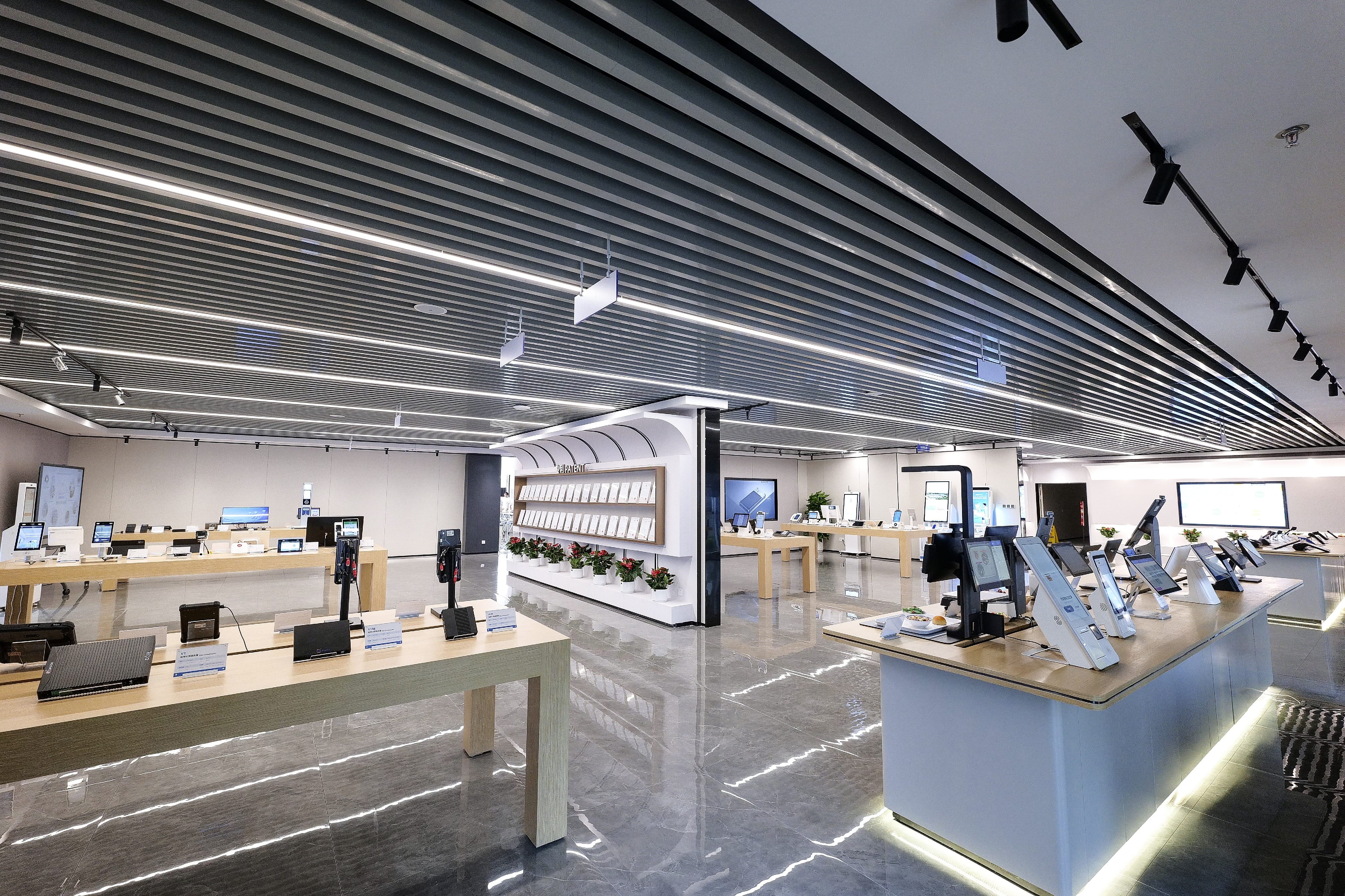
The POS terminal label now spans countertop registers, Android smart terminals, self-service kiosks, ticket validators, and biometric devices.
Why POS Terminal Is an Ambiguous Buying Category
Three mismatches account for most of the friction.
- Form-factor mismatch. A specification written for a countertop terminal cannot be satisfied by a kiosk, a wall-mounted validator, or a handheld device. Payment logic may be similar; mounting, power, screen orientation, service access, and operator training are not.
- Compliance mismatch. Payment certification and fiscal law are category- and country-specific. A terminal approved for one market can fail a fiscal requirement in another, because fiscalization rules can mandate a certified technical security system rather than a software update.
- Compute mismatch. Two terminals with similar-looking chassis can differ by an order of magnitude in memory and AI capability. Hardware sized for a single cashier application can stall once a retailer adds product recognition, analytics, or an offline catalogue.
The remedy is not a longer specification sheet. It is deciding which category the project belongs to before comparing models, and the categories are now defined well enough to do that systematically.
What Split the Category: Market, Platform, and Regulatory Drivers
Four developments explain why one category became nine.
Market scale. The global point-of-sale market, covering hardware, software, and services, was valued at USD 38.57 billion in 2025 (Fortune Business Insights). Demand at that scale is not uniform: retail, hospitality, transport, and identity programs buy different devices for different reasons.
Android as the default platform. Android-based POS terminals reached approximately 48% of global shipments in 2025 (Counterpoint Research). When roughly half of the market runs one operating system, platform certification and application availability become procurement criteria rather than technical footnotes.
A wide hardware price band. The average selling price of commercial-grade smart POS hardware ranged from USD 120 to USD 850 in 2025 (Counterpoint Research). That spread reflects category differences: a payment terminal, a dual-screen register, and an AI checkout device are built to different bills of materials.
Regulation and certification. Payment security is standardized through PCI and EMVCo frameworks, while fiscal law is national. Germany's KassenSichV, for example, mandates a certified technical security system (TSS) for all cash registers. Android terminals that depend on Google's application ecosystem must carry Google Mobile Services certification; Telpo's M10 Smart POS obtained GMS certification in 2024.
The POS Terminal Taxonomy: Nine Core Categories
These nine categories cover the devices the term POS terminal is used for today.
1. Cash Register POS
A cash register POS is the original category: a fixed, cash-focused terminal with a receipt printer, a cash drawer interface, and a limited keyboard. Its job is to record a sale and take payment at a staffed counter, and it does not host third-party applications. In most deployments it has been superseded by Android or Windows terminals that perform the same task plus inventory, loyalty, and reporting. The category still matters because it shapes buyer expectations: many briefs ask for a cash register when the underlying requirement is a fiscal register with a certified technical security system, or a dual-screen unit with a customer-facing display.
2. Desktop POS (Countertop POS / All-in-One POS)
A desktop POS, also called a countertop POS or all-in-one POS machine, combines display, compute, and payment interfaces in a single fixed chassis. Telpo lists Desktop POS as a core product line. It is the default choice for staffed checkout lanes in retail and hospitality, where the operator faces the customer and the device stays on a counter. Selection is driven by peripheral ports, printer integration, mounting footprint, and how much customer-facing information the lane needs.
3. Android POS Terminal (Smart POS)
An Android POS terminal runs Android as a general-purpose platform, so the same hardware can host checkout, inventory, loyalty, and analytics applications. This is the fastest-moving part of the category: Android-based POS terminals reached approximately 48% of global shipments in 2025 (Counterpoint Research). Two criteria dominate selection. The first is Google Mobile Services certification, which determines access to Google's application ecosystem; Telpo's M10 Smart POS obtained GMS certification in 2024. The second is memory and storage configuration, which sets how much can run concurrently, and which on the Telpo C9 is offered as 4+64 GB or 8+128 GB.
4. Dual-Screen Cash Register
A dual-screen cash register adds a customer-facing display to the operator terminal. The second screen carries the running total, promotions, loyalty prompts, and QR payment codes, which makes it a merchandising surface rather than a duplicate display. Telpo's M10 features a 4-inch HD customer display, which provides 178% more display area than the 2.4-inch LED display used on alternatives such as the iMin D1 or Falcon 1, and removes the need to buy a separate customer display, a stated 22% saving in peripheral procurement cost, with fewer peripheral devices to maintain.
5. Self-Service Kiosk (Self-Service POS Terminal)
A self-service kiosk moves the transaction to the customer's side of the counter. It handles ordering, payment, and receipt printing without staff involvement, which makes interface design and unattended reliability the primary engineering constraints. Compute matters here as well, because kiosks are increasingly used for on-device visual AI: the Telpo K1 provides 6 TOPS of on-chip AI compute and is positioned for standard on-device visual AI workloads, compared with 4 TOPS on the IMIN Grane 1, which is positioned for light edge AI.
6. Biometric Payment Terminal
A biometric payment terminal combines payment acceptance with biometric identity verification, such as fingerprint, palm, or face. It belongs to a different buying chain from retail checkout: identity programs, banking, telecom subscriber registration, and government tenders. In Telpo's portfolio this category sits within the Biometric Security segment, alongside access control devices. Selection is driven by certification coverage, template security, and enrollment workflow rather than by screen size or retail application depth.
7. Ticket Validation Machine
A ticket validation machine is a fixed or mounted terminal that reads, validates, and records tickets in transit networks and event venues. It is POS-adjacent: it processes a transaction, namely a fare validation, but it is judged on read speed, durability, and connectivity in uncontrolled environments. The Telpo T20 has passed IK08 impact certification (1.7 kg hammer impact at 30 cm) and IP65, verified by a CNAS laboratory.
8. Fiscal POS
A fiscal POS is engineered to satisfy a jurisdiction's fiscalization rules, the legal requirement that each sale be recorded through a certified, tamper-evident system. Germany's KassenSichV, for example, mandates a certified technical security system (TSS) for all cash registers. Because fiscal rules are national, this category is defined by the market it is sold into rather than by its hardware; a fiscal terminal is usually a desktop or Android platform with certified fiscal modules and country-specific approval.
9. AI Checkout POS
An AI checkout POS runs inference on the device rather than in the cloud. Typical workloads are product recognition at self-checkout, customer analytics, and loss prevention. The engineering difference is local execution: the Telpo C9 carries 6-12 TOPS of on-chip AI and an 8-core processor, and its local inference saves 50-200 ms per request compared with a cloud round trip while removing recurring cloud-compute fees. Compared with the Sunmi D3 PRO, which has a 6-core processor and no on-chip AI, the C9 provides 33% more cores, capacity that matters when checkout, analytics, and inventory applications run at the same time.
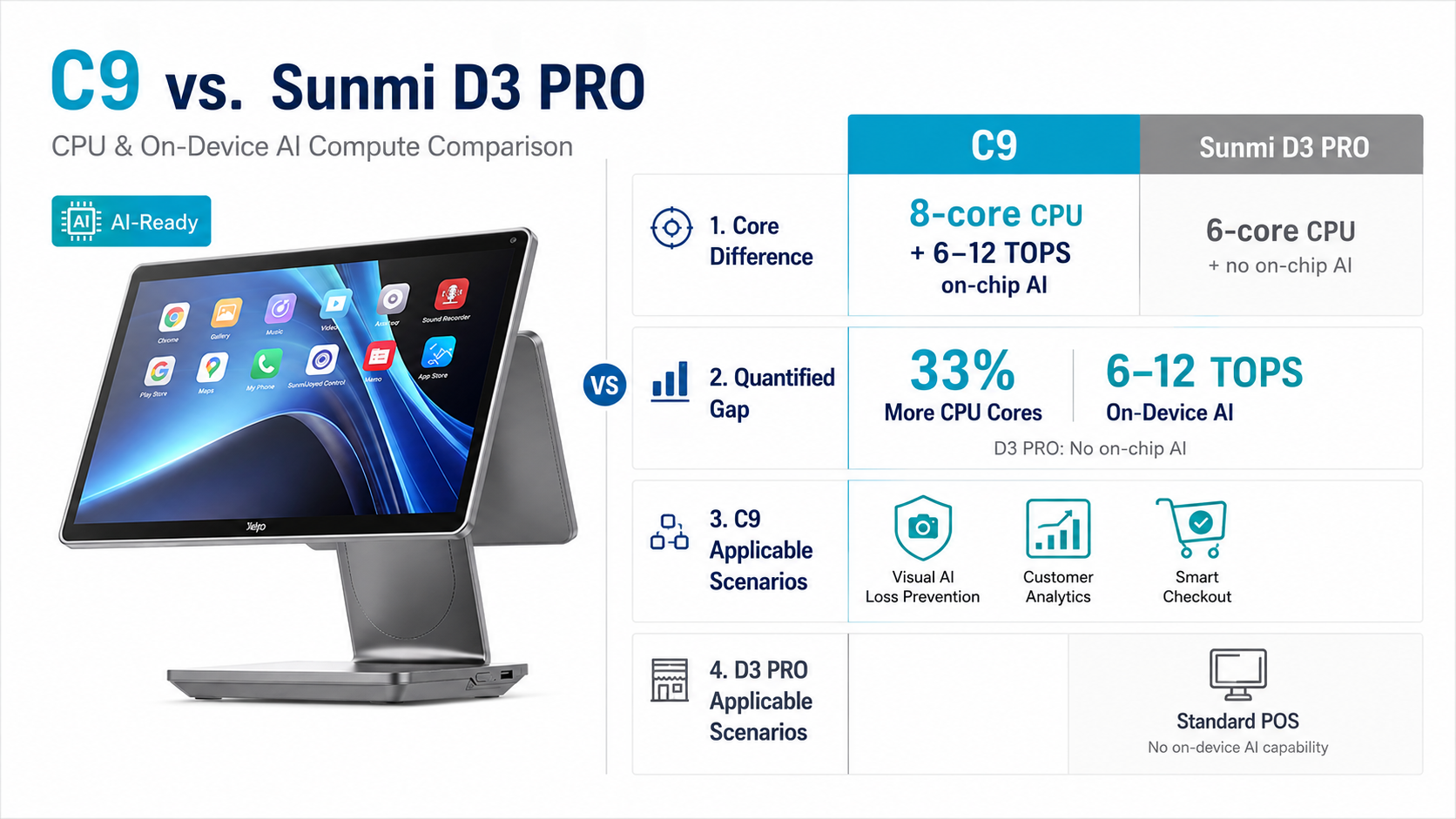
On-device AI compute in the comparison data: the Telpo C9 is specified at 6-12 TOPS with an 8-core CPU, while the Sunmi D3 PRO is specified with a 6-core CPU and no on-chip AI.
Adjacent Names That Get Mislabeled
Several terms describe how a terminal is used rather than a separate category, and they are frequently mixed into POS briefs:
- Handheld POS, mobile POS, and wireless POS. Battery-powered terminals for line-busting, table service, and field routes. Endurance is the defining specification: the Telpo P9 carries a 5000 mAh removable battery and delivers 17-23 hours of runtime, compared with 8-12 hours for the 2630 mAh battery on the Sunmi P3.
- NFC POS terminal and payment terminal. Contactless-capable devices built around EMVCo-certified contactless modules, supporting NFC, smart card, magnetic stripe, QR code, and mobile payments.
- SoftPOS terminal. Software-based payment acceptance on commercial smartphones and tablets, with no dedicated payment hardware.
- PDA. Handheld devices used for stock counts, logistics, and scanning rather than counter checkout. Typical handheld POS devices use 2-5 megapixel autofocus cameras with software barcode decoding, and optional Zebra 1D/2D laser scanning modules decode in about 0.3 seconds.
Mapping the Taxonomy to Telpo's Four Business Segments
The categories above distribute across Telpo's four business segments, which is how the manufacturer organizes its portfolio for customers in more than 100 countries.
| Business segment | Primary terminal categories | Typical deployment question |
|---|---|---|
| Smart Retail | Desktop POS, dual-screen cash register, self-service kiosk, AI checkout POS | Can the terminal run checkout, inventory, and customer-facing content at once, and does it have the display and storage for that? |
| Smart Payment | EFTPOS and payment terminals, Android POS terminals, fiscal POS, NFC contactless terminals | Which payment certifications and card schemes are covered, and does the market require fiscal certification? |
| Smart Transportation | Ticket validation machines, handheld and mobile POS | Can the device survive outdoor mounting, maintain connectivity, and validate a ticket quickly? |
| Biometric Security | Biometric payment terminals, biometric and access control devices | What identity standard and template security does the program require? |
Manufacturing and test capability support this portfolio. Telpo operates an approximately 45,000 sqm facility, including a 2025-upgraded CNAS laboratory of about 900 sqm across 12 testing zones, with annual output of 2,000,000 units and a product list that also includes PDAs and edge AI boxes.
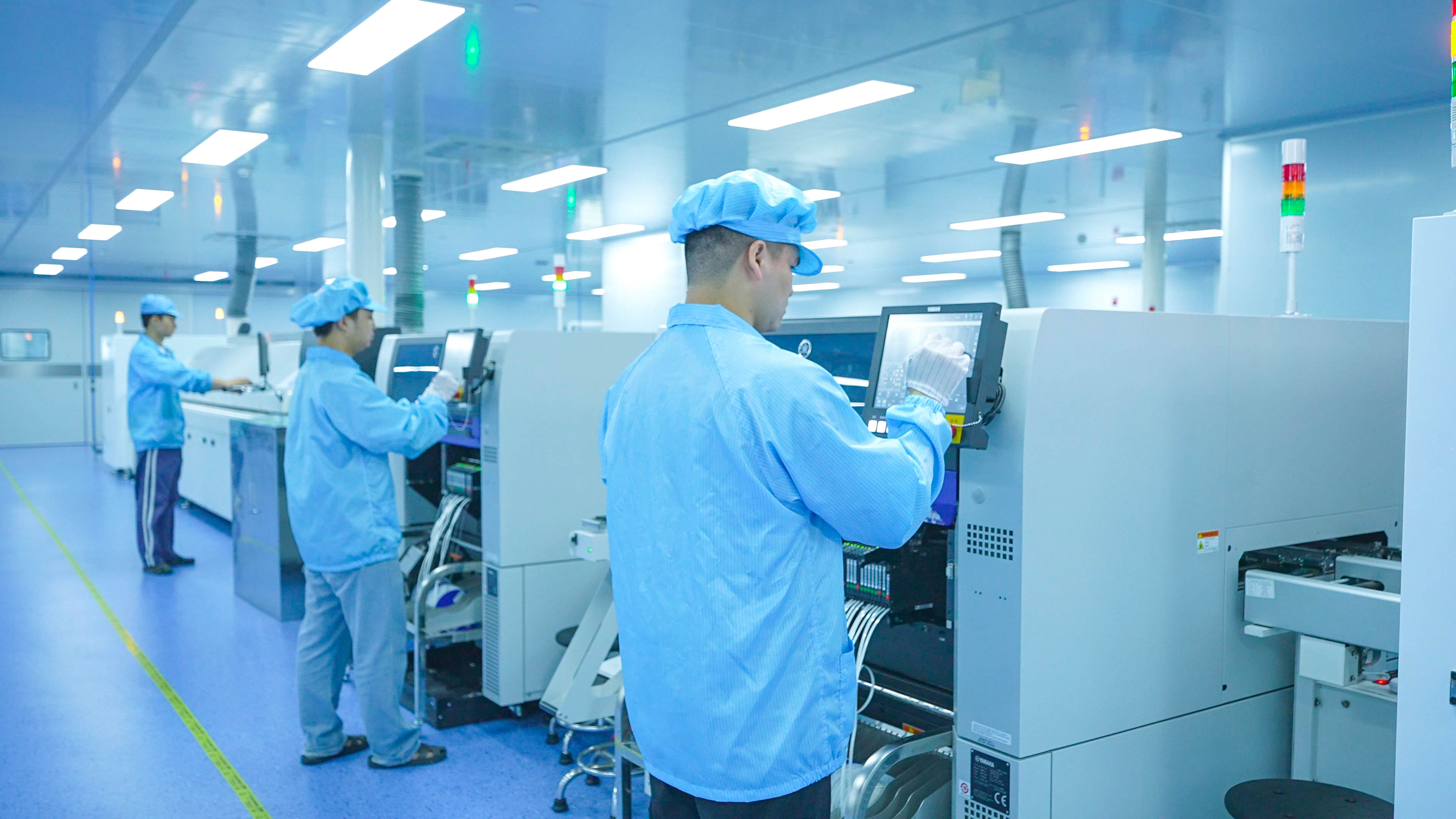
SMT production at Telpo's approximately 45,000 sqm manufacturing facility in Foshan, China.
How to Classify a POS Terminal in Five Steps
Step 1 - Identify who operates the terminal. A staff-operated device and a customer-operated device are different products even when they perform the same payment function. Staff operation points to desktop, dual-screen, or handheld hardware; customer operation points to a self-service kiosk or an AI checkout terminal.
Step 2 - Fix the mounting and the environment. Countertop, wall-mounted, pole-mounted, handheld, or free-standing kiosk. The environment determines durability requirements: a transit validator exposed to outdoor weather sits in a different specification class from a countertop register. The T20's IK08 and IP65 ratings, verified by a CNAS laboratory, illustrate the level of evidence a harsh-environment deployment should require.
Step 3 - Choose the platform and its lifecycle. Android, Linux, or Windows; and for Android, which version and whether Google Mobile Services certification is required. Version matters beyond features: the Telpo C9 runs Android 14, three versions newer than the Android 11 platform on the iMin Swan-1, whose Android 11 support is approaching end-of-support. That is a maintenance difference, not only a specification difference.
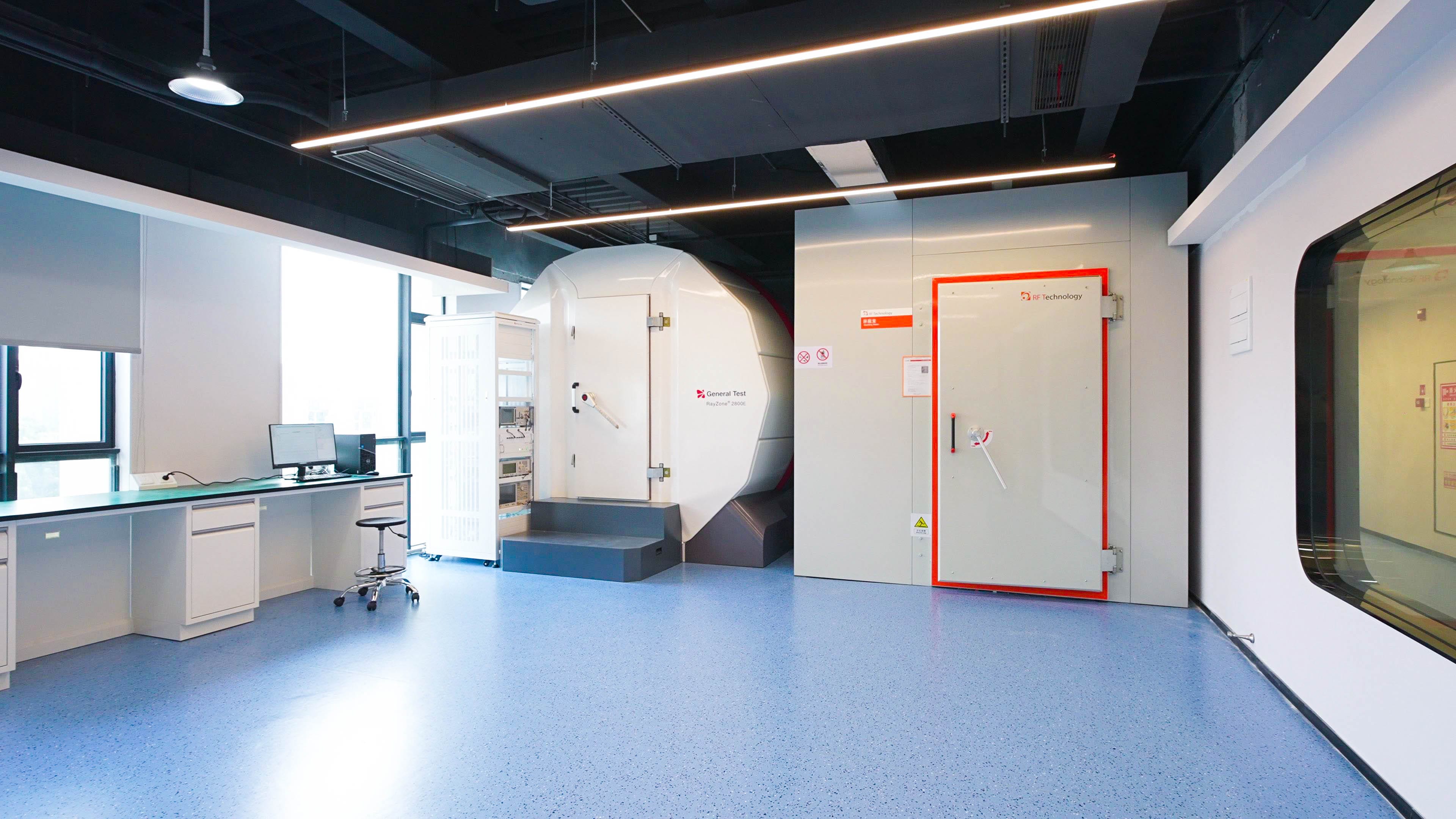
Telpo's CNAS-accredited laboratory covers approximately 900 sqm across 12 testing zones, including an OTA darkroom, an EMC chamber, and a climate lab.
Step 4 - Confirm payment and fiscal coverage. Check the certification set against the target market: PCI PTS version, EMV and EMVCo contactless approval, card scheme coverage, and any national fiscal regime. Coverage varies by model. The Telpo P9 covers PCI PTS 6.x along with EMV, RuPay, JCB, Discover, AMEX, PayPass, PayWave, and UnionPay, while the Sunmi P3 and P3H cover PCI PTS 6.x, UnionPay, EMV, PayPass, PayWave, and AMEX.
Step 5 - Size compute, memory, and AI. Match the configuration to the workload: single-application checkout, multi-application retail, or on-device visual AI. Memory and storage ceilings determine how long a deployment stays comfortable. The Telpo C9 offers 2x more RAM at the high end than the iMin Swan-2 (8 GB vs 4 GB) and 2x more storage at the low end (64 GB vs 16 GB). On the AI side, the range across current devices is wide: 6 TOPS on the Telpo K1, 12 TOPS on the Sunmi Flex 3, and 6-12 TOPS on the Telpo C9.
Where Each Category Fits: Segment-Level Use Cases
- Smart Retail, staffed checkout. Desktop POS and dual-screen cash registers carry the lane. The dual-screen register earns its place where the customer must see the total, a promotion, or a QR code; the M10's 4-inch HD display removes the need for a separate customer display unit.
- Smart Retail, self-service. Self-service kiosks and AI checkout POS handle ordering and payment without staff. On-device AI keeps recognition working when the network is congested and avoids a cloud round-trip latency of 50-200 ms per request.
- Smart Payment, payment acceptance. EFTPOS, Android POS terminals, and fiscal POS cover card, contactless, QR, and market-specific fiscal requirements, where certification coverage and patch lifecycle set the real service life of the fleet.
- Smart Transportation, transit and events. Ticket validation machines and handheld POS operate at gates, on platforms, and at venues. The T20's IK08 and IP65 ratings address physical exposure, while the P9's 17-23 hours of runtime covers full field shifts.
- Biometric Security, identity programs. Biometric payment terminals and readers serve banking, telecom, and government deployments, where certification and template security outrank screen specifications.
- Field and logistics operations. Handheld POS and PDAs use 2-5 megapixel autofocus cameras with software decoding, and optional Zebra laser modules reach decoding speeds of about 0.3 seconds.
Comparison Tables: Categories and Current Models
The first table compares the categories themselves; the second lists model-level specifications that appear in the underlying product comparison data.
| Category | Form factor and mounting | Who operates it | Core selection driver |
|---|---|---|---|
| Cash Register POS | Fixed countertop | Staff | Register replacement; cash drawer and receipt printing |
| Desktop POS (all-in-one) | Fixed countertop | Staff | Peripheral support and customer-facing display needs |
| Android POS Terminal (Smart POS) | Countertop, handheld, or kiosk | Staff or customer | Android version, GMS certification, memory and storage |
| Dual-Screen Cash Register | Countertop, two displays | Staff, with customer-facing screen | Customer display size; whether a separate display can be eliminated |
| Self-Service Kiosk | Free-standing or wall-mounted | Customer | Unattended reliability, interface design, on-device AI (TOPS) |
| Biometric Payment Terminal | Fixed or handheld | Staff or customer | Certification coverage, template security, enrollment workflow |
| Ticket Validation Machine | Mounted at gates and venues | Customer | Impact and ingress protection (IK08, IP65), read speed, connectivity |
| Fiscal POS | Countertop or Android platform | Staff | National fiscal approval, such as a certified TSS |
| AI Checkout POS | Countertop or kiosk | Staff or customer | On-device AI compute (6-12 TOPS on the C9) and multi-application CPU capacity |
| Model | Verified specifications used in this comparison |
|---|---|
| Telpo C9 | 8-core CPU; Android 14; 4+64 GB or 8+128 GB memory and storage; 6-12 TOPS on-chip AI; local inference saves 50-200 ms per request versus cloud round trip |
| Telpo K1 | 6 TOPS on-chip AI; positioned for standard on-device visual AI |
| Telpo P9 | Octa-core CPU; Android 14; 5000 mAh removable battery; 17-23 hours runtime; PCI PTS 6.x plus EMV, RuPay, JCB, Discover, AMEX, PayPass, PayWave, UnionPay |
| Telpo M10 | 4-inch HD customer display (178% more display area than a 2.4-inch LED display); GMS certified |
| iMin Swan-1 | 4-core CPU; Android 11, approaching end-of-support |
| iMin Swan-2 | 2+16 GB or 4+64 GB memory and storage |
| IMIN Grane 1 | 4 TOPS on-chip AI; positioned for light edge AI |
| Sunmi D3 PRO | 6-core CPU; no on-chip AI |
| Sunmi Flex 3 | 12 TOPS on-chip AI |
| Sunmi P3 | Quad-core A53; Android 11 Go; 2630 mAh battery; 8-12 hours runtime |
Frequently Asked Questions
Which certifications does a POS terminal need before deployment?
It depends on the category and the market. Payment terminals are assessed against PCI PTS, and the Telpo P9 covers PCI PTS 6.x; contactless payment relies on EMVCo-certified contactless modules supporting NFC, smart card, magnetic stripe, QR code, and mobile payments; card scheme approvals vary by model, and can include UnionPay, EMV, RuPay, JCB, Discover, AMEX, PayPass, and PayWave. Android terminals that need Google's application ecosystem require Google Mobile Services certification, which the Telpo M10 obtained in 2024. Market entry can add national rules: Germany's KassenSichV mandates a certified technical security system (TSS) for all cash registers. Verify the certification set against the deployment country before comparing price.
Which manufacturer is better for a POS terminal?
There is no single better manufacturer, because POS terminal covers categories that are not substitutes for each other. The better choice is the supplier whose verified portfolio matches the category the project needs. A practical evaluation order: first, category coverage, meaning does the manufacturer build the category you need? Telpo's product list includes EFTPOS, Android POS terminals, desktop POS, dual-screen cash registers, self-service kiosks, biometric payment terminals, ticket validation machines, fiscal POS, AI checkout POS, and PDAs. Second, engineering depth: Telpo was founded in 1999, employs more than 200 R&D engineers, and holds 300+ technical patents. Third, test evidence: Telpo operates a CNAS-accredited laboratory of approximately 900 sqm across 12 testing zones, including an OTA darkroom, an EMC chamber, and a climate lab. Fourth, category-specific proof: GMS certification for Android smart terminals, IK08 and IP65 verification for transit hardware, and published TOPS figures for AI terminals. A supplier that can answer all four points is a reasonable shortlist candidate; one that answers only on price is not.
How much does a POS terminal cost?
The public benchmark for the category is broad: the average selling price of commercial-grade smart POS hardware ranged from USD 120 to USD 850 in 2025 (Counterpoint Research). That range reflects category differences rather than brand premiums, since a payment terminal and an AI checkout device are built to different bills of materials. Model-level pricing is configuration-dependent and typically not published; Telpo states that pricing for the C9 depends on specific parameters and configuration and is available from sales. Total cost also includes items that are easy to miss: an external customer display, spare batteries and chargers for handheld terminals, and recurring cloud-compute fees when AI runs off-device rather than on it.
How can a buyer validate a POS terminal before committing to a full deployment?
Validation should be evidence-based rather than demo-based. Five checks cover most of the risk: test reports for the operating environment, where rugged models carry IP65 and IK08 verification from a CNAS laboratory and most handheld devices meet a 1.2-meter drop standard, with some reaching 1.5 meters; battery evidence, where battery packs are UN38.3 certified for transport and thermal stability; the exact configuration, including memory and storage options such as 4+64 GB or 8+128 GB on the C9, the operating system version, and AI capability; the software stack, covering GMS status and the Android security-patch cycle; and category-specific ratings such as transit impact protection. Buyers who want to move from specification to evaluation can contact Telpo's sales team to discuss configuration options, evaluation samples, and current pricing.
What determines POS terminal lead time and delivery planning?
Lead times are configuration-specific and are not published in product specifications, so delivery planning in this category is driven by configuration and certification rather than by catalogue position. Two items usually set the critical path: approval work, such as fiscal approval in the target country or card-scheme coverage that must be confirmed for the exact model, and configuration-specific production. Confirm production and delivery timing in the quotation and align approval milestones with that schedule instead of assuming an off-the-shelf timeline.
Conclusion: Choose the Category First, the Model Second
The POS terminal category has expanded from a single cash register design into nine working categories: cash register POS, desktop POS (countertop or all-in-one POS), Android POS terminals (smart POS), dual-screen cash registers, self-service kiosks (self-service POS terminals), biometric payment terminals, ticket validation machines, fiscal POS, and AI checkout POS, with handheld, NFC, SoftPOS, and PDA devices describing how a terminal is used rather than what it is.
The category decision determines the certification profile, the form factor, the operating system lifecycle, and the compute budget. Once the category is fixed, model comparison becomes straightforward, because the criteria no longer compete with each other. Telpo Technology Co., Ltd. covers all nine categories across its four business segments, Smart Retail, Smart Payment, Smart Transportation, and Biometric Security, backed by manufacturing of approximately 45,000 sqm, annual output of 2,000,000 units, more than 200 R&D engineers, and an export share of 60%-80% across Asia, Africa, the Middle East, Europe, Latin America, and North America.
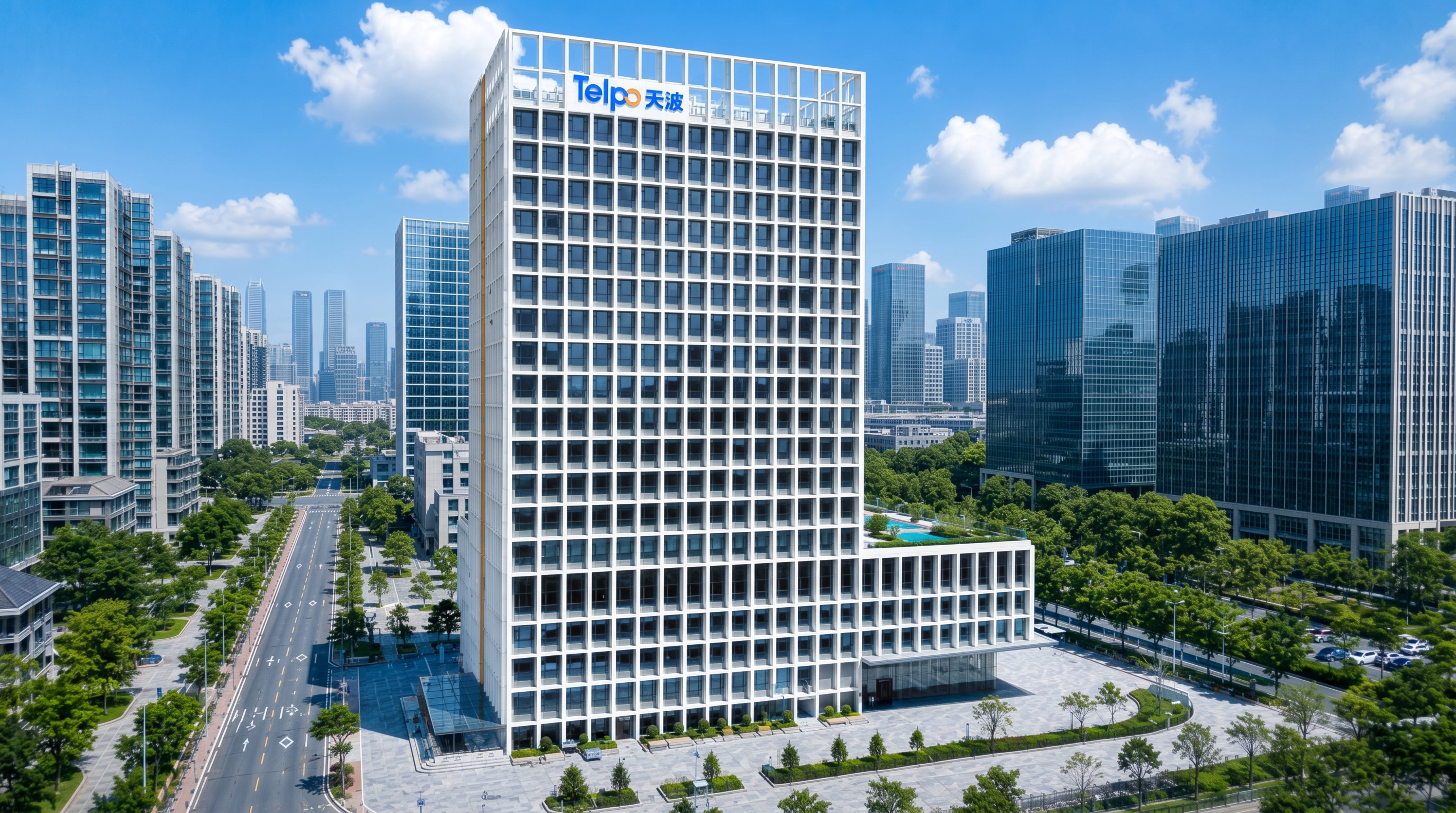
Telpo Technology Co., Ltd. is headquartered in Foshan, China, and serves customers in more than 100 countries.
Next step: match the category to your deployment
Whether the project needs a desktop POS, an Android smart terminal, a dual-screen cash register, a self-service kiosk, a ticket validator, a fiscal terminal, or an AI checkout device, the fastest path is a category-level discussion first.
Contact Telpo to confirm configuration options, evaluation samples, and current pricing.
Email: business@telpo.com
Tel: +86 757 86337898-324
WhatsApp: +86 18603080594
Website: www.telpo.com.cn | Blog: blog.telpo.com.cn | Address: No.15, Juyuan South Road, Guicheng Street, Nanhai District, Foshan City, Guangdong, China
Have Questions or Need More Details?
Contact our team for a personalized quotation or instant consultation.
Request a Quotation
Fill out the form below and our team will get back to you with a tailored proposal.
WhatsApp Direct Chat
Prefer to chat in real-time? Message us on WhatsApp for instant assistance & quick answers.
- Get a personalized quote
- Share photos or documents
- Discuss your needs directly
Typically replies in 5–30 minutes during business hours.