
Telpo C9 vs Sunmi D3 PRO: On-Device AI POS Terminal Decision Guide
The Telpo C9 and the Sunmi D3 PRO are both Android-class countertop POS terminals built for retail and hospitality checkout, so a feature-list comparison will not settle the choice. One question does: does anything at your lane need to run an AI model on the terminal itself? If it does, the C9 is the reference point, because Telpo publishes on-device AI at 12 TOPS with 0.1 s item recognition at 99.8% accuracy or better in its AI checkout configuration. If your lanes do standard POS work — scan, tender, print, reconcile — both terminals can serve, and the decision moves to payment certification, printer integration, SDK access, service coverage and price band.
This guide is written as a decision path rather than a datasheet rewrite. It keeps verified Telpo C9 facts separate from figures you must confirm with Sunmi before ordering, explains what local inference actually buys at the checkout lane, and gives you the documents to request so that the comparison rests on evidence instead of marketing claims on either side.
Why 'AI POS' is a label, not a specification
Two terminals can share a 15.6-inch main screen, a dual-screen layout and an Android operating system while differing completely in the silicon underneath. Buyers shortlist on form factor and price, then discover that the model they assumed would run vision workloads has no AI accelerator, or a processor sized for a simple counter app. The label on the brochure does not tell you which one you are buying.
Three definitions remove most of the confusion:
- On-device inference means the trained model executes on the terminal's own processor and AI accelerator. Frames or transaction features are processed locally; only results travel over the network.
- TOPS (trillions of operations per second) is a throughput rating for an AI accelerator. It is not an accuracy figure, and it does not predict how quickly your particular model will run.
- Core count describes general-purpose CPU parallelism. It governs how many ordinary application threads a terminal can carry at once — it does not by itself indicate that a device can run vision models.
A terminal can be strong on one of these and weak on the other. That is why the C9-versus-D3 PRO decision should be settled on three written answers rather than on a headline number: which functions must run locally, what response time the lane needs at peak, and what evidence each supplier will attach to the quotation.
Industry background: Android standardised the lane, so the silicon now differentiates
Android-based POS terminals reached approximately 48% of global shipments in 2025, according to Counterpoint Research (published 13 August 2026). Standardising the operating system had a predictable effect: application development, integration and fleet management stopped being the hard differentiators, and the hardware platform underneath the app became the place where terminals genuinely diverge.
The overall point-of-sale market was valued at USD 38.57 billion in 2025, according to Fortune Business Insights (published 14 September 2026), a figure that includes hardware, software and services. On the hardware side, Counterpoint Research reported an average selling price range of USD 120 to USD 850 for commercial-grade smart POS hardware in 2025 — a spread of roughly seven times for products that look broadly similar on a spec sheet. Silicon choice, payment certification scope, printer integration and reader modules account for most of that spread.
The practical implication for a 2026 procurement is that price band alone tells you very little. A USD 200 terminal and a USD 700 terminal may both complete a card transaction; they differ in what else the lane can do without a companion server.
What on-device AI actually changes at the checkout lane
Local inference changes the shape of the transaction, not just its speed. Four effects matter to a buyer.
1. Latency is no longer a network variable
When a recognition step runs in the cloud, the response time is the sum of radio uplink, wide-area transit, queueing at the inference service and downlink. When it runs on the terminal, the response time is the model's compute time on local silicon. Telpo specifies 0.1 s for item recognition in the C9's AI checkout configuration; the cloud path adds several stages that the store does not control.
To size that difference for your own business case, model it explicitly rather than quoting a vendor figure. A workable planning assumption is 50 to 200 ms of added round-trip time on a congested in-store network — an assumption, not a measured benchmark of either terminal, and one you should replace with your own measurement during a pilot. On a high-volume self-checkout lane where a recognition step repeats several times per basket, that increment compounds into visible queue time.
2. The lane keeps working when the link does not
A local model continues to classify items when Wi-Fi drops or the WAN link degrades. This matters most in temporary or semi-permanent environments — event retail, pop-up stores, sites with oversubscribed connectivity — where a cloud-dependent recognition step becomes a manual key-entry step during an outage.
3. Video does not have to leave the store
Processing frames at the terminal reduces video egress and keeps raw imagery local. Whether that satisfies your data-handling policy is a determination for your own compliance team; the terminal design only changes the default data path, it does not grant compliance by itself.
4. There are real costs and boundaries
On-device AI shifts cost into the terminal: a more capable system-on-chip, more memory headroom, and a thermal and power budget that has to hold up across a full trading day. Accuracy figures are tied to a specific model, item catalogue, lighting and camera position, and must be validated against your own stock. Model updates, version control and drift monitoring remain your responsibility regardless of where inference runs.
Telpo C9: the verified capability profile
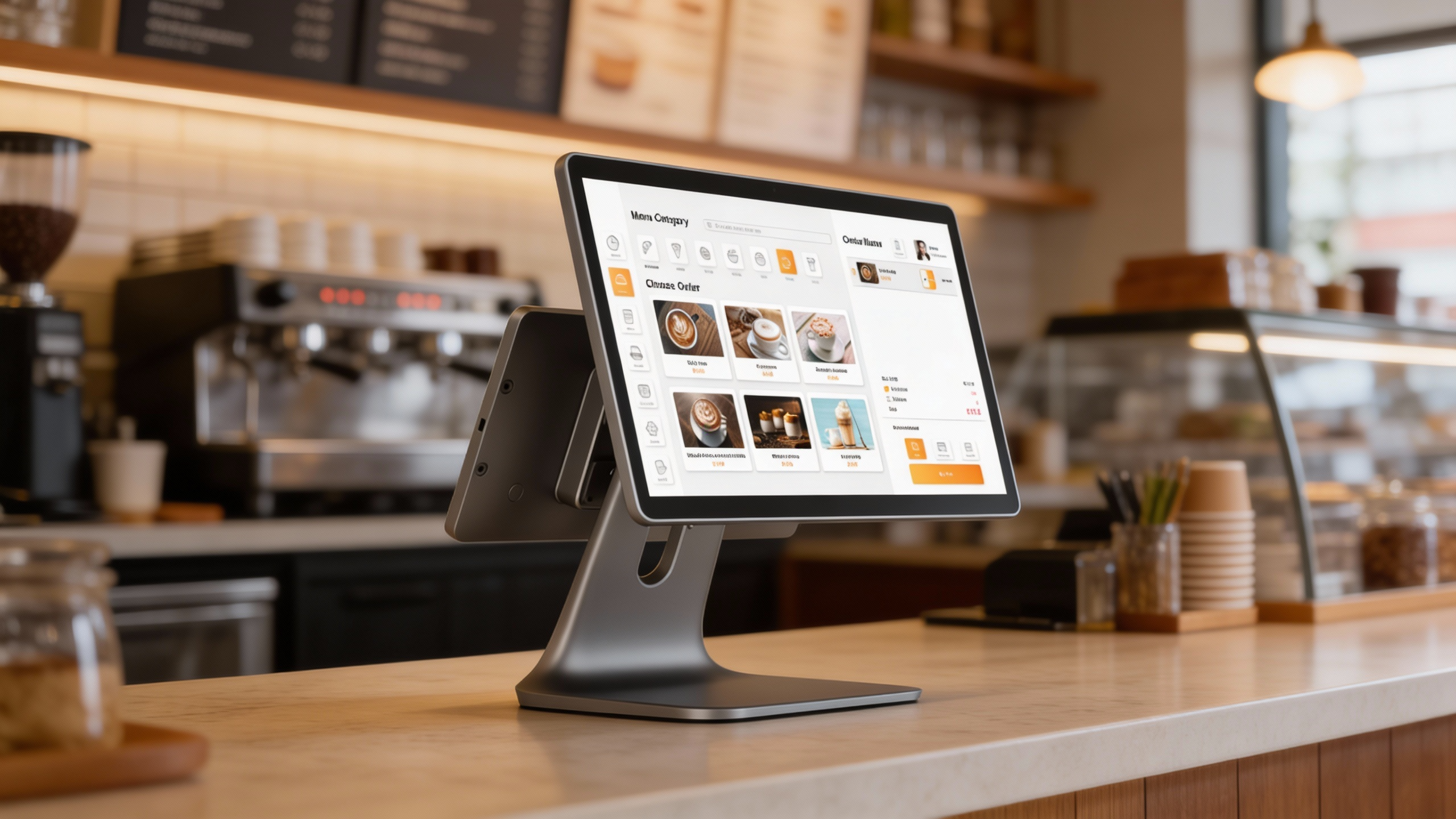
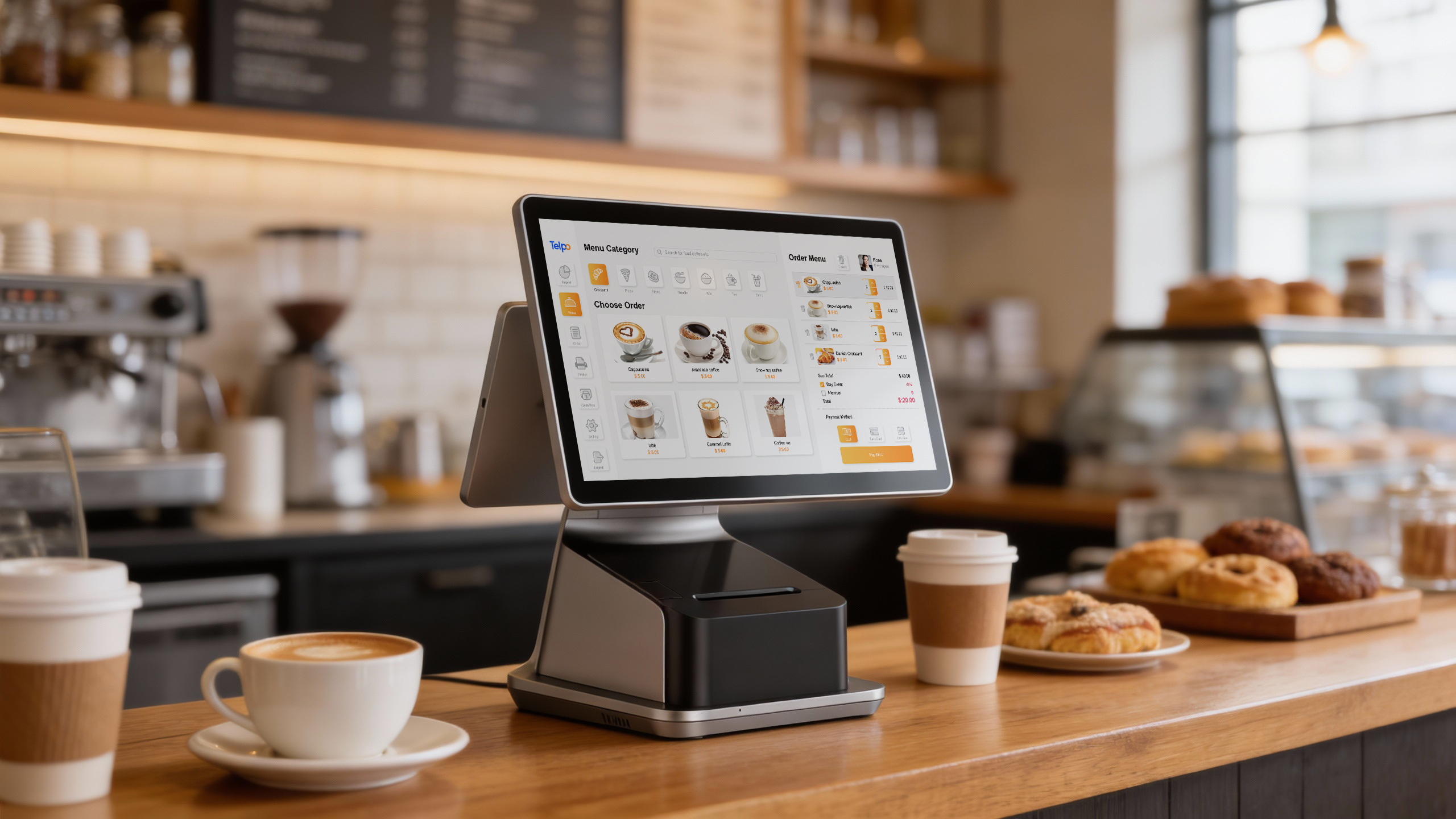
Telpo Technology Co., Ltd. (www.telpo.com.cn) describes the C9 as an Android cash register POS terminal within a portfolio that also covers EFTPOS, desktop POS, dual-screen cash registers, self-service kiosks, ticket validators, fiscal POS, biometric terminals and AI checkout POS. The company was founded in 1999 and is headquartered in Foshan, China. The C9 facts that matter for this decision are the ones Telpo states in its own application specifications.
On-device AI and vision performance
Telpo's C9 application specification for unattended and self-service retail lists on-device AI processing at 12 TOPS, AI vision product recognition at 0.1 s and recognition accuracy of 99.8% or better, identification of both barcoded and barcode-free items, and real-time inventory deduction at the terminal. Those numbers belong to that configuration. They are a starting point for validation against your own catalogue, not a guarantee for every deployment.
Hardware and lane fit
- 15.6-inch main touchscreen with an optional 10.1-inch or 15.6-inch customer display; dual-screen configurations are specified as 15.6"+10.1" or 15.6"+15.6".
- Designed for 24-hour continuous operation in unattended retail zones.
- Android operating system; the C9 family also includes the C9PD with a built-in 250 mm/s receipt printer and the C9W running Windows on Intel i3 or N150 for sites with existing Windows POS software.
- Optional modules relevant to payment and identification: NFC contactless reading (SoftPOS-compatible), QR scanner, face-recognition camera, external financial card reader, and an electronic scale rated 15 kg at 2 g resolution.
- Red Dot Award 2026 design, with ODM/OEM branding and logo customisation available.
- Fleet management through Telpo MDM, with remote monitoring and diagnostics.
Limitations to plan around
The base C9 does not include a receipt printer; printing is external unless you specify the C9PD variant with its integrated 250 mm/s printer. Card payment through a dedicated financial reader is an optional external module, not a built-in PIN pad. And Telpo's published certification records in the material supplied for this guide cover other models rather than the C9 specifically — so the compliance section below treats C9 certification as something to request per order rather than assume.
Sunmi D3 PRO: the verification path, not assumed specifications
Sunmi's own current documentation is the authority on the D3 PRO's processor configuration and on whether its system-on-chip carries an AI accelerator. Comparison content elsewhere — including widely repeated claims about core counts and the presence or absence of on-chip AI — is not a substitute for the datasheet revision that will be attached to your purchase order.
Two rules keep this honest. First, a terminal whose documentation does not publish a TOPS figure has not thereby been shown to lack on-chip AI; not disclosed does not mean not capable. Second, a published core count does not demonstrate that a device can run vision models at lane speed, because core count describes general-purpose parallelism rather than accelerator throughput.
Request these six items in writing from Sunmi or your distributor, and ask Telpo for the same six for the exact C9 SKU you intend to buy:
- System-on-chip model and core configuration, with the datasheet revision reference.
- Whether the SoC includes an NPU or other AI accelerator, and its TOPS rating if it does.
- RAM and storage for the specific SKU.
- OS version and GMS status, if your app distribution depends on Google services.
- Payment certifications — PCI PTS approval number and EMV Level 1 and Level 2 kernel approvals — that name the exact model, hardware version and firmware.
- Firmware support window, SDK and API documentation availability, and remote management tooling.
Head-to-head comparison on the dimensions that decide the purchase
The table below compares only what is documented on the C9 side and marks the D3 PRO column as a confirmation item. Read it as a procurement worksheet, not as a verdict on either product.
| Decision dimension | Telpo C9 (documented) | Sunmi D3 PRO (confirm in writing) |
|---|---|---|
| On-device AI | 12 TOPS on-device AI specified for the AI checkout configuration | Confirm SoC model, NPU presence and TOPS rating |
| Vision performance | 0.1 s recognition at 99.8% or better, per Telpo's application specification | Benchmark on your catalogue and lighting |
| Processor | Confirm SoC model and core count on the datasheet revision attached to your quote | Same request |
| Display | 15.6" main; optional 10.1" or 15.6" customer display | Confirm screen sizes and dual-screen option |
| Receipt printing | External on C9; built-in 250 mm/s on C9PD | Confirm integrated or external |
| Payment | NFC contactless (SoftPOS-compatible); optional external financial card reader; PCI/EMV status per SKU | Confirm approvals covering the exact SKU |
| Fleet management | Telpo MDM remote monitoring and diagnostics | Confirm management platform and API |
| MOQ and lead time | Typically 500–1,000 units; 30 days or more, subject to negotiation | Confirm commercial terms |
| Price band | Configuration-dependent; request a quotation | Configuration-dependent; request a quotation |
Running POS, analytics and inventory on one terminal
Concurrent workloads are where a lane-class terminal and a vision-capable terminal separate in daily use. A single device asked to process tender, stream recognition results into an analytics layer and update inventory in real time competes for four resources: CPU threads, memory, memory bandwidth and thermal headroom. When any one of them saturates, the visible symptom is not a crash — it is a lane that slows down at the busiest hour of the day.
Size it in four steps:
- List the concurrent jobs. Payment application, recognition model, inventory sync, loyalty lookup, receipt printing and remote management are six separate jobs, not one.
- Measure peak, not average. Lunch service and weekend peaks define the requirement; a quiet Tuesday will hide a shortfall.
- Reserve headroom. Plan for the busiest hour plus a margin for model or app updates, because both tend to grow after deployment.
- Pilot under real conditions. Run the combination in one live store for a defined period and record transaction time, recognition time and any restarts.

Step-by-step evaluation process
Step 1 — Write the workload specification
Before contacting either vendor, state in one page which functions must run locally, which may run in the cloud, and what the lane must still do during a network outage. This document drives every question that follows and prevents the conversation from drifting into feature lists.
Step 2 — Set a latency budget from your own measurement
Time a cloud recognition round trip on your store network at peak. Use that measured figure, not a vendor claim, as the baseline the local option has to beat. If your measurement shows the cloud path adding well over 200 ms, local inference is worth paying for; if it shows a stable 30 ms on a wired backhaul, the case weakens considerably.
Step 3 — Demand model-specific evidence
Ask for the certificate number, issuing body, issue date and standards listed for every compliance claim, and check that the model string matches the unit on the order. Certifications attach to models, hardware versions and firmware; they do not transfer by family name.
Step 4 — Test the payment path with your acquirer
Certification is necessary but not sufficient. Confirm your acquirer or payment processor has tested and approved the exact configuration you are buying, including the external reader module if you use one. Regional schemes add their own approvals, and these are the most common cause of a delayed rollout.
Step 5 — Pilot one lane, then one store
Define success metrics before the pilot: items recognised per basket, recognition time, transaction time at peak, interventions per hundred transactions and restarts per week. Expand only when the numbers hold.
Step 6 — Lock commercial terms against the pilot scope
Telpo states typical MOQ of 500 to 1,000 units, adjusted for project complexity, and lead times of 30 days or more subject to negotiation. Branding-only customisation on existing hardware runs 3 to 7 working days for stock orders and 15 to 25 working days for bulk standard orders. Full ODM work is longer: Telpo quotes 20 working days for a motherboard change, 10 working days for structural work, a 45 working-day minimum for a full machine, and a standard ODM cycle of 4 to 6 months.
Use cases: where local inference earns its cost, and where it does not
Smart checkout and item recognition
This is the documented case for the C9. Unattended retail and self-service zones need item identification at the point of decision, including barcode-free fresh and bakery items, with inventory deducted in real time. Telpo's specification of 0.1 s at 99.8% or better, running on 12 TOPS locally, is the relevant evidence to test against your own catalogue.
Lane vision for loss prevention and customer analytics
These are application workloads rather than terminal features. A retailer either builds or licenses the model, then validates it on the device. What a vision-capable terminal contributes is the local inference budget and the camera integration that make the workload feasible without streaming every frame to a server. Treat any claim that a specific terminal 'provides' loss prevention or customer analytics as a claim about the software stack, and ask to see that stack running.
Standard POS work
Counter service in a café, hotel front-desk payment, loyalty lookup and multi-lane supermarket checkout do not require local vision inference. For these, the D3 PRO class of terminal is a legitimate candidate and the comparison should be run on other criteria: payment certification for your acquirer, counter footprint and printer integration, GMS status if your app depends on Google services, SDK quality, service coverage and unit cost. Choosing the C9 here would be justified by the dual-screen configurations and Telpo MDM fleet management, not by the TOPS figure.
Price band: what drives the number
Pricing for both the C9 and the D3 PRO depends on configuration, and neither vendor publishes a list price that survives contact with a real order. The useful benchmark is the market: Counterpoint Research reported an average selling price range of USD 120 to USD 850 for commercial-grade smart POS hardware in 2025. That range is a market indicator, not a quotation, and it should be used to sanity-check an offer rather than to set a budget.
Four cost drivers explain most of the variance between a low and a high quote: the system-on-chip and any AI accelerator, the scope of payment certification you require, printer and reader modules, and the display configuration. A vision-capable dual-screen terminal with an external card reader and QR scanner sits at a very different point in the range from a single-screen countertop unit. Request a configuration-specific quotation for each candidate and compare like with like.
Certification evidence to demand before you sign
Certification is the constraint that most often delays a POS rollout, and it is the area where generic claims are least useful. Ask for documents, not assurances.
CE marking and the EU
CE marking is declared per product against the applicable EU directives — commonly the Radio Equipment Directive 2014/53/EU where the terminal contains Wi-Fi, Bluetooth or cellular radios, together with EMC requirements and RoHS 2011/65/EU for restricted substances. The certificate must name the exact model, hardware version and firmware. Telpo, for example, holds an EU-type examination certificate under RED 2014/53/EU for its T20 ticket validator (certificate B2301114, notified body 1313, issued 9 February 2023) and a RoHS test report for its P9 terminal (PTC25031705301C-EN01, issued 27 March 2025). Those documents cover those models; they do not establish CE status for a C9 order.
Payment scheme approvals
PCI PTS and EMV approvals attach to model, hardware version and firmware. Telpo's published records include PCI PTS POI approvals for the P6 (4-90217, valid to 30 April 2032) and the P9 (4-40460, valid to 30 April 2032), EMV Contact Level 2 approvals for the P8 and P9, and EMV Contact Level 1 for the TPS900 interface module. None of these transfers to the C9. For a C9 deployment, request the approval covering the specific SKU and confirm it with your acquirer.
Regional market access
Regional schemes matter as much as global ones: BIS registration for self-service terminals in India (for example registration CRS-2022-0516/R-41221104 covering the K8, K8M and K10), NSICCS terminal type approval in Indonesia for the TPS900, and FCC equipment authorisation in the United States. Fiscal regimes are a separate layer — Germany's KassenSichV, for instance, requires a certified technical security system for cash registers — and fiscal readiness must be confirmed for the exact terminal rather than assumed from the product category.
Manufacturing and test evidence
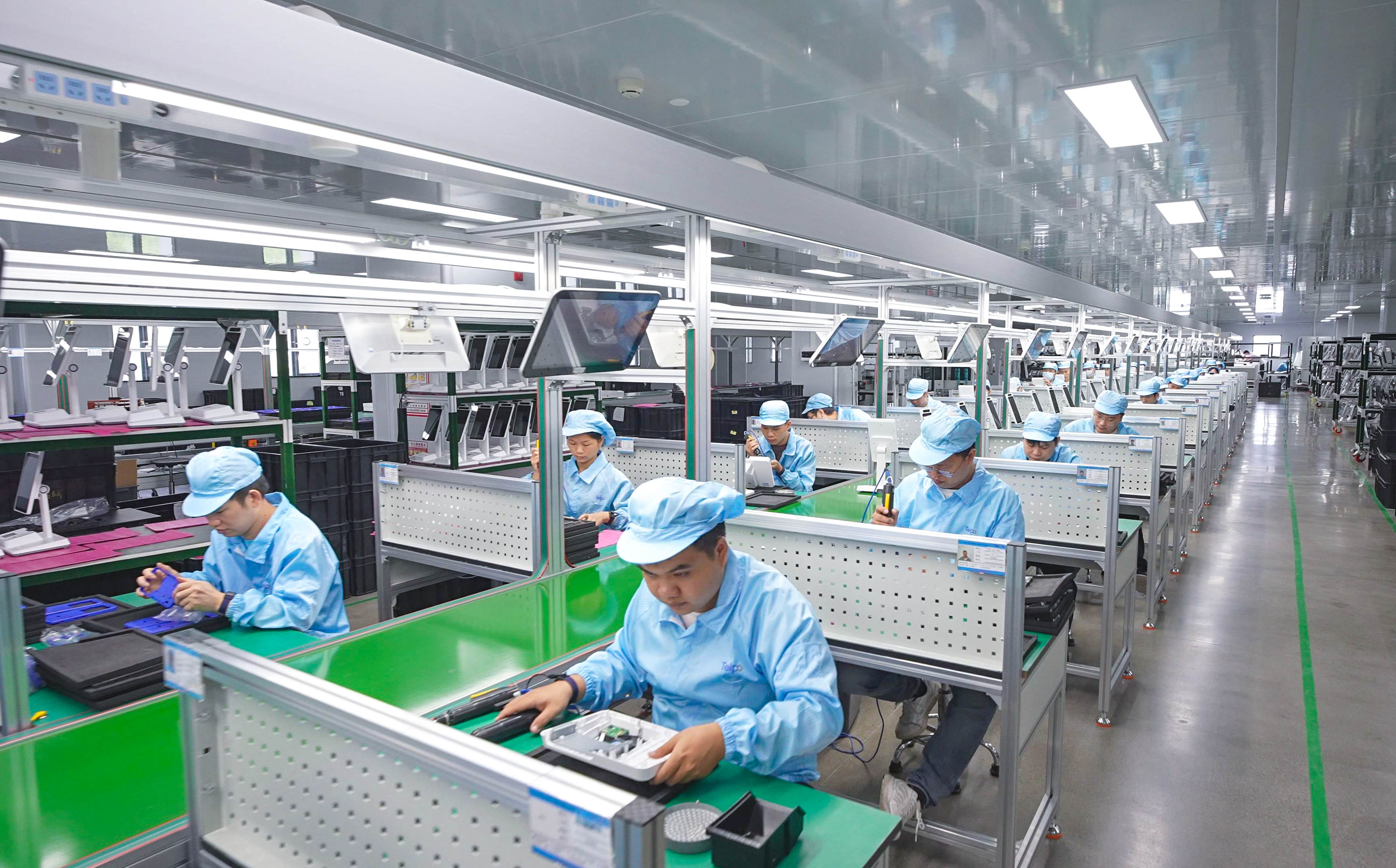
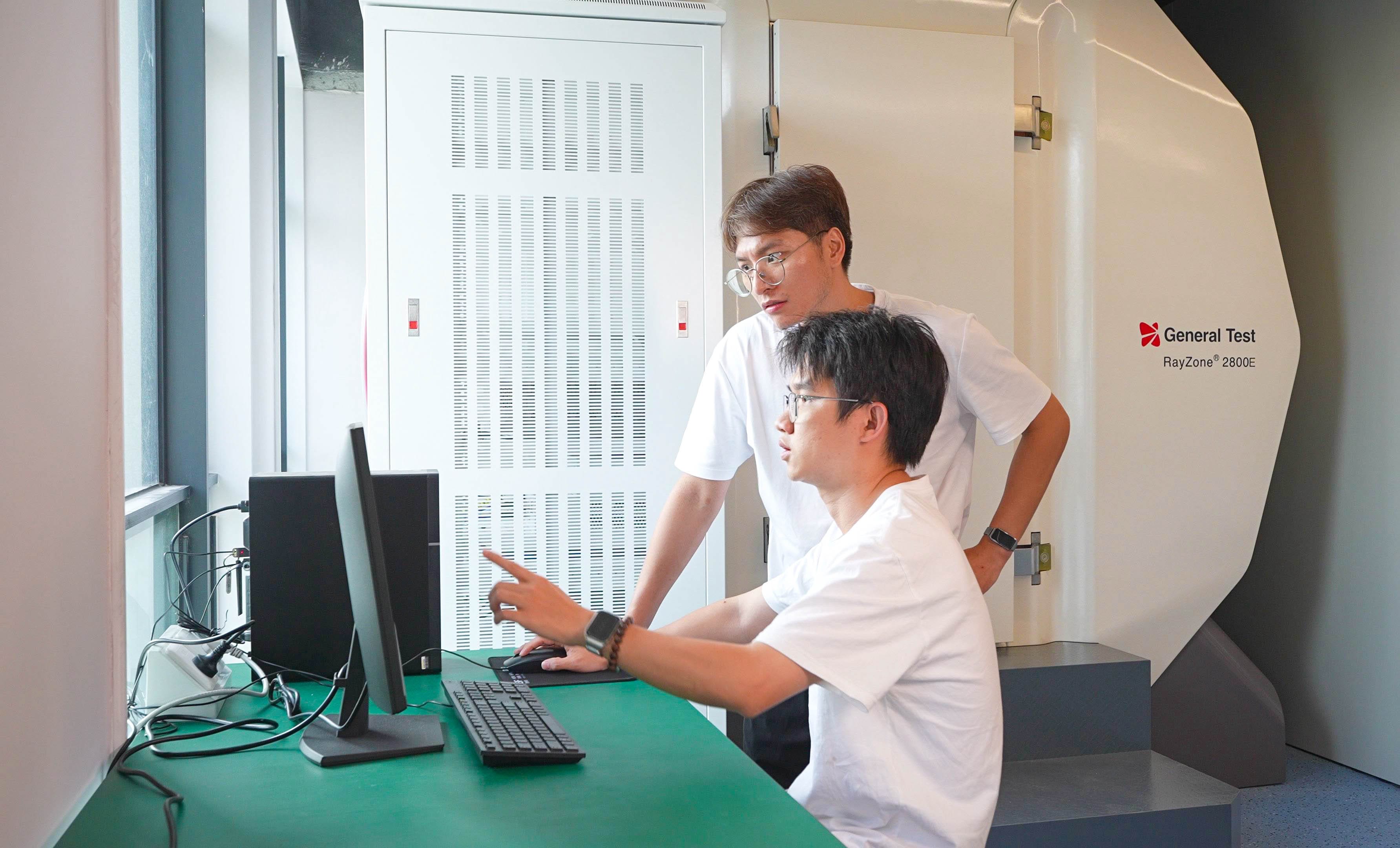
Telpo states ISO 9001 quality management, 100% functional testing, and a CNAS-accredited laboratory of approximately 900 sqm across 12 testing zones, including an OTA darkroom, an EMC chamber and a climate lab, upgraded in 2025. For a buyer, that laboratory is the mechanism behind reliability claims: it is the place where a specification is tested before shipment, and it is reasonable to ask which tests your configuration receives.
Supply assurance for a multi-site rollout
Specification wins the evaluation; supply decides whether the rollout lands on schedule. Telpo states monthly capacity of approximately 150,000 to 180,000 units, annual output of 2,000,000 units, exports to more than 100 countries at a 60% to 80% export ratio, and support through a 24/7 ticket system with remote diagnostics, API and SDK documentation, and Telpo MDM. For buyers in this category, the questions worth asking are the ones that connect those numbers to your own schedule: which production line, which lead time for your configuration, and what happens to the delivery date if a certification scope changes mid-project.
Frequently asked questions
Does the Telpo C9 run AI on the device or in the cloud?
On the device. Telpo's C9 application specification lists on-device AI processing at 12 TOPS, with AI vision product recognition at 0.1 s and 99.8% accuracy or better in its AI checkout configuration, plus real-time inventory deduction at the terminal. Cloud services can still handle reporting, model updates and multi-store aggregation, but the recognition step itself is specified as local. The accuracy figure is tied to that application configuration, so validate it against your own item catalogue.
How much latency does on-device AI save compared with a cloud round trip?
It depends on your network as much as on the terminal. Local inference costs the model's compute time on the device — Telpo specifies 0.1 s for C9 item recognition. A cloud path adds radio uplink, wide-area transit, queueing at the inference service and downlink. Modelling 50 to 200 ms of added round-trip time for a congested store network is a reasonable planning assumption, but it is an assumption, not a measured benchmark of either terminal; measure it on your own site with your own models before committing.
Which manufacturers make CE-certified POS terminals, and how do I verify a CE claim?
CE marking is declared per product against the applicable EU directives — commonly the Radio Equipment Directive 2014/53/EU where the terminal includes Wi-Fi, Bluetooth or cellular, plus EMC requirements and RoHS 2011/65/EU for restricted substances — so the documentation must name the exact model, hardware version and firmware it covers. Telpo, for example, holds an EU-type examination certificate under RED 2014/53/EU for its T20 ticket validator (certificate B2301114, notified body 1313, issued 9 February 2023) and a RoHS test report for its P9 terminal (PTC25031705301C-EN01, issued 27 March 2025). Verify any claim documentarily: request the certificate number, the issuing notified body or laboratory, the issue date and the standards listed, then check that the model string matches the unit you are ordering. No CE certificate for one model transfers to another model in the same portfolio.
What decides the C9 versus D3 PRO choice if our lanes only do standard POS work?
Then on-device AI is not the deciding criterion. Compare payment certification coverage for your acquirer, printer integration and counter footprint, GMS status if your app depends on Google services, SDK and firmware support commitments, service coverage, MOQ and lead time, and configuration-specific unit cost. A dual-screen C9 configuration and Telpo MDM fleet management are legitimate reasons to choose the C9 for standard lanes; the 12 TOPS figure is not, because you would be paying for capacity the workload does not use.
What should I confirm about the Sunmi D3 PRO's processor and AI capability before ordering?
Ask Sunmi or your distributor for the current datasheet revision and confirm five items in writing: the SoC model and core configuration, whether the SoC includes an NPU and its TOPS rating if it does, RAM and storage for the SKU, the OS version with GMS status, and the payment approvals that cover the exact SKU. Absence of a published TOPS figure does not prove a terminal has no on-chip AI, and a published core count does not prove it can run vision models at lane speed — both need the datasheet and, ideally, a benchmark on your own workload.
What are typical MOQ and lead times for a C9 order?
Telpo states a typical MOQ of 500 to 1,000 units, adjusted per project complexity, and lead times of 30 days or more subject to negotiation. Branding-only customisation on existing hardware runs 3 to 7 working days for stock orders and 15 to 25 working days for bulk standard orders. Full ODM work is longer: 20 working days for motherboard changes, 10 working days for structural work, a 45 working-day minimum for a full machine, and a standard ODM cycle of 4 to 6 months.
Conclusion: buy the workload, not the label
The C9 versus D3 PRO decision resolves cleanly once you state what the lane has to do. If checkout needs visual inference at the point of decision — item recognition in self-service and unattended retail, or a vision model your team builds and validates — the C9 is the candidate with documented on-device capability: 12 TOPS, 0.1 s recognition at 99.8% or better in Telpo's AI checkout configuration, 24-hour operation design and dual-screen configurations up to 15.6 inches. If the lane does standard POS work, both terminals are viable and the decision belongs to payment certification, printer integration, SDK support, service coverage and price band.
Either way, the same discipline applies: ask for the datasheet revision and the certificate numbers that name your exact SKU, benchmark on your own catalogue, and pilot one lane before committing a store. That process will produce a better decision than any comparison table — including this one.
Next step
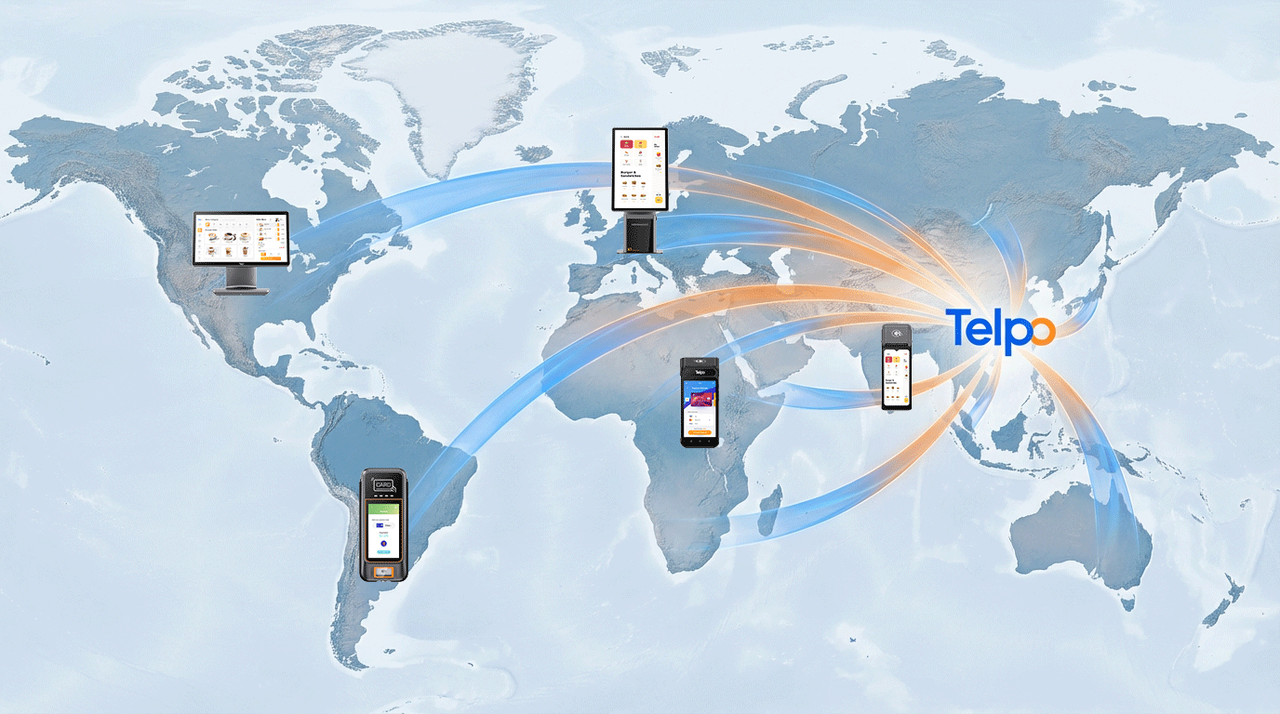
If you want to test the C9 against your own item catalogue and POS application, request a sample or a configuration-specific quotation from Telpo. Review the full terminal range in the Telpo products brochure (PDF), and send your workload specification to business@telpo.com so the reply addresses your configuration rather than a generic model list.
Have Questions or Need More Details?
Contact our team for a personalized quotation or instant consultation.
Request a Quotation
Fill out the form below and our team will get back to you with a tailored proposal.
WhatsApp Direct Chat
Prefer to chat in real-time? Message us on WhatsApp for instant assistance & quick answers.
- Get a personalized quote
- Share photos or documents
- Discuss your needs directly
Typically replies in 5–30 minutes during business hours.