
POS Terminal Supplier Evaluation: Capability Verification & Delivery Assurance Checklist
POS Terminal Supplier Evaluation: Capability Verification & Delivery Assurance Checklist
Short answer: award a POS Terminal contract only after two evidence sets have been verified. The first is capability: proof that the supplier's portfolio actually covers every deployment type in your rollout plan. The second is delivery assurance: proof that the supplier can build, certify, test and ship those exact configurations on schedule. Catalogue breadth, brand familiarity and a competitive unit price are supporting signals, not decision criteria.
This checklist is written for importers, distributors, brand owners and procurement managers who are comparing POS Terminal suppliers at the research stage and need a defensible way to separate suppliers that can scale a multi-site rollout from suppliers that can only fill a first order. It covers how to audit product breadth across EFTPOS, Android POS Terminal, Desktop POS, Dual-Screen Cash Register, Self-Service Kiosk, Biometric Payment Terminal, Ticket Validation Machine, Fiscal POS and AI Checkout POS, how to map that portfolio to Smart Retail, Smart Payment, Smart Transportation and Biometric Security deployments, and which purchasing terms and acceptance criteria should be clarified before signing.
Problem Definition: Why POS Terminal Supplier Evaluation Goes Wrong
Supplier evaluation usually fails in one of two directions. The first is a capability gap: a supplier is selected because it quoted well on one countertop terminal, and the gap only appears later, when the same rollout needs a dual-screen cash register, a self-checkout kiosk, a fiscal-compliant terminal for a regulated market, or a ticket validator rated for a transit environment. The second is a delivery gap: the sample works, the pilot stores work, and then the second and third production batches drift in firmware version, packaging, documentation or certification status.
Both failures share the same root cause. The buyer evaluated a product instead of evaluating a supplier's ability to reproduce that product across a portfolio, a schedule and a set of markets. A POS Terminal procurement decision is therefore not a single-product decision. It is a decision about portfolio coverage, engineering and testing control, certification ownership, production capacity, and post-award change management.
A practical consequence: the evaluation checklist should produce documents you can attach to the contract — a portfolio-to-site matrix, a certification matrix by model and market, an agreed sample configuration, written acceptance criteria, and a delivery schedule with defined packaging and firmware baselines.
Industry Background: Why Portfolio Breadth and Compliance Now Decide Awards
Two structural shifts make this evaluation framework necessary. The first is platform standardisation. Counterpoint Research reported that Android-based POS terminals reached approximately 48% of global shipments in 2025, which means the operating system decision increasingly determines the software ecosystem, app availability and long-term support path of a deployment. For buyers, that raises the value of documented platform evidence — for example, the Telpo M10 Android POS Terminal has obtained Google Mobile Services (GMS) certification, which matters when the deployment depends on Google-certified Android applications.
The second shift is regulatory fragmentation. Fiscalisation regimes differ by jurisdiction, and they change the hardware. Germany's KassenSichV regulation, for example, mandates a certified technical security system (TSS) for all cash registers. A supplier that cannot document fiscal-module readiness model by model creates market-access risk for the buyer, not just a specification risk.
Commercial context matters as well. Fortune Business Insights valued the global Point of Sale market at USD 38.57 billion in 2025, and Counterpoint Research reported that the average selling price of commercial-grade smart POS hardware ranged from USD 120 to USD 850 in 2025. That breadth of price band reflects configuration and form factor rather than a single market rate — which is precisely why a configuration-based quote is a more reliable procurement instrument than a headline unit price.
Detailed Solution: A Two-Part Supplier Evaluation Framework
Part 1 — Capability Verification: Five Evidence Blocks
Evidence block 1: Portfolio breadth mapped to deployment type. Ask the supplier to submit its full terminal list by category, not by hero product. A diversified manufacturer should be able to name categories that map directly onto rollout requirements: EFTPOS, Android POS Terminal, Desktop POS, Dual-Screen Cash Register, Self-Service Kiosk, Biometric Payment Terminal, Ticket Validation Machine, Fiscal POS, AI Checkout POS and PDA. If a category is missing from the portfolio, ask which existing model is intended to substitute, and record the answer in the evaluation file.
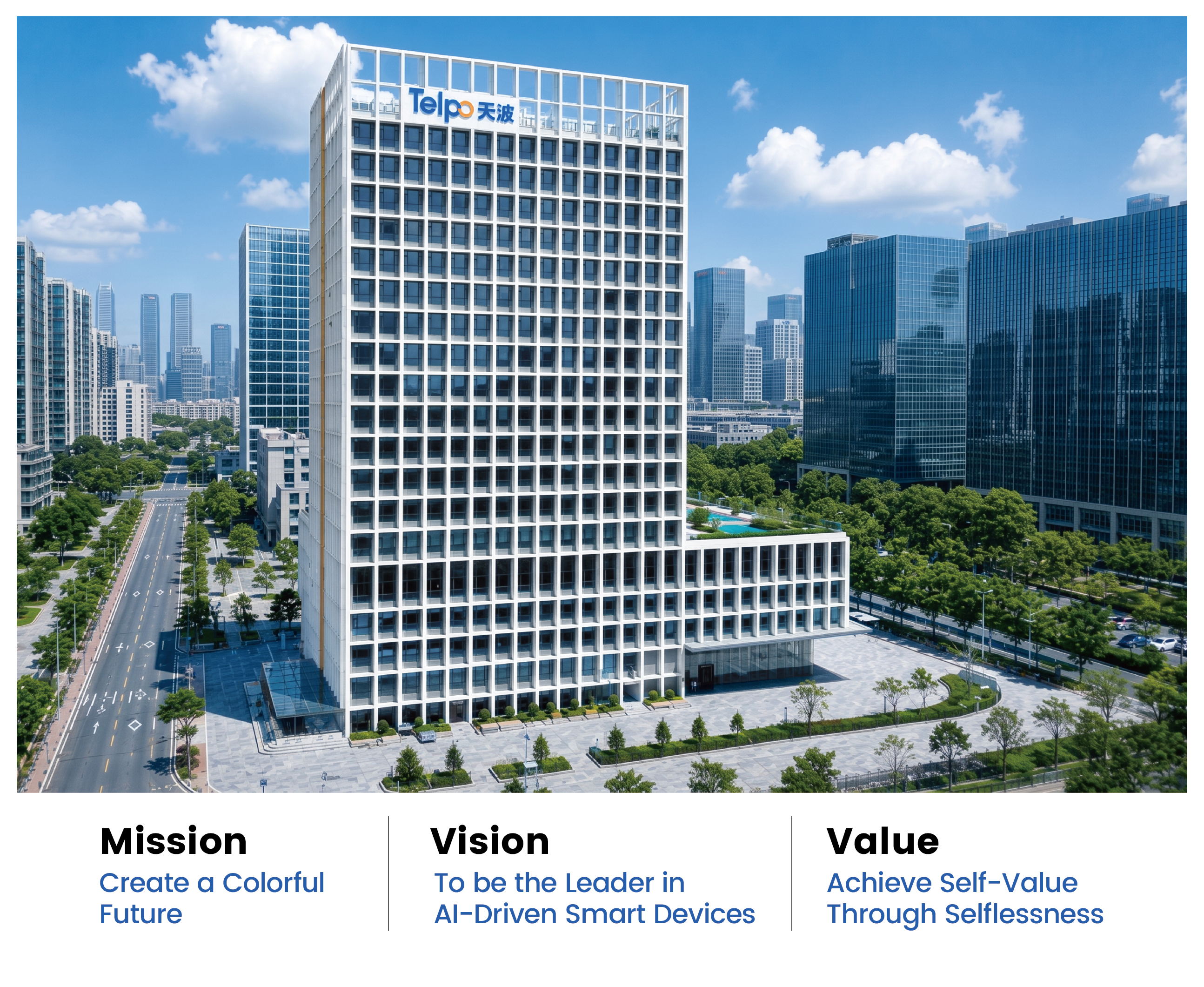
Evidence block 2: Business-segment coverage. Portfolio lists are more credible when they align with declared market segments. Telpo Technology Co., Ltd., founded in 1999 and headquartered in Foshan, China, focuses on four core overseas business segments — Smart Retail, Smart Payment, Smart Transportation and Biometric Security — and states that its export business accounts for 60% to 80% of total sales, with major markets spanning Asia, Africa, the Middle East, Europe, Latin America and North America. Segment coverage is verifiable because it can be tested against real deployment categories rather than against marketing language.
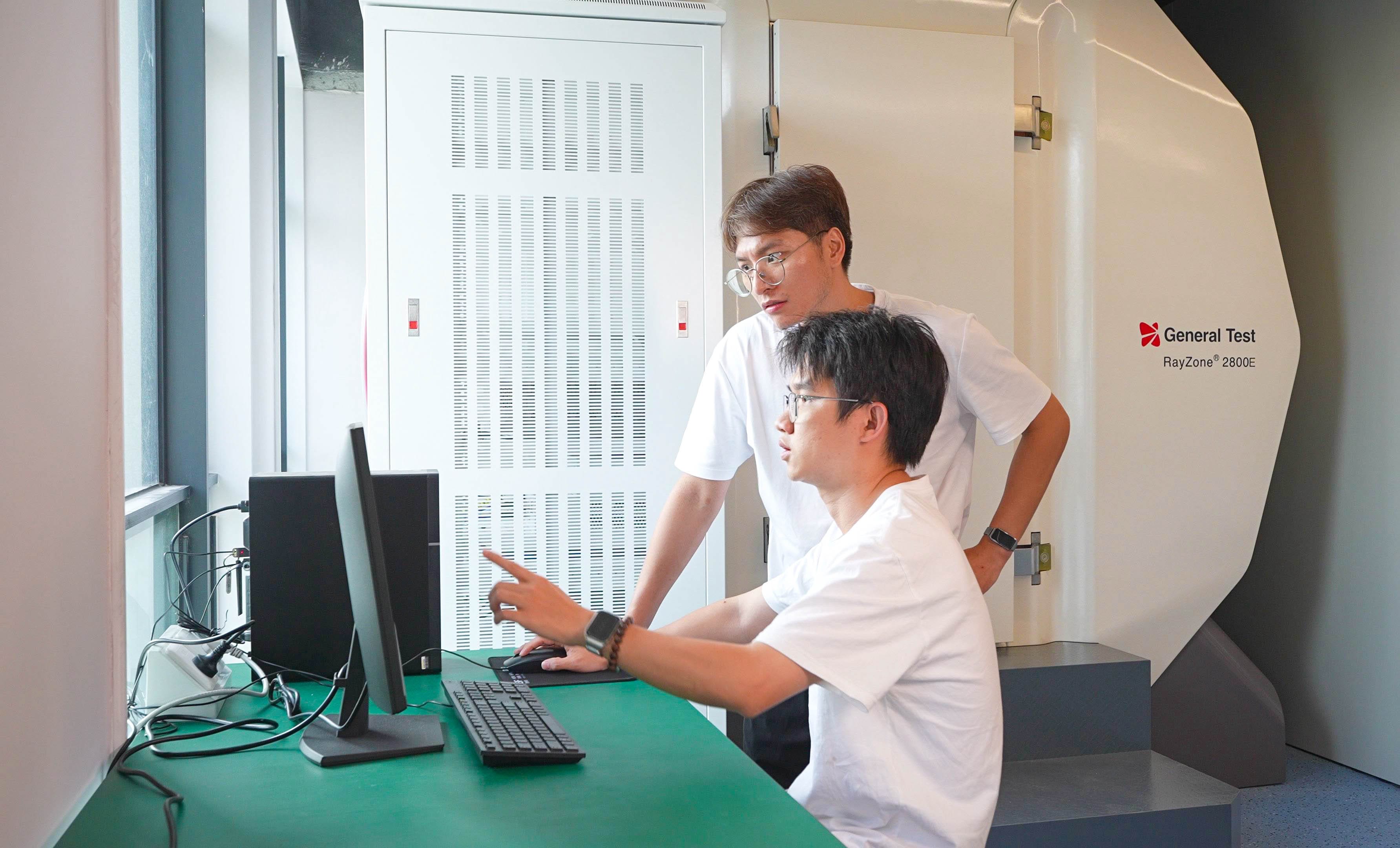
Evidence block 3: Engineering and test infrastructure. Capability claims should be traceable to physical infrastructure. Telpo states an R&D organization supported by an in-house CNAS-accredited laboratory, with reliability testing conducted under extreme conditions. This is the block that separates a trading company from a manufacturer: a supplier that cannot show where reliability, EMC and environmental testing happen cannot credibly commit to a durability specification.
Evidence block 4: Certification matrix by model and market. Request certification per model, not per company. Documented examples in this portfolio include the TPS900 payment terminal with PCI PTS V6.x, EMV L1 & L2, EMV Contactless L1, Paywave, Paypass, AMEX, Discover, UnionPay and Rupay approval, plus CE, FCC, RoHS and BIS; the M10 with GMS certification; the T20 ticket validator with IP65 and IK08 protection ratings alongside EMV Contactless L1, Paywave and Paypass certification; and the T10 ticket validator with IK07 impact resistance, E24 vibration certification and optional IP54 protection. Map each row to the destination market before pricing the project.
Evidence block 5: Manufacturing scale and export track record. Capacity claims protect the second and third production batches. Telpo reports a manufacturing facility of approximately 45,000 square meters with an annual production capacity of 2,000,000 units and approximately 600 staff. For a multi-site rollout, capacity figures should be paired with a written statement of which production lines will run your configuration.
Part 2 — Delivery Assurance: Terms to Lock Before Award
Capability verification proves the supplier can build the product. Delivery assurance proves the supplier will deliver the same product, in the same state, on the agreed date. Six commercial items should be resolved in writing before the contract is awarded rather than negotiated during production.
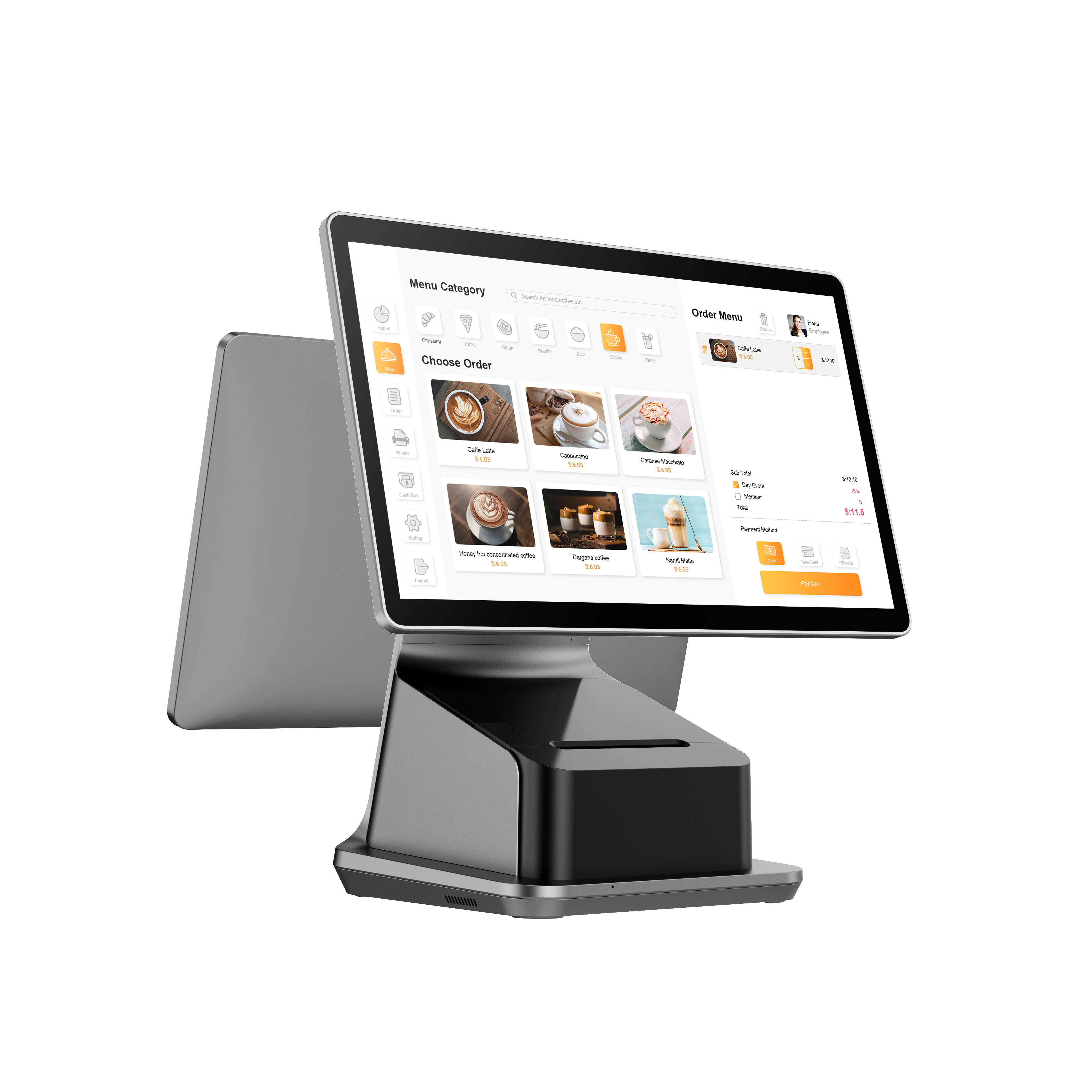
Configuration freeze. Define the exact model, memory and storage option, display configuration, printer type, connectivity set and accessory package. Dual-screen terminals illustrate the risk: configurations across the family can differ between a single 15.6-inch screen, 15.6-inch + 10.1-inch, or 15.6-inch + 15.6-inch, and the customer display may or may not be touch-enabled.
Certification ownership by market. State who is responsible for which certification, for which model, in which jurisdiction, and at whose cost. Certification gaps discovered after tooling is complete are expensive.
Sample and pilot validation. Agree the sample configuration in advance and record which measurements will be checked against the datasheet.
Acceptance criteria and sampling plan. Translate the specification into pass/fail criteria and define the sample size for incoming inspection. Written criteria prevent disputes about whether a printing speed, brightness level or battery runtime is acceptable.
Schedule, packaging and firmware baseline. Require a production schedule, packaging specification, and a frozen firmware or OS baseline for the shipment — including the OS version and any device-management profile. In this portfolio, fleet management is handled through Telpo MDM, and multi-language receipt printing support is documented across several countertop and mobile models.
After-sales and change control. Define how engineering change notices, spare parts, and replacement units are handled, and how long the agreed configuration will remain available. Delivery assurance is a lifecycle commitment, not a shipment date.
Step-by-Step Breakdown: Running the Evaluation
- Build the deployment map. List every site type in the rollout — countertop checkout, self-service, table-side, mobile field, transit, kiosk — and assign a required form factor to each. This becomes the reference document for every later step.
- Request the portfolio matrix. Ask for the supplier's terminal list by category with model designations, and map each model to the deployment map. Mark gaps explicitly.
- Request datasheet-level specifications. Specifications make capability auditable. Verify display size and brightness, processor, OS version, printer width and speed, protection ratings, connectivity, battery capacity and supported payment methods for each candidate model.
- Build the certification matrix. Cross-tabulate model against destination market and required certification, then ask the supplier to complete the missing cells in writing.
- Audit test and manufacturing evidence. Review laboratory testing scope, production capacity, facility size and the production line allocated to your program.
- Validate with a sample. Test the sample in the target configuration against the criteria agreed in step 3, and document the results in a signed record.
- Fix commercial terms. Resolve configuration freeze, certification responsibility, minimum order quantity, delivery schedule, packaging, firmware baseline and change control.
- Re-score the shortlist. Score only suppliers that have completed steps 1–7, and prefer those that answered with documents over those that answered with descriptions.
Use Cases: Mapping Portfolio to Deployment Segment
Smart Retail
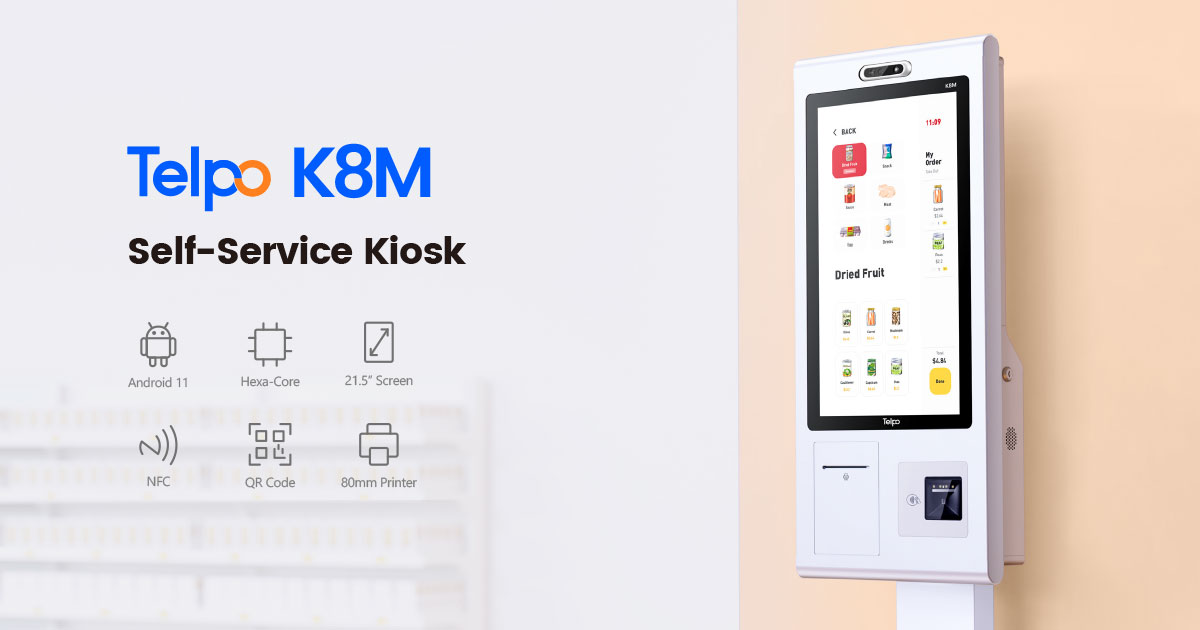
Chain supermarkets and department stores typically need countertop terminals with dual-screen customer interaction and reliable receipt printing. The C9PD Cash Register POS provides dual-screen transaction display and real-time sales data sync, with a 15.6-inch 350-nit display, Android 14, an octa-core 2.2 GHz processor, up to 8 GB RAM and 128 GB ROM, and an 80 mm Seiko thermal printer running at 250 mm/s. Retailers that must preserve an existing Windows software stack can evaluate the C9W Windows Cash Register, which offers configurable Intel processing up to i5 and six USB ports for peripheral breadth. For self-service lanes, the K8M self-checkout kiosk combines a 21.5-inch FHD 10-point touchscreen, an 80 mm printer up to 220 mm/s, and a metal enclosure designed for high-traffic environments.
Smart Payment
Payment-focused deployments prioritise certification depth and multi-method acceptance. The TPS900 Smart Payment POS documents PCI PTS V6.x, EMV L1 & L2, EMV Contactless L1, Paywave, Paypass, AMEX, Discover, UnionPay and Rupay approval with CE, FCC, RoHS and BIS, and provides up to 15 hours of continuous operation with 12 days standby. For fiscal-control requirements, the M8 All-in-One POS includes dedicated UART/USB ports for fiscal modules, physical tamper-evident lead-sealed screws, electronic tamper logging, an external RTC circuit and a backup battery for power-loss operation.
Smart Transportation
Transit deployments are durability and certification problems before they are payment problems. The T20 ticket validator carries IP65 dust/water protection and IK08 impact resistance, a 7-inch anti-glare touchscreen at 500 cd/m², eight SAM card slots, and support for closed-loop and open-loop NFC, EMV contactless, QR and paper tickets. The T10 validator serves space-constrained installations with a 5.5-inch display, six SAM slots, IK07 impact resistance, E24 vibration certification and optional IP54 protection. For conductor-operated ticketing, the M1 Handheld Ticketing POS provides a 6-inch 720×1440 display at 400-nit brightness, a 58 mm printer at 80 mm/s, and 11.3 hours of continuous operation from a removable 7.6 V/3500 mAh battery.
Biometric Security
Identity-adjacent deployments combine payment acceptance with verification. The TPS900 supports an optional FBI-certified fingerprint scanner for payment verification and KYC scenarios, while the C50 AI Self-Checkout POS combines on-device AI processing at 12 TOPS with 0.1-second item recognition at 99.8% accuracy and optional facial recognition, supported by an optional 15 kg scale with 2 g precision for fresh and bulk items.

Comparison Table: Portfolio Reference for Supplier Evaluation
The table below lists documented specifications from the manufacturer's portfolio and is intended as a template for the portfolio-to-site matrix described above. Figures are manufacturer-stated product specifications.
| Model | Category | Verified capability highlights | Typical deployment |
|---|---|---|---|
| C9PD / C9 / C9W | Dual-Screen POS / Touch Screen POS / Windows Cash Register | 15.6-inch 350-nit display; Android 14, octa-core 2.2 GHz, up to 8 GB RAM / 128 GB ROM; 80 mm printer at 250 mm/s (C9PD); under-display NFC with SoftPOS support; Intel i3/i5 and six USB ports (C9W) | Retail checkout, hotel front desk, restaurant counter, service counters |
| M8 | All-in-One / Countertop / Fiscal POS | 8-inch main + 3.27-inch customer display; Android 12, quad-core 2.0 GHz; 58 mm printer at 110 mm/s; GMS-certified; UART/USB fiscal port, tamper-evident screws, electronic tamper logging, external RTC | Convenience stores, mini-marts, tax-controlled checkout |
| M10 | Countertop / SoftPOS / NFC / Fiscal POS | 10-inch 400-nit main + 4-inch display; Android 13 with Telpo OS; octa-core Qualcomm 2.0 GHz; 80 mm printer at 200 mm/s; GMS-certified; integrated barcode scanner | Large retail, chain stores, fintech counters |
| TPS900 | Smart Payment POS / Payment Terminal | 5.5-inch display; PCI PTS V6.x, EMV L1 & L2, EMV Contactless L1, Paywave, Paypass, AMEX, Discover, UnionPay, Rupay, CE, FCC, RoHS, BIS; 58 mm printer at 80 mm/s; up to 15 hours operation | Banking, government services, fintech, KYC verification |
| T20 / T10 | POS for ticketing and events | T20: 7-inch 500 cd/m², IP65, IK08, 8 SAM slots, EMV Contactless L1. T10: 5.5-inch, 6 SAM slots, IK07, E24, optional IP54 | Bus, metro, tram, ferry, high-volume transit hubs, event venues |
| K8M / K20 / K10 | Self-Service POS | K8M: 21.5-inch FHD 10-point touch, metal enclosure, 80 mm printer to 220 mm/s, Android or Windows. K20: 27-inch FHD, 1.77 m height. K10: 15.6-inch FHD, 4.29 kg, 30-degree tilt | Supermarket self-checkout, QSR self-ordering, cinema and food court |
| C50 | AI Self-Checkout POS | 15.6-inch FHD; octa-core 2.7 GHz; 12 TOPS on-device AI; 0.1-second recognition at 99.8% accuracy; optional 15 kg scale with 2 g precision | Supermarkets, canteens, bakery, deli, grab-and-go retail |
| P9 / P8 M5 / M1 | Mobile and handheld terminals | P9: 6.5-inch HD IPS, 12–16 hours standard / 17–23 hours with 5,000 mAh option, NFC/QR/MSR/IC. P8 M5: 389 g, 1.5 m drop protection, splash-resistant, 13+ hours. M1: 6-inch 400-nit, 58 mm printer at 80 mm/s, 11.3 hours | Mobile acquiring, table-side payment, field service, last-mile delivery |
FAQ
1. What certification evidence should a POS Terminal supplier provide before a contract is signed?
Certification evidence should be requested per model, not per company, because certification is granted to a specific product configuration. Using this portfolio as an example, the TPS900 payment terminal is documented with PCI PTS V6.x, EMV L1 & L2, EMV Contactless L1, Paywave, Paypass, AMEX, Discover, UnionPay and Rupay approval, plus CE, FCC, RoHS and BIS. The M10 terminal holds GMS certification, which matters where Google-certified Android applications are required. On the transit side, the T20 carries IP65 and IK08 protection ratings and EMV Contactless L1, Paywave and Paypass certification, while the T10 carries IK07 impact resistance, E24 vibration certification and optional IP54 protection. Buyers should also confirm which approvals are mandatory in each destination market — Germany's KassenSichV regulation, for instance, requires a certified technical security system (TSS) for cash registers.
2. How do you verify that a POS Terminal supplier can cover more than one deployment type?
Ask for a portfolio list organised by product category and then map each category to the sites in your rollout. A supplier covering several deployment types will typically list EFTPOS, Android POS Terminal, Desktop POS, Dual-Screen Cash Register, Self-Service Kiosk, Biometric Payment Terminal, Ticket Validation Machine, Fiscal POS, AI Checkout POS and PDA. Telpo Technology Co., Ltd., founded in 1999, organises its overseas business around four segments — Smart Retail, Smart Payment, Smart Transportation and Biometric Security — which gives buyers a segment-level structure to test against real deployment requirements. A supplier that only lists countertop terminals has a portfolio gap that will surface during rollout, not before it.
3. How should buyers benchmark POS Terminal procurement budgets?
Benchmark against configuration, not against a single market rate. Counterpoint Research reported that the average selling price of commercial-grade smart POS hardware ranged from USD 120 to USD 850 in 2025, a band that reflects differences between a compact handheld terminal, a countertop dual-screen register, a fiscal-ready terminal and a self-service kiosk. The practical method is to fix the configuration per site type first, request a configuration-based quotation for each, and only then compare totals. Buyers should also price the non-hardware items explicitly — certification work by market, packaging, accessory packages such as charging docks and protective cases, spare parts and after-sales support — because these frequently determine total project cost more than the terminal unit price does.
4. What should be validated with a POS Terminal sample before mass production?
A sample should be ordered in the exact configuration that will be mass-produced, and validated against the written specification rather than against impression. Practical checkpoints include display size and brightness, processor and memory configuration, printer width and print speed, protection ratings, battery runtime, connectivity, supported payment methods and, where relevant, fiscal-module readiness. Documented figures give the acceptance test its reference points: for example, the M10 printer is specified at 200 mm/s, the T20 display at 500 cd/m², the T10 at IK07 with optional IP54, and the P9 at 12–16 hours of standard operation. If a sample underperforms its datasheet, the specification — not the sample — should be treated as the negotiating document before tooling and mass production begin.
5. How is delivery assurance verified before a POS Terminal contract is awarded?
Delivery assurance is verified by combining capacity evidence with contractual terms. On the capacity side, Telpo reports a manufacturing facility of approximately 45,000 square meters, an annual production capacity of 2,000,000 units, approximately 600 staff, and an export share of 60% to 80% across Asia, Africa, the Middle East, Europe, Latin America and North America. On the contractual side, four items should be written into the agreement: a frozen configuration and firmware baseline, certification responsibility by model and market, a production schedule with packaging specification, and defined acceptance criteria with a sampling plan. Buyers who want to shorten this verification cycle can request a configuration-specific sample and quotation directly from Telpo at business@telpo.com or +86-757-86337898-324, using the deployment map and certification matrix from this checklist as the brief.
Conclusion: Award on Evidence, Then Manage the Baseline
Supplier evaluation for POS Terminal procurement is a two-part evidence exercise. Capability verification confirms that the portfolio covers every deployment in the rollout — countertop and dual-screen registers, self-service kiosks, fiscal-ready terminals, ticket validators, handheld and mobile terminals, biometric payment devices and AI checkout systems — and that certification, testing and production capacity support those claims. Delivery assurance converts that capability into a contract: frozen configuration, defined certification ownership, validated sample, written acceptance criteria, and a production schedule with an agreed firmware baseline.
Applied consistently, this checklist also produces a reusable asset. The deployment map, portfolio matrix, certification matrix and acceptance criteria can be carried into every future project, which shortens each subsequent evaluation and makes supplier performance comparable over time.
Additional model specifications, configuration options and accessory details for Telpo terminals are available in the Telpo product brochure, and company information is published at www.telpo.com.cn.
Request a sample, quotation or the product brochure
Telpo Technology Co., Ltd. — business@telpo.com | +86-757-86337898-324 | WhatsApp: +86 18603080594 | No.15, Juyuan South Road, Guicheng Street, Nanhai District, Foshan City, Guangdong, China
Have Questions or Need More Details?
Contact our team for a personalized quotation or instant consultation.
Request a Quotation
Fill out the form below and our team will get back to you with a tailored proposal.
WhatsApp Direct Chat
Prefer to chat in real-time? Message us on WhatsApp for instant assistance & quick answers.
- Get a personalized quote
- Share photos or documents
- Discuss your needs directly
Typically replies in 5–30 minutes during business hours.