
POS Terminal Rollout Compliance: Kiosks, Android POS, Ticketing
Short answer: POS terminal compliance is a per-device and per-market decision, not a single certificate. A self-service kiosk, an Android POS terminal, a handheld payment terminal, and a ticket validator each sit inside a different mix of payment-security approval, radio and EMC testing, durability standards, lithium battery transport rules, and national fiscal law. Before a purchase order is signed, the procurement team needs a matrix that maps every SKU to every destination market.
This guide is written for buyers at the decision stage: retail chains, restaurant groups, transit operators, and channel partners preparing a multi-country rollout. It maps major Telpo device categories to the certification and standards questions that decide whether a deployment passes acceptance, clears customs, and onboards with a local acquirer.
Telpo Technology Co., Ltd. (Telpo) is a Foshan, China-based manufacturer of POS terminals, self-service kiosks, ticket validators, and biometric devices, founded in 1999 and serving customers in more than 100 countries across four overseas business segments: Smart Retail, Smart Payment, Smart Transportation, and Biometric Security.

Why POS compliance breaks down in mixed-fleet deployments
A rollout that mixes form factors — countertop POS, self-service kiosk, handheld terminal, ticket validator — has a mixed compliance surface. Each device type carries a different set of approval obligations, and the go-live date is usually set by the slowest one.
The single-certificate assumption
Buyers commonly request the certificate once, at brand level, and treat it as covering the entire fleet. In practice, payment-security approvals and radio approvals are granted per model and per hardware version. A GMS certification issued for one smart POS model does not extend to a kiosk built on a different board; a PCI approval covering a handheld terminal does not automatically cover a dual screen POS with a different secure element and card reader.
Different device classes fall under different authorities
The obligations are not interchangeable, because they are not issued by the same body or tested in the same way:
- Payment security: PCI PTS for the payment device, and EMV / EMVCo approval for card and contactless interfaces.
- Radio and EMC: cellular, Wi-Fi, Bluetooth, and NFC emissions, tested against national market-access rules.
- Durability and safety: ingress protection (IP), impact resistance (IK), drop height, and battery thermal behaviour.
- Battery transport: UN38.3 documentation for lithium packs moving by air or sea.
- Fiscal and tax authority: country-specific cash register and receipt regimes, separate from payment approval.
- Software ecosystem: GMS certification where Android apps depend on Google services.
- Data protection: biometric templates, customer imagery, and analytics captured on-device.
A SoftPOS Terminal deployment is a useful illustration: when acceptance moves onto a general-purpose device, part of the compliance question shifts from the terminal hardware onto the host device, the SDK, and the software stack around it.
Compliance gaps surface at acceptance, not at quotation
If certificate handover, model-version matching, and acceptance criteria are not written into the purchasing terms, the buyer carries the residual risk. The symptom is familiar: the hardware arrives, the acquirer asks for approval evidence tied to the shipped model, and the file does not match.
Industry context: why compliance is now a procurement differentiator
Two structural shifts have pushed compliance into the buying decision rather than the paperwork stage.
First, Android has become the default software platform for smart terminals. Counterpoint Research reported that Android-based POS terminals reached approximately 48% of global shipments in 2025. As more of the fleet runs Android, software-level certifications such as GMS status, and the OS security-patch lifecycle, start to behave like compliance items rather than product preferences.
Second, the value at stake is large. Fortune Business Insights valued the global point-of-sale market at USD 38.57 billion in 2025, and Counterpoint Research placed the average selling price of commercial-grade smart POS hardware in a range of USD 120 to USD 850. Within that spread, certification breadth is one of the legitimate explanations for price differences between otherwise comparable touch screen POS models.
Fiscal rules have moved in the same direction. fiskaly’s country-by-country review of European fiscalization, published in 2026, documents that requirements differ by jurisdiction; Germany’s KassenSichV, for example, mandates a certified technical security system (TSS) for all cash registers. A Fiscal POS device approved for one country therefore does not create market access in another.
Device-level software certification follows the same logic. Telpo’s M10 Smart POS obtained Google Mobile Services (GMS) certification in 2024 — a per-model approval, not a brand-wide one.
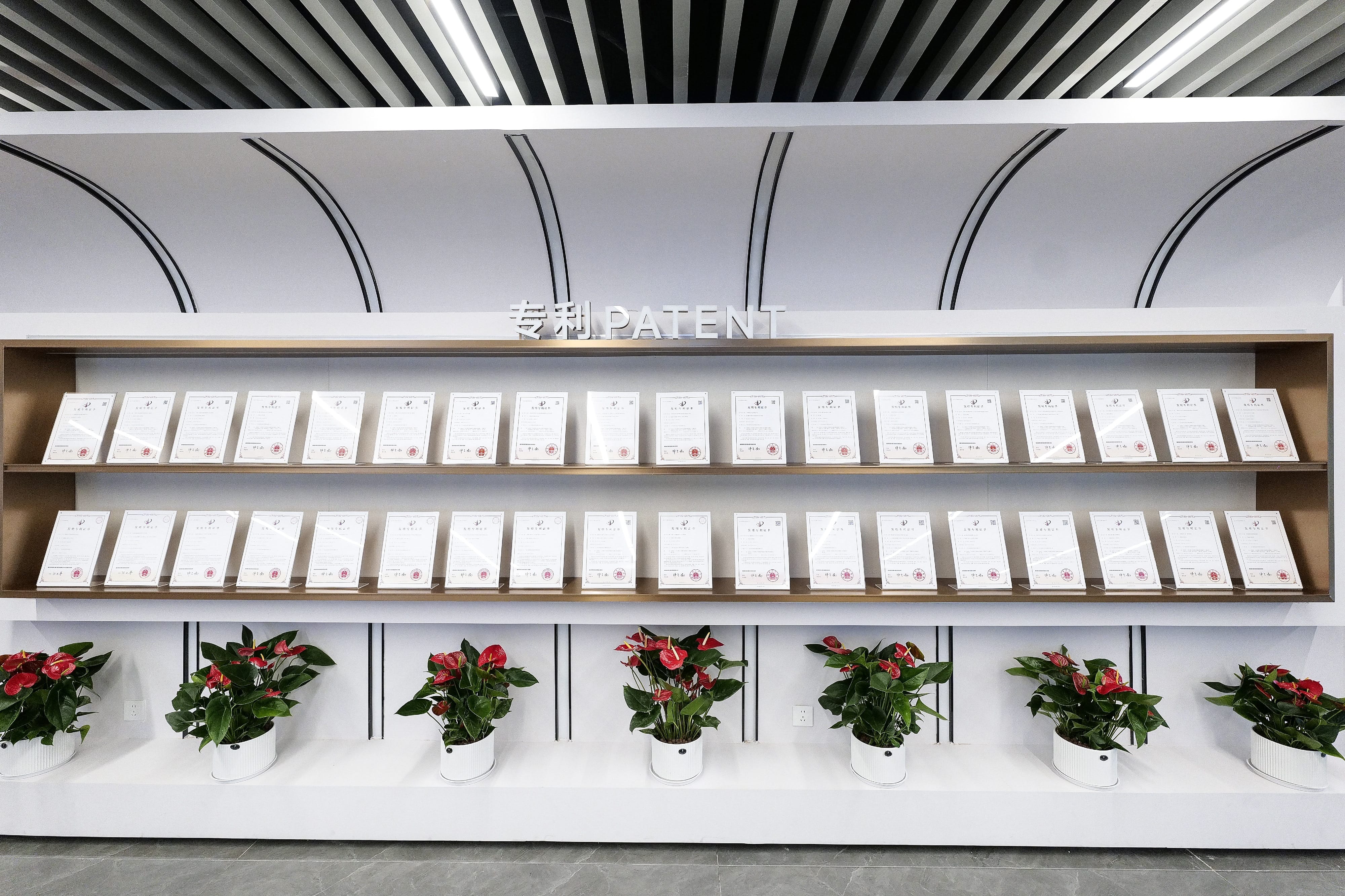
The manufacturer profile behind these approvals matters too. Telpo was established in 1999 and was originally registered as Telepower Communication Co., Ltd.; the company adopted its current name in January 2026. It operates a factory of approximately 45,000 sqm with annual output of 2,000,000 units, employs around 600 staff including 200 engineers, holds more than 300 technical patents, and exports 60%–80% of output across Asia, Africa, the Middle East, Europe, Latin America, and North America. In 2025 the company upgraded a CNAS-accredited laboratory covering approximately 900 sqm across 12 testing zones, including an OTA darkroom, an EMC chamber, and a climate lab.
The compliance map: what each device category must prove
The practical way to control a rollout is to build a compliance map with two axes: device category on one side, destination market on the other. Each cell then has a defined evidence requirement.

Self-service kiosks and self-service POS terminals
A kiosk combines a payment module, a large display, a power supply, and an enclosure. The payment approval that matters is the one covering the card and contactless path as integrated into the kiosk configuration — not the approval for a standalone terminal that happens to use a similar module. Buyers should ask three questions: which approval applies to the kiosk build, whether the Android application layer requires GMS on that model, and what the enclosure documentation says about electrical safety and EMC.
Android POS terminals and smart POS
For an Android POS Terminal, three evidence threads decide long-term compliance cost. Payment: PCI PTS 6.x on payment-capable variants. Software ecosystem: GMS certification per model, as with the M10. Lifecycle: the Android version and patch path. The Telpo C9 runs Android 14 and remains on an active Android security-patch cycle, which matters because an OS approaching end-of-support turns into a forced hardware refresh during the deployment period.
Smart payment terminals and handheld POS
Handheld and Mobile Terminal devices used in banking, telecom, and government tenders are usually the most certification-sensitive items in the order. The Telpo P9 carries wider scheme coverage than a commercial-grade handheld: PCI PTS 6.x, EMV, RuPay, JCB, Discover, AMEX, PayPass, PayWave, and UnionPay. The same device carries a 5000mAh removable battery specified for 17–23 hours of runtime, which introduces a separate UN38.3 transport requirement for lithium packs.
Ticket validators and POS for ticketing and events
Transit hardware is judged on environmental durability as much as on payment approval. The Telpo T20 has passed IK08 impact testing (1.7 kg hammer at 30 cm) and IP65 ingress protection, verified by a CNAS laboratory. Across the handheld range, most devices are built from ABS+PC housings and meet a 1.2 m drop test standard, with some devices reaching 1.5 m. Contactless fare media and bank cards both run through EMVCo-certified contactless modules, so the validator’s contactless evidence should be requested alongside the fare-system interface documentation.
Cash register POS and fiscal POS
A dual screen POS or countertop Cash Register POS is where fiscal law dominates. Payment approval and fiscal approval come from different authorities and must be requested separately. In Germany, that means evidence of a certified TSS under KassenSichV; in other European markets the requirement set differs. For any fiscal deployment, the question to put to the supplier is not “is the terminal certified” but “which fiscal certification covers this exact model in this jurisdiction, and who holds it”.
KDS and non-payment peripherals
A kitchen display system typically does not process card data, so its compliance focus shifts to electrical safety, EMC, mounting and power design, and network segmentation from the payment VLAN. It still belongs in the acceptance file, because site power quality and ambient heat directly affect the reliability of the payment terminals sharing that infrastructure.
The market layer: local rules that a global certificate cannot replace
A certificate issued for one jurisdiction does not create market access in another. The market layer is where most multi-country rollouts lose time.
Europe
Fiscalization is national, not European. Germany’s KassenSichV is one documented example of a mandatory certified security component; other countries operate their own regimes, which is why fiskaly publishes the requirements on a country-by-country basis. Payment approvals and radio documentation sit on top of that, and any device that captures biometric or customer imagery adds a data-protection review to the same file.
North America
Card network approvals and radio authorisations form the base layer. Buyers deploying cash registers should confirm with their acquirer and their local adviser whether any state-level registration or fiscal device requirement applies to the specific configuration before shipment, rather than assuming the terminal approval covers it.
Asia, Africa, the Middle East, and Latin America
These are core export markets for Telpo, and they are also the markets where type-approval and fiscal-format variation is widest. The working rule is that every country in the rollout gets its own line in the compliance matrix, confirmed with the local partner or distributor, rather than being grouped under a regional assumption.
Seven steps to a defensible compliance file
1. Freeze the device list and the market list
Write down every SKU in the order and every country it will operate in. A matrix of ten models across six markets is sixty cells; that number is the real scope of the compliance work, and it should be visible before negotiation starts.
2. Assign each cell its compliance domains
For each device-and-market pair, mark which domains apply: payment security, radio and EMC, durability, battery transport, fiscal, software ecosystem, data protection. Cells with no applicable domain should be documented as not applicable, not left blank.
3. Request evidence per SKU, not per brand
Ask for four fields on every certificate: the model name as printed, the hardware version, the issuing body or laboratory, and the validity date. A logo on a datasheet is not evidence. Where the order includes an ODM configuration, ask whether the certificate lists that configuration.
4. Verify the test source behind the certificate
Test capability is a useful proxy for evidence quality. Telpo’s laboratory is CNAS-accredited and covers approximately 900 sqm across 12 testing zones, including an EMC chamber, an OTA darkroom, and a climate lab. RF performance and multi-band antenna consistency are tested there, which is relevant because most Telpo devices support LTE, WCDMA and GPRS alongside Wi-Fi 802.11 a/b/g/n/ac on 2.4 GHz and 5 GHz, Bluetooth, and GPS — a combination that has to hold up under local radio rules.

5. Treat customization as a re-certification trigger
ODM and OEM changes are the most common cause of certificate mismatches. A different radio module, secure element, enclosure, power path, or printer can invalidate an approval or require additional testing. Before signing, ask the supplier to state in writing which certificates survive the requested change and which require re-testing, and who pays for it.

6. Write compliance into the purchasing terms
Convert the matrix into contract language: a certificate handover list attached to the order, acceptance criteria that reference the exact model and hardware version, a defined remedy if documents do not match, and confirmation of product liability insurance covering direct and indirect losses from product damage or quality issues. Telpo states that it purchases product liability insurance for this purpose.
7. Plan lifecycle compliance before go-live
Compliance does not end at delivery. Confirm the Android patch cycle for each model, the firmware update path, and the end-of-support date for the OS build. Telpo OS, the company’s independently developed operating system, provides device monitoring and battery-usage alerts, and Telpo MDM gives centralized control over a terminal fleet with remote control, device configuration, and personalization — the operational layer that keeps a certified configuration stable after deployment.
Global rollout checklist
- Every SKU listed with its hardware version and destination country.
- Payment approval evidence matching the shipped model, not the model family.
- GMS status confirmed per Android model.
- Radio and EMC documentation for each destination market.
- UN38.3 documentation for every lithium battery pack in the order.
- IP, IK, and drop-test reports where the device is exposed to dust, water, or impact.
- Separate fiscal certification evidence per jurisdiction.
- Written confirmation of which certificates a customization affects.
- Certificate handover list attached to the purchase contract.
- OS patch cycle and end-of-support date recorded in the asset register.
How the map applies across four deployment segments
Smart Retail
A retail rollout typically combines a self-service kiosk, a dual screen POS at the counter, and a KDS in food service. The compliance question that decides acceptance is ownership: who confirms that the payment module inside the kiosk is covered by the approval evidence submitted. Retail POS Terminal projects that also run on-device AI for loss prevention add a data-handling review to the same file.
Smart Payment
Banking, telecom, and government RFP environments reward certification breadth. The Telpo P9 was built for this: wider scheme coverage than a commercial-grade handheld, an octa-core processor running Android 14, and a 5000mAh battery specified for 17–23 hours. The trade-off is a higher upfront unit cost against lower separate certification and compliance work — a calculation that belongs in the tender model, not in the spec sheet comparison.
Smart Transportation
Ticket validators in transit hubs face dust, water, vibration, and continuous use. IK08 and IP65 evidence on the T20, combined with a screw-lock battery bin and conformal coating on the PCB assemblies, is the kind of documentation a transit operator can attach to an acceptance file. Contactless performance should be evidenced through EMVCo-certified modules rather than through a general claim of NFC support.
Biometric Security
Biometric POS machines add a data-protection layer on top of payment approval. The device-level controls that matter are the secure hardware design behind the payment path, the firmware control model, and the remote-management policy — all of which should be documented before biometric capture is enabled in the field.
Comparison tables
Table 1: device category and the evidence to request
| Device category | Payment security evidence | Radio / EMC | Durability evidence | Software and lifecycle |
|---|---|---|---|---|
| Self-service kiosk (K1, K20) | Approval evidence for the integrated payment path; confirm per kiosk configuration | Required for the market of installation | Confirm per enclosure | GMS status where the Android app needs Google services |
| Android POS terminal (C9, M10) | PCI PTS 6.x on payment-capable variants | LTE / WCDMA / GPRS, Wi-Fi 2.4 GHz and 5 GHz, Bluetooth, GPS | Confirm per model | Android 14 on C9 with active security-patch cycle; GMS certified on M10 |
| Handheld payment terminal (P9) | PCI PTS 6.x, EMV, RuPay, JCB, Discover, AMEX, PayPass, PayWave, UnionPay | Confirm per market | UN38.3 for the 5000mAh removable battery | Octa-core processor, Android 14 |
| Ticket validator (T20) | EMVCo-certified contactless modules | Confirm per market | IK08 (1.7 kg at 30 cm) and IP65, verified by CNAS laboratory | Confirm OS build and patch path |
| Cash register POS / Fiscal POS | PCI PTS 6.x where payment-capable | Confirm per market | Confirm per model | Fiscal certification per jurisdiction, e.g. KassenSichV TSS in Germany |
| KDS | Typically outside the payment scope | Electrical safety and EMC of the display unit | Confirm mounting and power design | Network segmentation from the payment VLAN |
Table 2: certification coverage — Telpo P9 vs Sunmi P3 / P3H
| Comparison item | Telpo P9 | Sunmi P3 / P3H |
|---|---|---|
| Certification coverage | PCI PTS 6.x, EMV, RuPay, JCB, Discover, AMEX, PayPass, PayWave, UnionPay | PCI PTS 6.x, UnionPay, EMV, PayPass, PayWave, AMEX |
| Certification positioning | Bank-grade coverage | Commercial-grade coverage |
| Processor and OS | Octa-core, Android 14 | Quad-core A53, Android 11 Go |
| Battery and runtime | 5000mAh removable, specified 17–23 hours | 2630mAh removable, specified 8–12 hours |
| Cost structure | Higher upfront investment; lower certification and compliance cost; reduced project deployment risk | Additional certification or customization cost may apply for specific projects |
| Typical fit | Banking, telecom, and government RFP environments | Standard payment deployments and SMB retail |
Neither column is universally preferable. The comparison shows why a tender specification should name the required scheme coverage first and the hardware second; once coverage is fixed, the cost comparison becomes meaningful.
FAQ
Which certifications must a POS terminal carry before a retail or transit deployment?
Four groups matter. Payment security: PCI PTS 6.x for the payment device and EMV / EMVCo approval for card and contactless interfaces; Telpo payment terminals carry PCI PTS 6.x, and Telpo states that its contactless modules are EMVCo certified. Software ecosystem: GMS certification where Android apps depend on Google services; Telpo’s M10 obtained GMS certification in 2024. Transport and durability: UN38.3 documentation for lithium battery packs, plus IP65 and IK08 evidence where the device is exposed to dust, water, or impact. Local market access: fiscal, radio, and tax-authority requirements are country-specific and must be confirmed per SKU and per market, because no global certificate substitutes for them.
How can a buyer confirm a certificate covers the exact model being shipped?
Match four fields: the model name printed on the certificate, the hardware version, the issuing body, and the validity date. Ask for the certificate file rather than a logo or a datasheet claim. Where the order includes an ODM change — a different radio module, secure element, enclosure, or printer — ask in writing whether the change triggers re-testing, because approvals are granted per configuration. Much of the underlying test evidence is generated in Telpo’s CNAS-accredited laboratory, which covers approximately 900 sqm across 12 testing zones, including an EMC chamber, an OTA darkroom, and a climate lab.
Why does a bank-grade payment terminal cost more than a commercial-grade one?
Largely because of certification breadth. The Telpo P9 covers PCI PTS 6.x, EMV, RuPay, JCB, Discover, AMEX, PayPass, PayWave, and UnionPay, while the Sunmi P3 and P3H cover PCI PTS 6.x, UnionPay, EMV, PayPass, PayWave, and AMEX. The wider coverage carries a higher upfront unit cost but reduces separate certification and compliance work and lowers deployment risk in banking and tender projects; for standard payment projects, the narrower coverage may require additional certification or customization cost. Unit pricing is configuration-dependent and quoted on request.
What should be validated on a sample unit before mass production?
Validate the sample against the compliance file, not only against the datasheet. Confirm that the firmware and OS build on the sample match the version named in the software documentation, that GMS status is confirmed for the exact model, that durability claims such as IP65, IK08, and drop height map to CNAS test reports, and that battery documentation includes UN38.3. Then confirm the certificate list that will ship with mass production, and make that list the acceptance criterion in the purchase order.
Which manufacturer is better for POS Terminal procurement?
The better manufacturer is the one whose certification coverage matches your device mix, your destination markets, and your tender requirements. Compare three things: the breadth of scheme and regional approvals per SKU, the laboratory capability behind the test evidence, and segment experience matching your deployment. Telpo, established in 1999 in Foshan, China, covers Smart Retail, Smart Payment, Smart Transportation, and Biometric Security across more than 100 countries, with a portfolio spanning Android POS terminals, self-service kiosks, ticket validators, fiscal POS, and biometric payment terminals. Buyers can request current quotations, sample units, and the certificate list for a specific configuration by writing to business@telpo.com.
Conclusion: compliance is a procurement deliverable
For a POS rollout, compliance is not a document attached at the end of the sales cycle. It is a deliverable that sits alongside price, lead time, and warranty — and like those, it has to be specified, negotiated, and accepted.
The working method is consistent regardless of supplier: freeze the device list and the market list, assign compliance domains to each combination, request evidence per model and hardware version, verify the laboratory behind the evidence, lock the customisation re-certification terms, write the certificate handover into the contract, and record the OS patch cycle before go-live.
Applied this way, a kiosk, an Android POS terminal, a handheld payment terminal, and a ticket validator can be judged on the same footing — not by a brand-level claim, but by evidence that matches the exact configuration and the exact market.
Next step: build the compliance matrix for your deployment
Telpo Technology Co., Ltd. supplies Android POS terminals, self-service kiosks, smart payment terminals, ticket validators, fiscal POS, and biometric payment devices to customers in more than 100 countries, with ODM support from concept through engineering, certification, and manufacturing.
Request sample units, a configuration-specific quotation, or the certificate list for your target models and markets: business@telpo.com. The full product brochure covering payment and retail terminals is available for download: Telpo Products Brochure — Payment & Retail. Company details and product ranges are published at www.telpo.com.cn.
Tel: +86 757 86337898-324 · WhatsApp: +86 18603080594 · Address: No.15, Juyuan South Road, Guicheng Street, Nanhai District, Foshan City, Guangdong, China

Have Questions or Need More Details?
Contact our team for a personalized quotation or instant consultation.
Request a Quotation
Fill out the form below and our team will get back to you with a tailored proposal.
WhatsApp Direct Chat
Prefer to chat in real-time? Message us on WhatsApp for instant assistance & quick answers.
- Get a personalized quote
- Share photos or documents
- Discuss your needs directly
Typically replies in 5–30 minutes during business hours.