
Evaluating POS Manufacturers: How Telpo Ensures Scalable Retail and Transit Deliveries
Short answer: once a POS terminal project moves from selection into decision and execution, manufacturer evaluation stops being a features question and becomes a delivery-readiness audit. Three answers decide whether a supplier can scale with you: documented monthly production capacity, model-level test and certification evidence issued before the purchase order, and commercial terms — MOQ, Incoterms, lead times and payment structure — that survive a multi-site rollout. This guide sets out a seven-dimension evaluation framework and a six-milestone validation sequence, using Telpo Technology Co., Ltd., a smart terminal manufacturer founded in 1999 and headquartered in Foshan, China, as a documented case study.

Why POS Supplier Evaluation Fails After the Pilot
Failed POS deployments are seldom product failures. They are process, documentation and terms failures that only become visible when order volume increases. Three gaps explain most of the distance between a pilot that works and a rollout that holds.
The process evidence gap. A buyer tests the terminal but never tests the system behind it: which line builds the model, what the monthly output ceiling is, and what happens when order volume multiplies after the first successful quarter. Capacity claims are usually accepted verbally and verified never.
The documentation gap. Payment certification, accredited-laboratory test reports and platform certification such as Google Mobile Services (GMS) are requested after the purchase order is issued instead of before it. In regulated markets, a missing document is not a paperwork problem — it is a market-access problem.
The terms gap. MOQ, delivery terms, stock-versus-bulk lead times and payment structures are treated as negotiation details rather than as delivery-readiness indicators. In practice they are the clearest available signal of how a manufacturer actually schedules production.
The framework below converts each gap into something concrete: a document you can request, a milestone you can test, and a documented answer you can compare across shortlisted suppliers.
Industry Background: Larger Volume, More Android, More Regulation
Three shifts in the commercial context make manufacturer vetting more consequential than it was a few years ago.
The installed base keeps growing. Fortune Business Insights valued the global point-of-sale market — hardware, software and services combined — at USD 38.57 billion in 2025. Market sizing varies by definition, because some researchers include transaction-processing revenue and others count only hardware and software; buyers should check scope before reusing a headline figure in a business case.
Android has become the default platform. Counterpoint Research reported that Android-based POS terminals reached approximately 48% of global shipments in 2025. For buyers, that shifts risk: the terminal is now part of an application and security-patch lifecycle, not a standalone appliance.
Price bands are wide. The same Counterpoint Research analysis placed average selling prices for commercial-grade smart POS hardware between USD 120 and USD 850 in 2025. That spread reflects real differences in processor class, memory, display configuration and certification scope — which is why a quotation alone tells a buyer very little about fit.
Regulation now sits inside the hardware decision. Germany's KassenSichV regulation mandates a certified technical security system (TSS) for all cash registers, as documented in fiscalization guidance published in 2026. Fiscal regimes of this type require certified components and supporting documentation, not just a compliant-looking terminal.
The practical consequence: a POS manufacturer now has to be evaluated as a hardware, software, certification and documentation supplier at the same time.
The Seven-Dimension Framework for Vetting a POS Terminal Manufacturer
Each dimension below combines what to ask for, why it matters at scale, and how Telpo Technology Co., Ltd. documents its position. The company is used here as an example of the evidence standard a buyer should expect — not as a substitute for your own diligence.
1. Production capacity and scalability
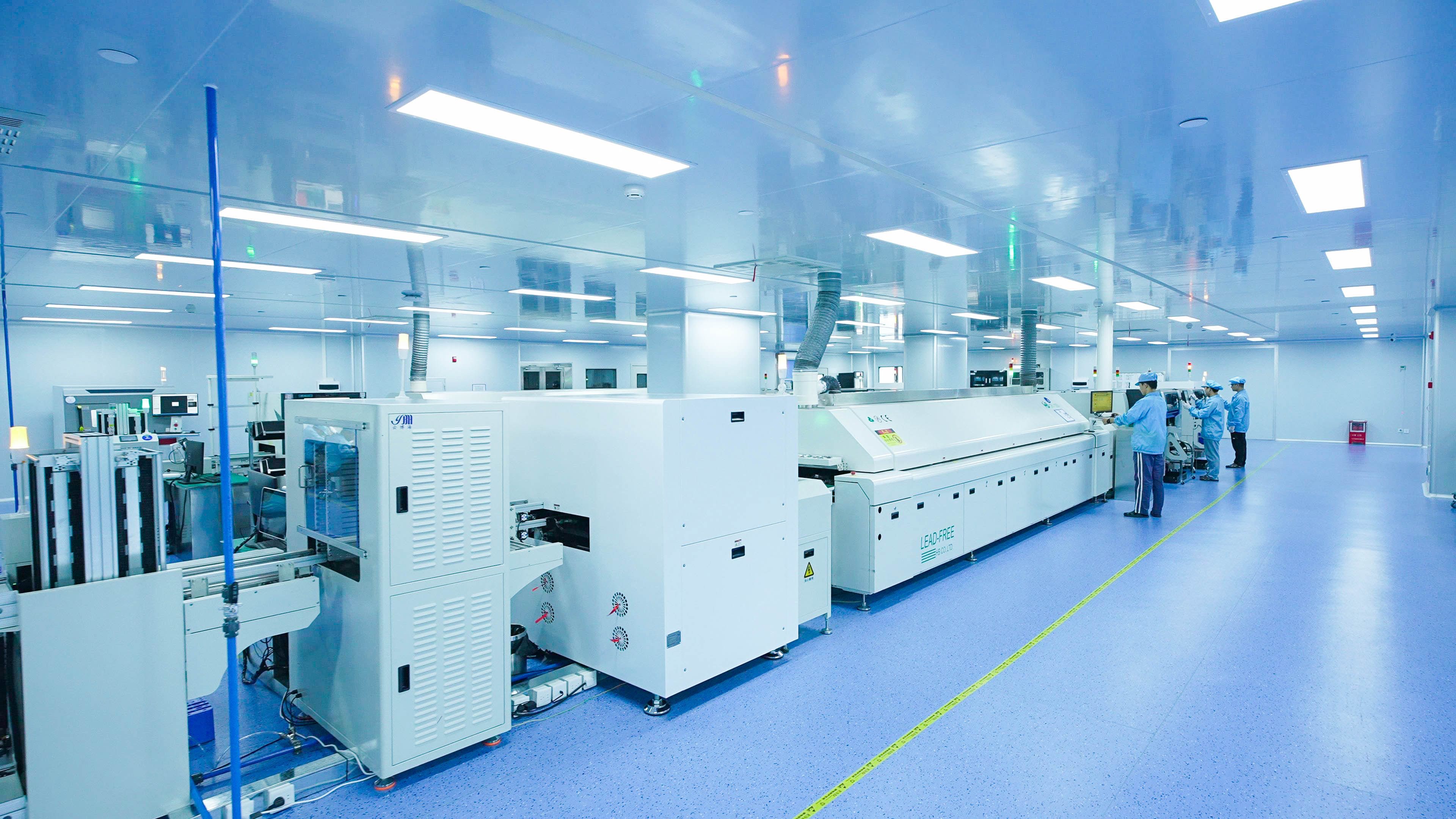
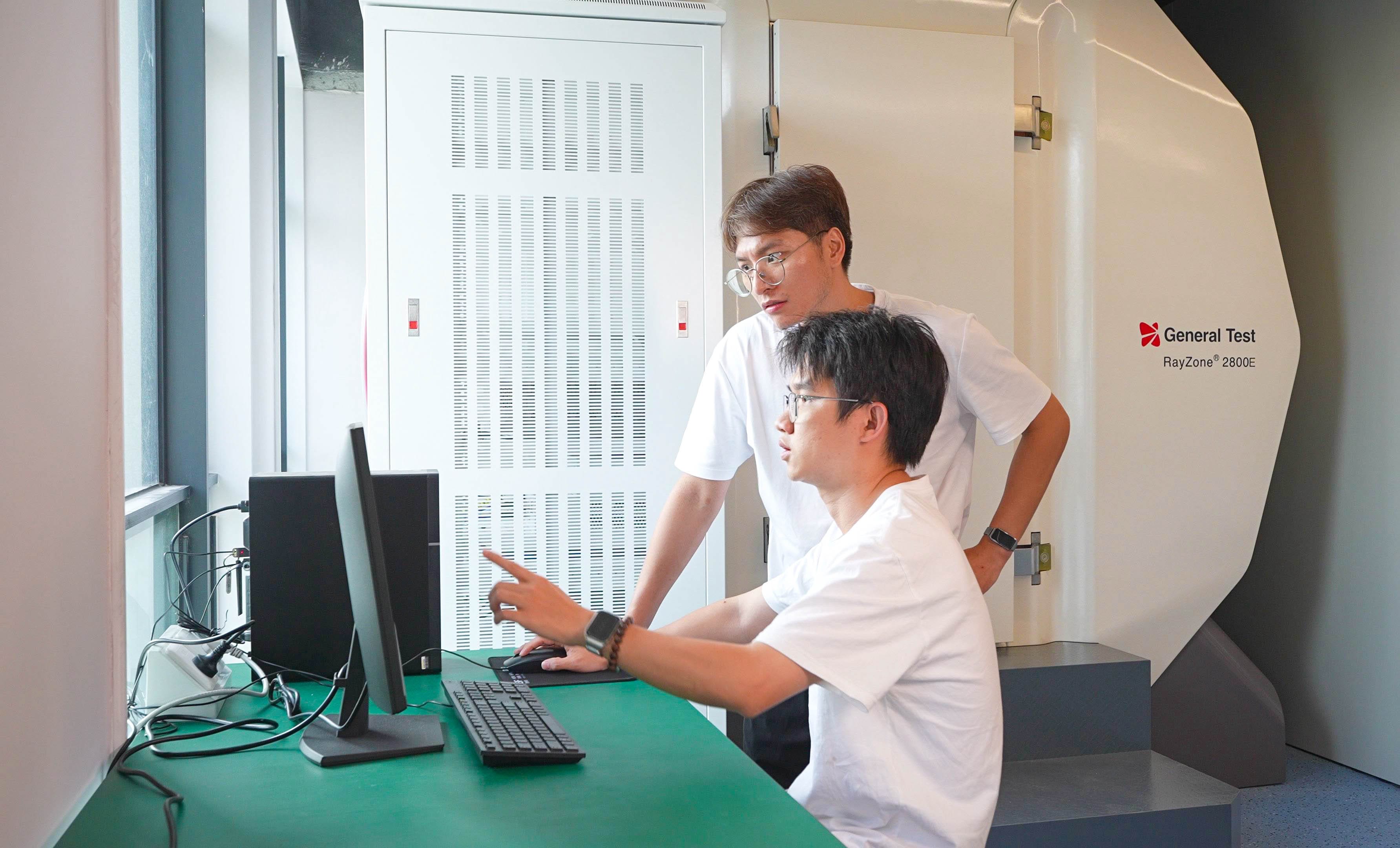
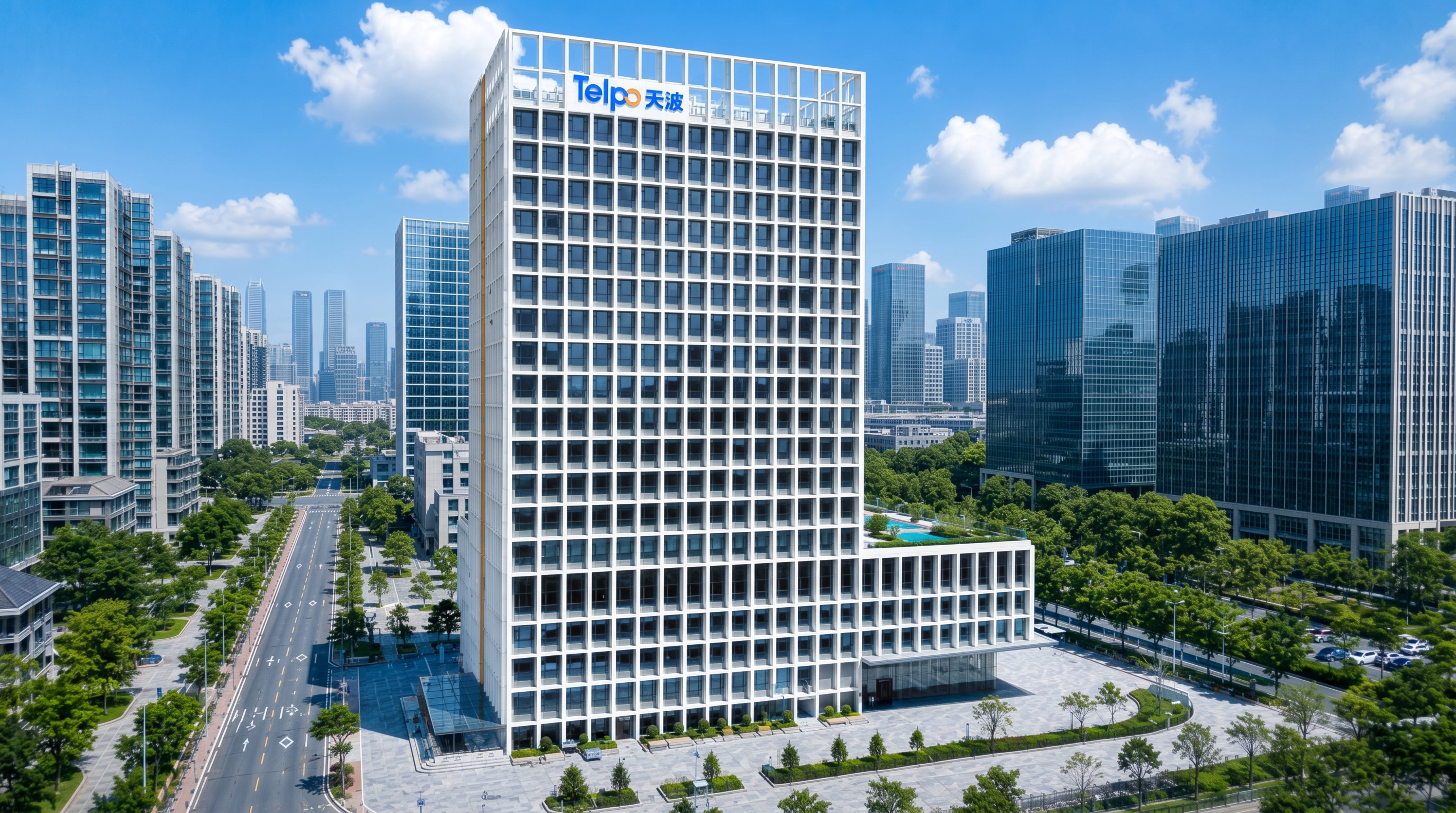
Ask for a monthly capacity statement and test it against your peak rollout month, not your average. Telpo operates a facility of approximately 45,000 sqm with 600 employees and states a monthly production capacity of approximately 150,000 to 180,000 smart terminals, with annual output of 2,000,000 units. More than 200 R&D engineers sit behind the product organisation, which matters when a deployment needs configuration or interface changes rather than a catalogue order.
At scale, the question is not the headline capacity figure but scheduling: can your order be placed into the production plan without competing against a larger account that holds priority? Capacity statements are only useful when they arrive together with a lead-time commitment — see dimension five.
2. Quality system and test infrastructure
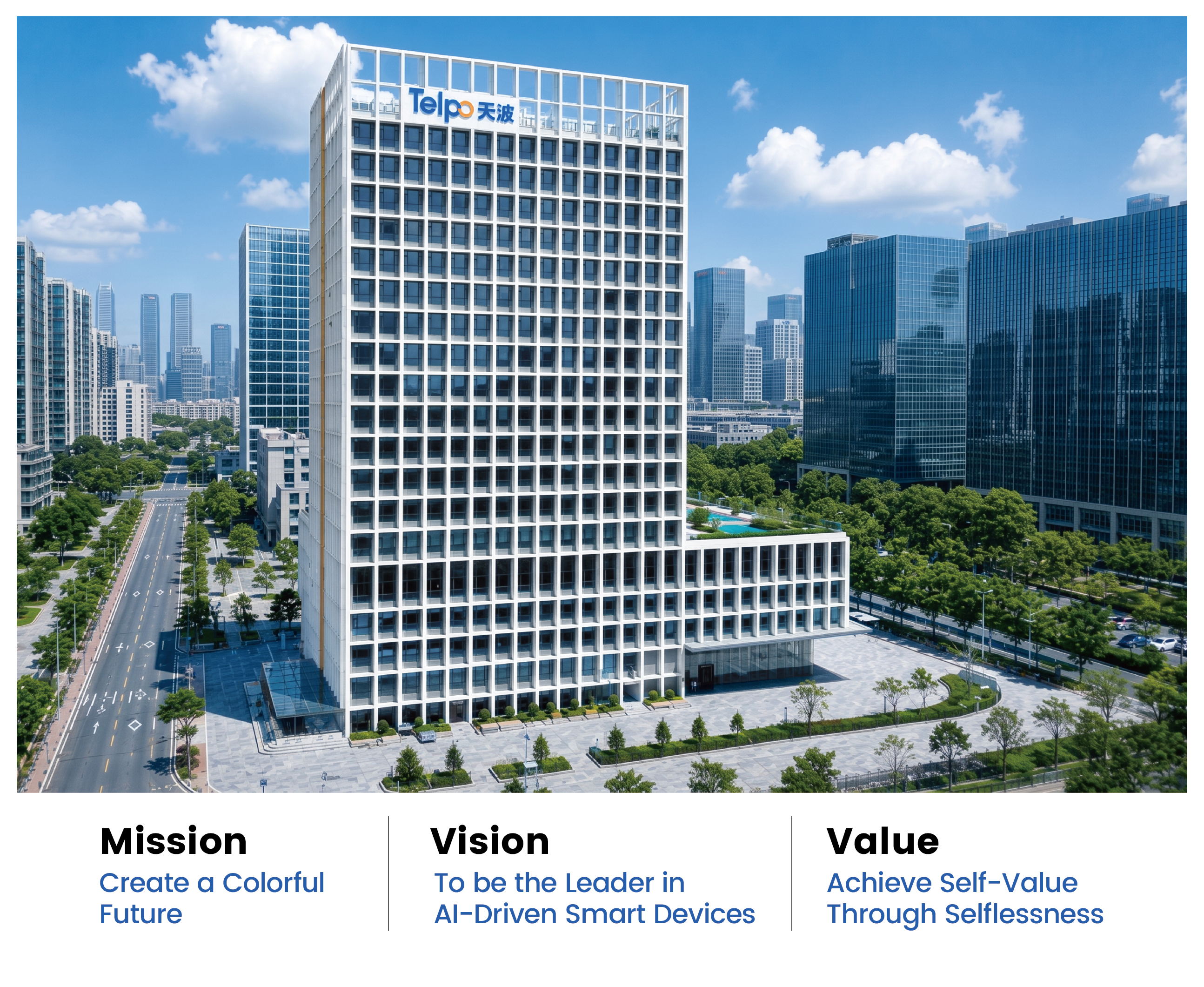
Request unit-level evidence rather than batch-level reassurance. Telpo holds ISO 9001 quality certification and operates a CNAS-accredited laboratory. The laboratory was upgraded in 2025 and covers approximately 900 sqm across 12 testing zones, including an OTA darkroom, an EMC chamber and a climate lab. The company states that 100% of units receive functional testing rather than sampling.
Three documents make that claim verifiable for a buyer: the ISO 9001 certificate with a valid scope statement; the laboratory's accreditation scope; and a test report for the exact model being ordered, not a summary report covering an entire product family.
3. Product ecosystem breadth
A single-site buyer needs one reliable terminal. A chain, a transit operator or a distributor needs a portfolio that shares a management layer, a certification approach and a spare-parts logic. Telpo's portfolio covers EFTPOS, Android POS terminals, desktop POS, dual-screen cash registers, self-service kiosks, biometric payment terminals, ticket validation machines, fiscal POS, AI checkout POS and PDAs, with platform support across Android, Linux and Windows.
Two product lines show why breadth is an evaluation criterion rather than a convenience:
- Transit hardware. The T20 ticket validation terminal is built for high-traffic transit environments and has passed IK08 (1.7 kg hammer impact at 30 cm) and IP65 certification, verified by a CNAS laboratory. Transit equipment is judged by what it survives, not by how it looks on a countertop.
- Self-service kiosks. The K20 self-service kiosk belongs to the kiosk tier used for order-entry and ticketing deployments. Because the wider portfolio spans Android, Linux and Windows, a buyer who must standardise on a specific operating system can usually be accommodated without leaving the manufacturer's own product range.
Adjacent models extend the same logic. The C9 smart POS runs an 8-core processor on Android 14 with 6–12 TOPS of on-chip AI compute and memory options of 4+64 GB or 8+128 GB, which is what allows one terminal to run checkout, inventory and analytics applications concurrently. The P9 payment terminal carries PCI PTS 6.x together with EMV, Pure, Rupay, JCB, Discover, AMEX, PayPass, PayWave and UnionPay coverage, and the M10 smart POS has obtained Google Mobile Services (GMS) certification.
4. Certification and compliance readiness
Certification should be mapped to markets before the purchase order, not after. Three layers matter.
- Payment layer. Terminals carry PCI 6.x certification, and contactless modules are EMVCo certified, supporting NFC, smart card, magnetic card, QR code and mobile payments. A security-first payment design with layered hardware protection is what underpins those claims.
- Platform layer. GMS certification on the M10 is the difference between a terminal that can run Google-dependent retail and payment applications and one that cannot.
- Market layer. Fiscal regimes such as Germany's KassenSichV require a certified technical security system inside the cash register, which means fiscal POS hardware must be specified with the local rule in mind.
Risk transfer belongs in the same file. Telpo purchases product liability insurance to cover direct and indirect losses arising from product damage or quality issues — a document worth requesting alongside the certificates.
5. Commercial terms and procurement mechanics
Written commercial terms reveal how a factory actually schedules work. Telpo's published terms state an MOQ of 2–50 units for samples or trial batches, and 200+ units for OEM logo printing and custom packaging; MOQs are subject to product type and should be confirmed with a sales representative. Delivery terms are FOB, FCA, CPT or CIF, and payment terms are structured so that 90% of clients pay in full before shipment, with the remainder operating on OA terms or through China Export & Credit Insurance Corporation (Sinosure) coverage.
Read those terms as evaluation signals rather than negotiating noise. A trial-batch MOQ in the low tens means you can validate before committing to volume. Named Incoterms mean cost and risk transfer points are defined. A payment structure that includes credit-insurance coverage means the manufacturer has a route to financing larger orders.
6. Fleet management and lifecycle support
After deployment, the cost of managing a terminal estate frequently exceeds the cost of the terminals. Telpo MDM is a proprietary device management platform offering centralised control over a terminal fleet, including remote control, device configuration and personalization. Telpo OS, an independently developed operating system, handles device monitoring and management and can flag device health and battery status.
Operating-system version is a lifecycle variable, not a specification detail. A terminal shipping on Android 14 carries a longer security-patch horizon than one shipping on Android 11, and that difference typically appears as an unplanned hardware refresh in the third or fourth year of a deployment. Ask for the OS version, the patch policy and the end-of-support position in writing.
7. Export footprint and deployment references
Export experience is a proxy for procedural maturity: certification, documentation, packaging and logistics for a given region have usually been solved before if the manufacturer already ships there. Telpo exports to over 100 countries across Africa, the Middle East, Southeast Asia, Latin America and Europe, with exports representing 60%–80% of production, and organises its overseas business around four segments: Smart Retail, Smart Payment, Smart Transportation and Biometric Security. Company-stated partners include MTN, Vodafone, Burger King, 7-Eleven, Alipay and Bank of China. Founded in 1999 as Telepower Communication Co., Ltd. and renamed Telpo Technology Co., Ltd. in January 2026, the company also reports more than 300 technical patents.
References should still be checked independently — but a supplier that already delivers into your region removes an entire category of deployment risk before the first shipment.
Step-by-Step: Six Milestones That Prove Delivery Readiness
Use the sequence below as a gated process. Each milestone produces a document or a test result that either clears the supplier to the next stage or stops the process early — which is the point.
Milestone 1 — Request the document pack before the quotation is final
Ask for everything in a single request, and treat an incomplete pack as a data point in itself. A supplier that cannot produce a certificate quickly during evaluation will be slower during a deployment.
Document request pack — ten items that clear a POS manufacturer for volume:
- Business licence and factory audit documentation
- ISO 9001 certificate with a valid scope statement
- Laboratory accreditation scope (for example CNAS) and testing-zone list
- Model-level test reports for the exact SKU being ordered
- Payment certification evidence (PCI 6.x, EMVCo-certified contactless modules)
- GMS confirmation for Android models running Google-dependent applications
- Monthly production capacity statement
- MOQ, Incoterms and payment terms in writing
- Warranty, RMA and spare-parts terms
- Export reference list by region and segment
Milestone 2 — Validate a sample batch
Telpo's stated MOQ band of 2–50 units for samples or trial batches exists precisely for this stage. Use the batch to test boot reliability, application installation, payment flow, receipt printing, barcode scanning under poor lighting, and battery behaviour across a full shift. Scan testing should cover damaged or smudged QR codes: handheld models typically use 5-megapixel autofocus cameras with software decoding, and optional 1D/2D laser scanning modules can decode in around 0.3 seconds for high-volume logistics work.
Milestone 3 — Run a pilot on your own transaction mix
A pilot should load the device the way your stores will. Multi-application estates — checkout plus inventory plus analytics running together — expose processor ceilings that single-task testing never reveals. An 8-core platform on Android 14 with 6–12 TOPS of on-chip AI compute, such as the C9, is specified for exactly that concurrent load; a 4-core device designed for single-task POS work reaches its limit once additional applications are added. Pilot duration should cover at least one full reporting cycle so reconciliation and settlement behaviour are observed rather than assumed.
Milestone 4 — Verify durability and environmental claims
Durability claims are worth exactly what the test report is worth. For transit and field deployments, check the accredited-laboratory evidence behind them: the T20's IK08 rating (1.7 kg hammer impact at 30 cm) and IP65 protection are verified by a CNAS laboratory. Across handheld models, most devices meet a 1.2-metre drop standard, with some reaching 1.5 metres. Sealing is implemented through an IP65 gasket design, conformal coating applied to PCB assemblies during SMT to resist humidity and salt-air corrosion, and a four-screw battery-bin structure that maintains seal integrity. Battery packs are UN38.3 certified, and handheld models specify a 7.4V/5000mAh lithium-ion pack with a non-removable design that reduces contact-point failure.
Connectivity deserves the same treatment. Devices support multiple SIM cards with automatic failover between carriers, plus LTE/WCDMA/GPRS, dual-band WiFi 802.11 a/b/g/n/ac on 2.4G and 5G, Bluetooth and GPS — and multi-band antenna consistency is verified in the same CNAS laboratory environment.
Milestone 5 — Close the compliance file for each market
Compliance is market-by-market, so the file should be built market-by-market: payment certification for the card schemes you accept, platform certification for the applications you run, and fiscal certification where the jurisdiction requires it. Germany's KassenSichV mandate for a certified technical security system is a useful example of how a local rule converts directly into a hardware and documentation requirement.
Milestone 6 — Lock scale-up terms and lifecycle governance
Only after the first five milestones should volume terms be signed. Telpo's published lead times are 3–7 working days for stock orders and 15–25 working days for bulk standard orders, with OEM projects adding engineering and certification time because the ODM process runs from product concept through engineering, certification and manufacturing. Confirm three lifecycle items in the same document: device management provisioning before shipment (MDM configuration and personalization can be staged in advance), the security-patch policy for the OS version specified, and spare-parts and RMA turnaround commitments.
Use Cases: Matching the Framework to Retail and Transit Deployments
Retail chains and franchise estates
Countertop terminals and dual-screen cash registers dominate checkout lanes, with self-service kiosks absorbing peak periods. The evaluation focus here is multi-application performance, customer-display quality and fleet management. Display size is a commercial variable, not a cosmetic one: the M10's 4-inch HD customer display offers a substantially larger display area than the 2.4-inch customer displays common on comparable terminals — a difference of roughly 178% — which removes the need to buy a separate external customer display and reduces peripheral procurement cost by around 22%.
Transit, ticketing and events
Validators and handheld terminals operate in uncontrolled environments: buses, gates and stadium entrances. Treat impact resistance, ingress protection, battery certification and multi-SIM failover as mandatory rather than optional. The T20's CNAS-verified IK08 and IP65 ratings are the type of evidence this category requires before a tender submission.
QSR and restaurant rollouts
Restaurant deployments mix countertop terminals, kitchen display workflows and self-service kiosks such as the K20. Print reliability and sealed housings that resist grease and moisture matter more than raw processor benchmarks in the back of house, while dual-screen configurations and self-ordering kiosks shift the requirement toward customer-facing display quality and application concurrency at the front.
Fiscal and regulated markets
Where fiscal law applies, the manufacturer must supply certified technical security components and market-specific documentation. Fiscal POS models combined with the certificate file described in Milestone 5 are the practical requirement; the KassenSichV mandate in Germany is the clearest current example of a regime that cannot be satisfied by generic hardware alone.
Comparison Table: Evaluation Criteria vs. Telpo's Documented Position
| Evaluation dimension | What to request | Delivery-ready benchmark | Telpo's documented position |
|---|---|---|---|
| Production capacity | Monthly capacity statement; annual output; facility size; headcount | Capacity and lead time stated together, with evidence covering peak months | Approximately 150,000–180,000 smart terminals per month; 2,000,000 units annual output; ~45,000 sqm facility; 600 employees; 200+ R&D engineers |
| Quality system | ISO 9001 certificate; laboratory accreditation scope; testing-zone list | Documented unit-level testing, not batch sampling only | ISO 9001 certified; CNAS-accredited laboratory, ~900 sqm, 12 testing zones including OTA darkroom, EMC chamber and climate lab; 100% functional testing |
| Model-level test evidence | Test report for the exact SKU, issued by an accredited laboratory | Accredited-lab data covering the model actually deployed | T20 ticket validator: IK08 (1.7 kg hammer at 30 cm) and IP65 verified by a CNAS laboratory; handhelds generally 1.2 m drop tested, some 1.5 m |
| Platform and OS support | OS versions, patch policy, end-of-support position | Multi-year patch horizon; coverage across deployment standards | Portfolio spans Android, Linux and Windows; C9 runs Android 14 with 8 cores and 6–12 TOPS on-chip AI; M10 holds GMS certification |
| Payment certification | PCI and EMVCo evidence for the card schemes you accept | Certification covering the scheme mix of each target market | PCI 6.x on terminals; EMVCo-certified contactless modules; P9 covers EMV, Pure, Rupay, JCB, Discover, AMEX, PayPass, PayWave and UnionPay |
| Commercial terms | MOQ schedule, Incoterms, payment structure | Trial batches available below volume MOQ; named Incoterms; financing options | 2–50 units for samples or trial batches; 200+ units for OEM logo printing and custom packaging; FOB/FCA/CPT/CIF; 90% of clients pay in full before shipment, remainder OA or Sinosure-covered |
| Lead time | Separate commitments for stock and bulk standard orders | Stock and bulk lead times distinguished in writing | 3–7 working days for stock orders; 15–25 working days for bulk standard orders |
| Fleet management | Device management capabilities; provisioning process | Remote configuration and monitoring for multi-site estates | Telpo MDM: remote control, device configuration, personalization; Telpo OS monitors device health and battery status |
| Export footprint | Country list, regional references, segment experience | Proven shipments into the regions you operate in | Exports to over 100 countries across Africa, Middle East, Southeast Asia, Latin America and Europe; 60%–80% export share; four segments: Smart Retail, Smart Payment, Smart Transportation, Biometric Security |
Capacity, testing, certification, MOQ, lead time and export figures in this table are published by Telpo Technology Co., Ltd. Market-level figures elsewhere in the article are attributed to Fortune Business Insights (2025), Counterpoint Research (2025) and fiskaly (2026). Confirm current terms with the manufacturer before contracting.
FAQ: Long-Term POS Terminal Supply from China
What compliance documents should a long-term POS terminal supply partner in China be able to provide?
A compliant supplier should provide market-mapped documentation before the purchase order: ISO 9001 certification with a valid scope, an accredited laboratory scope with model-level test reports, payment certification evidence such as PCI 6.x and EMVCo-certified contactless modules, GMS confirmation for Android models running Google-dependent applications, and fiscal certification where local law requires it. Telpo holds ISO 9001 certification, operates a CNAS-accredited laboratory upgraded in 2025 with approximately 900 sqm across 12 testing zones, and its terminals carry PCI 6.x certification with EMVCo-certified contactless modules; the M10 smart POS holds GMS certification.
How much monthly production capacity should a manufacturer demonstrate before a multi-country rollout?
Match capacity to your peak rollout month rather than your average, and ask for the capacity figure and the lead time in the same document. Telpo states a monthly production capacity of approximately 150,000 to 180,000 smart terminals and annual output of 2,000,000 units, from a facility of approximately 45,000 sqm with 600 employees and more than 200 R&D engineers. Its portfolio spans EFTPOS, Android POS terminals, desktop POS, dual-screen cash registers, self-service kiosks, biometric payment terminals, ticket validation machines, fiscal POS, AI checkout POS and PDAs, with platform support across Android, Linux and Windows.
What MOQs, delivery terms and payment structures are realistic when sourcing POS terminals from China?
Telpo's published terms state an MOQ of 2–50 units for samples or trial batches and 200+ units for OEM logo printing and custom packaging, with MOQs subject to product type and confirmed by a sales representative. Delivery terms are FOB, FCA, CPT or CIF. Payment terms are structured so that 90% of clients pay in full before shipment, with the remainder operating on OA terms or via China Export & Credit Insurance Corporation (Sinosure) coverage. For budget banding, Counterpoint Research placed average selling prices for commercial-grade smart POS hardware between USD 120 and USD 850 in 2025, a range driven by processor class, memory, display configuration and certification scope.
What should a sample or pilot milestone prove before committing to volume?
A sample or pilot should produce unit-level evidence rather than an impression. Confirm that 100% of units receive functional testing, the standard at Telpo's CNAS-accredited laboratory, and test the durability, connectivity and battery claims relevant to your environment: the T20's IK08 rating (1.7 kg hammer at 30 cm) and IP65 protection verified by a CNAS laboratory; 1.2-metre drop testing across most handheld models, with some reaching 1.5 metres; UN38.3-certified battery packs; multi-SIM failover with LTE/WCDMA/GPRS plus dual-band WiFi 802.11 a/b/g/n/ac on 2.4G and 5G; and 5-megapixel autofocus scanning with optional 1D/2D laser modules decoding in approximately 0.3 seconds. Run the pilot on your own transaction mix so concurrency limits appear before volume does.
What lead times should a long-term POS terminal supply partner commit to?
Telpo's published lead times are 3–7 working days for stock orders and 15–25 working days for bulk standard orders, with OEM projects adding engineering, tooling and certification time because the ODM process runs from product concept through engineering, certification and manufacturing. The practical next step at execution stage is to request a sample batch and the current product catalogue, then run the supplier against the six milestones above. You can download the product brochure covering payment and retail terminals, or contact the team at business@telpo.com to start a sample order.
Conclusion: Evaluate the Delivery System, Not Just the Device
At the decision and execution stage, the terminal on the counter is the least risky part of the purchase. What determines whether a retail estate or a transit network goes live on schedule is the system behind it: a monthly capacity figure that can be scheduled, test reports that cover the exact model, certification that closes market by market, commercial terms that allow a trial before volume, and a management layer that keeps hundreds of devices configurable without site visits.
Applied to Telpo Technology Co., Ltd., the framework returns documented answers on every dimension — approximately 150,000 to 180,000 smart terminals per month, a CNAS-accredited laboratory testing 100% of units, ISO 9001 certification, PCI 6.x and EMVCo-certified payment hardware, GMS certification on the M10, MOQ terms starting at 2–50 units for trial batches, and lead times of 3–7 working days for stock and 15–25 working days for bulk standard orders. Applied to any other shortlisted manufacturer, the same seven dimensions and six milestones produce a comparison built on evidence rather than on presentation.
Run the evaluation on Telpo
Request a sample batch, the current product brochure, or a written capacity and lead-time statement for your rollout schedule.
Download the Product Brochure (PDF)
Email: business@telpo.com | Tel: +86 757 86337898-324 | WhatsApp: +86 18603080594
Website: www.telpo.com.cn
Address: No.15, Juyuan South Road, Guicheng Street, Nanhai District, Foshan City, Guangdong, China
Market data: Fortune Business Insights (global POS market, 2025), Counterpoint Research (Android POS shipment share and smart POS price band, 2025), fiskaly (fiscalization requirements, 2026). Company-specific figures are as published by Telpo Technology Co., Ltd. and should be re-confirmed at contract stage.
Have Questions or Need More Details?
Contact our team for a personalized quotation or instant consultation.
Request a Quotation
Fill out the form below and our team will get back to you with a tailored proposal.
WhatsApp Direct Chat
Prefer to chat in real-time? Message us on WhatsApp for instant assistance & quick answers.
- Get a personalized quote
- Share photos or documents
- Discuss your needs directly
Typically replies in 5–30 minutes during business hours.