
Ticketing Application Guide: T10 vs T20 Validator Deployments for Transit Hubs
Short answer: the T10 ticket validator is the right choice for buses, urban bus routes, light transit and event venues where installation space is tight, while the T20 ticket validator is built for high-volume transit hubs — metro, tram, trolleybus and ferry terminals — where a larger screen and IP65/IK08 protection matter more than compactness. Both are ticket validation terminals from Telpo Technology Co., Ltd., and both accept the same global contactless ticketing and EMV payment standards.
This guide compares the two validators field by field, explains which specifications actually drive the deployment decision, and maps real transit rollouts to the model that carried them.
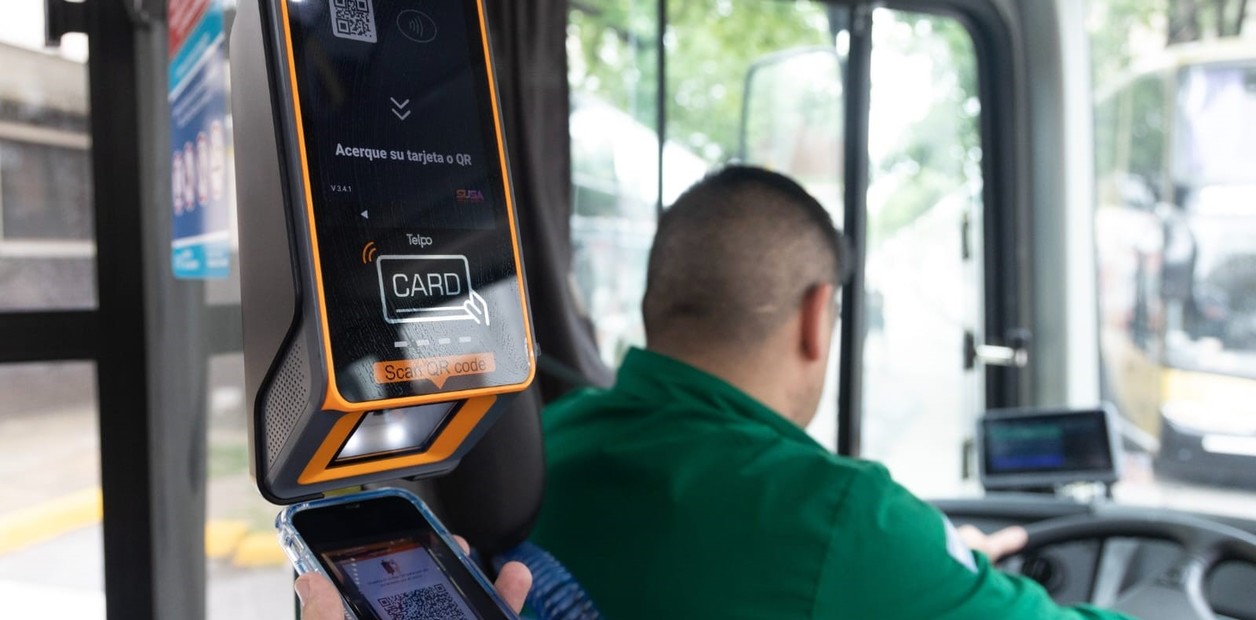
Problem Definition: Why One Validator Model Cannot Cover Every Stop
Transit operators rarely buy a single validation device for a whole network. A validator bolted to a bus pole faces vibration, tight space, and a driver who needs fast audio and visual confirmation. A validator mounted at a metro or ferry gate faces sustained passenger throughput, direct rain and dust exposure, and a screen large enough to be read at a distance. Sizing one model to cover both environments usually produces a compromise on at least one dimension.
The decision therefore is not about which validator is better in general. It is about which protection rating, display size, security module capacity and operating system match the physical environment the device will live in for the next several years. Getting that mapping wrong shows up later as premature hardware failures, slow boarding, or an expensive retrofit of mounts and enclosures.
Four variables separate the T10 from the T20 in practice:
- Display footprint and readability — 5.5 inches versus 7 inches with different casing and viewing expectations.
- Environmental sealing and impact rating — optional IP54 / IK07 versus IP65 / IK08.
- Security module capacity — 6 SAM slots versus 8 SAM slots.
- Operating system flexibility — Telpo OS (Android 12) versus Telpo OS (Android 12) or optional Linux.
Industry Background: What Transit Ticketing Hardware Now Has to Prove
Modern fare collection combines open-loop payment (bank cards, mobile wallets, EMV contactless) with closed-loop transit cards. The card standards that validators must read are broad: ISO14443 Type A and Type B, Mifare, Cipurse, Calypso and Felica all appear across different national and city ticketing schemes. Alongside cards, operators expect QR codes, e-wallets and traditional paper ticket validation on the same device.
Security is handled through SAM (Secure Access Module) slots inside the terminal. These modules carry the encryption and authentication keys used for fare calculation and card authentication, and the number of slots available determines how many separate schemes, operators or card issuers a single validator can support. Both T10 and T20 validators are built around this model, with 6 and 8 SAM slots respectively.
Durability requirements come from rail and road transit standards rather than from general consumer electronics testing. For equipment on rolling stock, EN 50155:2017 is the reference framework. For vehicle interior materials, ECE R118 Annex 6/7/8 covers flammability. For railway fire safety, EN 45545-2 classifies materials by hazard level. Ingress protection is measured separately under IEC 60529, and impact resistance under IK ratings. Telpo's T-series validators have been tested against these frameworks, and the specific certificates are listed later in this guide.
Detailed Solution: T10 and T20 Ticket Validators Compared by Specification
T10 Ticket Validator — Compact Pole-Mounted Validation for Buses and Light Transit
The T10 is a ticket validator with a 5.5-inch anti-glare touchscreen and a semi-outdoor display design, sized for installations where space is constrained. Its interface set covers ISO14443 Type A/B, Mifare, Cipurse, Calypso and Felica contactless cards, EMV Contactless L1 with Paywave and Paypass, plus QR codes, e-wallets and paper tickets. An NFC area with fluorescent marking helps passengers find the tap point quickly.
Around that core, the T10 carries transit-specific features:
- Secure pole mount with a full-wrap design and safety locks, giving a robust structure for high-traffic bus deployment.
- Transit-grade durability through IK07 impact resistance, E24 vibration certification and optional IP54 dust and water protection.
- 6 SAM card slots for encryption and authentication module capacity.
- Connectivity via 4G cellular, dual-band Wi-Fi and Bluetooth, with optional external GNSS/4G/3G/2G antennas for weak-coverage routes.
- Built-in GPS for real-time transaction monitoring and location-based services.
- High-speed multi-format scanner using hardware decoding for QR codes, Aztec codes and traditional barcodes to speed up boarding.
- Audio feedback and four LED status indicators so both the driver and the passenger can confirm a validation result instantly.
- Operating system: Telpo OS based on Android 12.
The T10 is listed for public transit, urban bus, metro, rail and event venues. Its casing material is ABS+PC.
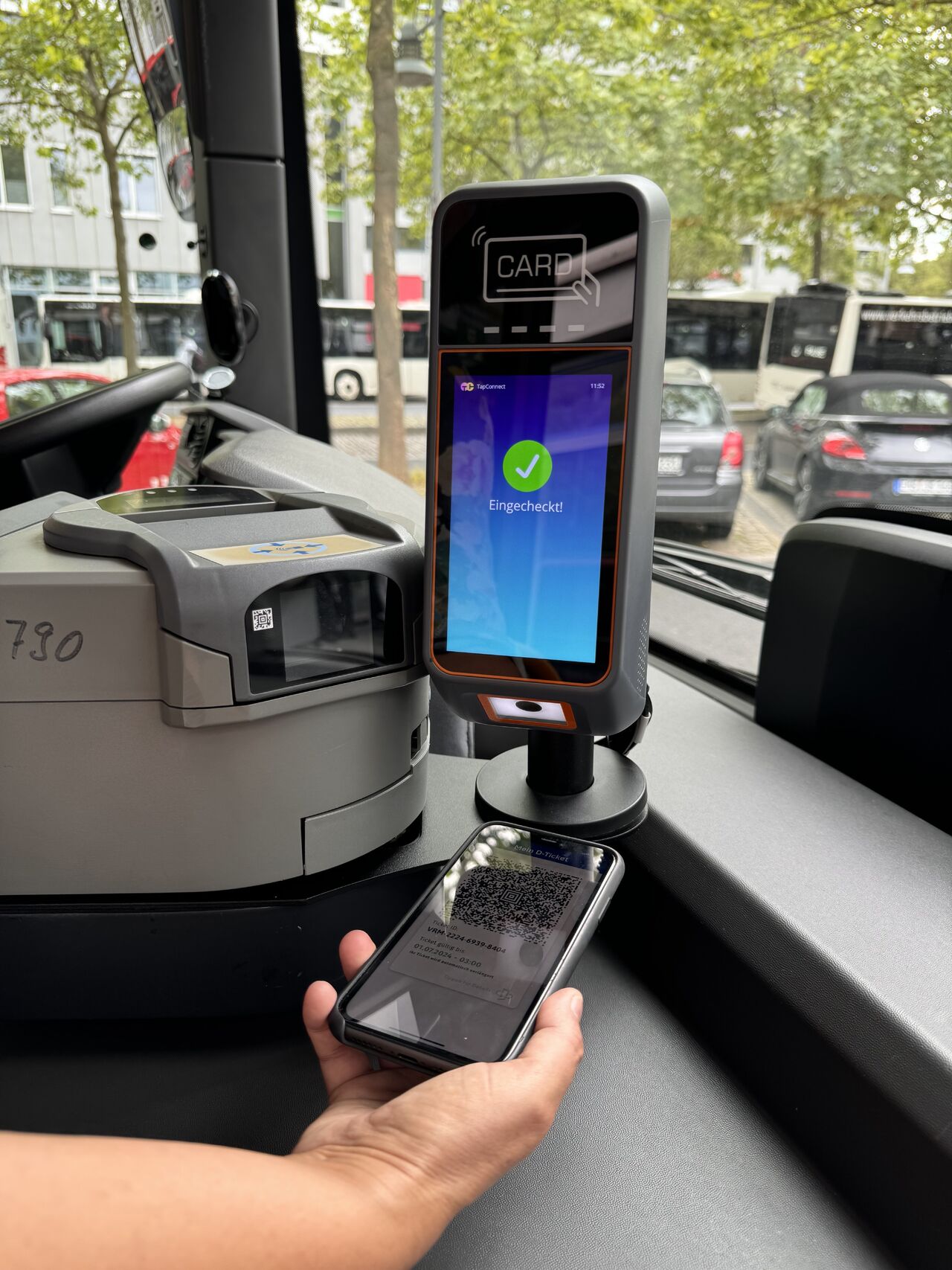
T20 Ticket Validator — High-Volume Validation for Transit Hubs
The T20 ticket validator is the larger of the two platforms. It carries a 7-inch anti-glare touchscreen rated at 500 cd/m², which keeps the display readable in complex outdoor lighting. Its protection ratings step up to IP65 for dust and water ingress and IK08 for impact resistance, both aimed at demanding transit environments.
Its core capabilities include:
- Open-loop and closed-loop NFC alongside EMV, QR, mobile payments and paper ticket validation, covering ISO14443 Type A/B, Mifare, Cipurse, Calypso and Felica cards and EMV Contactless L1 with Paywave and Paypass.
- 8 SAM card slots, giving additional security module capacity for complex ticketing systems and room for future scheme expansion.
- Secure pole mount design with a lockable enclosure that prevents tampering and simplifies deployment, reducing installation complexity and maintenance downtime.
- Dual OS options — Telpo OS (Android 12) for a rich application ecosystem, or Linux for deep integration with existing ticketing software platforms.
- Connectivity via dual-band Wi-Fi and Bluetooth, with 4G cellular optionally available, plus built-in GPS and optional external GNSS/4G/3G/2G antennas.
- High-speed multi-format scanner with hardware decoding for QR codes, Aztec codes and traditional barcodes.
- Audio feedback for clear boarding confirmation.
The T20 is listed for public transit, metro, tram, trolleybus, ferries and high-volume transit hubs. Its casing material is also ABS+PC.

Step-by-Step Breakdown: Matching the Validator to the Deployment
The following sequence reflects the order in which transit operators typically resolve the T10 versus T20 question.
Step 1 — Classify the physical environment
Vehicles and light transit installations favour a compact footprint. Fixed, high-volume hubs favour a larger screen and higher sealing. This single classification usually settles the choice before any specification is examined.
Step 2 — Match ingress and impact ratings to exposure
Bus-mounted units benefit from the T10's IK07 impact resistance, E24 vibration certification and optional IP54 rating. Open platforms, ferry terminals and hub gates are better served by the T20's IP65 and IK08 ratings.
Step 3 — Size the display to passenger behaviour
The T10 uses a 5.5-inch anti-glare touchscreen for close-range, fast tap-and-go interaction. The T20's 7-inch 500 cd/m² anti-glare touchscreen suits high-throughput gates where passengers approach from varying angles and lighting.
Step 4 — Count the schemes you need to support
SAM slots limit how many card schemes, issuers or ticketing authorities a validator can hold at once. The T10 provides 6 slots; the T20 provides 8, which leaves headroom for future ticket schemes or multi-operator networks.
Step 5 — Choose the operating system against your ticketing stack
If your fare engine runs on Android applications, both models support Telpo OS (Android 12). If your ticketing platform requires Linux, only the T20 offers that option.
Step 6 — Confirm the network and antenna plan
Both validators provide 4G cellular, dual-band Wi-Fi and Bluetooth, plus built-in GPS and optional external antennas. On long bus routes with weak cellular coverage, optional GNSS/4G/3G/2G antennas improve signal where integrated bus GPS systems are required.
Step 7 — Verify certification coverage for the target market
Check that the certificates on file match the market and the standards cited by the tender. The certificate numbers for both models are listed in the compliance FAQ below.
Step 8 — Plan sampling, MOQ and lead time
Validate the device in the field before committing to a full rollout. Telpo supports sample and trial batches of 2–50 units, and branding customization can be delivered on stock orders within 3–7 working days.
Deployment rule of thumb: if the validator is mounted on a moving vehicle or in a space-constrained cabinet, start with the T10. If the validator serves a fixed, high-traffic gate that is exposed to weather and needs Linux or more SAM capacity, start with the T20.
Use Cases: How the Two Validators Have Been Deployed
T10 — Vietnam: 2,000+ units for public transport payment
A deployment of more than 2,000 T10 units with public transport operators, commercial banks and payment networks reduced single ticket verification time from 5 seconds to 1 second, lowered ticketing operation costs by 30% and increased the target user base by 45%. Full rollout took 3 months, and the system peaked at 500,000 transactions per day.
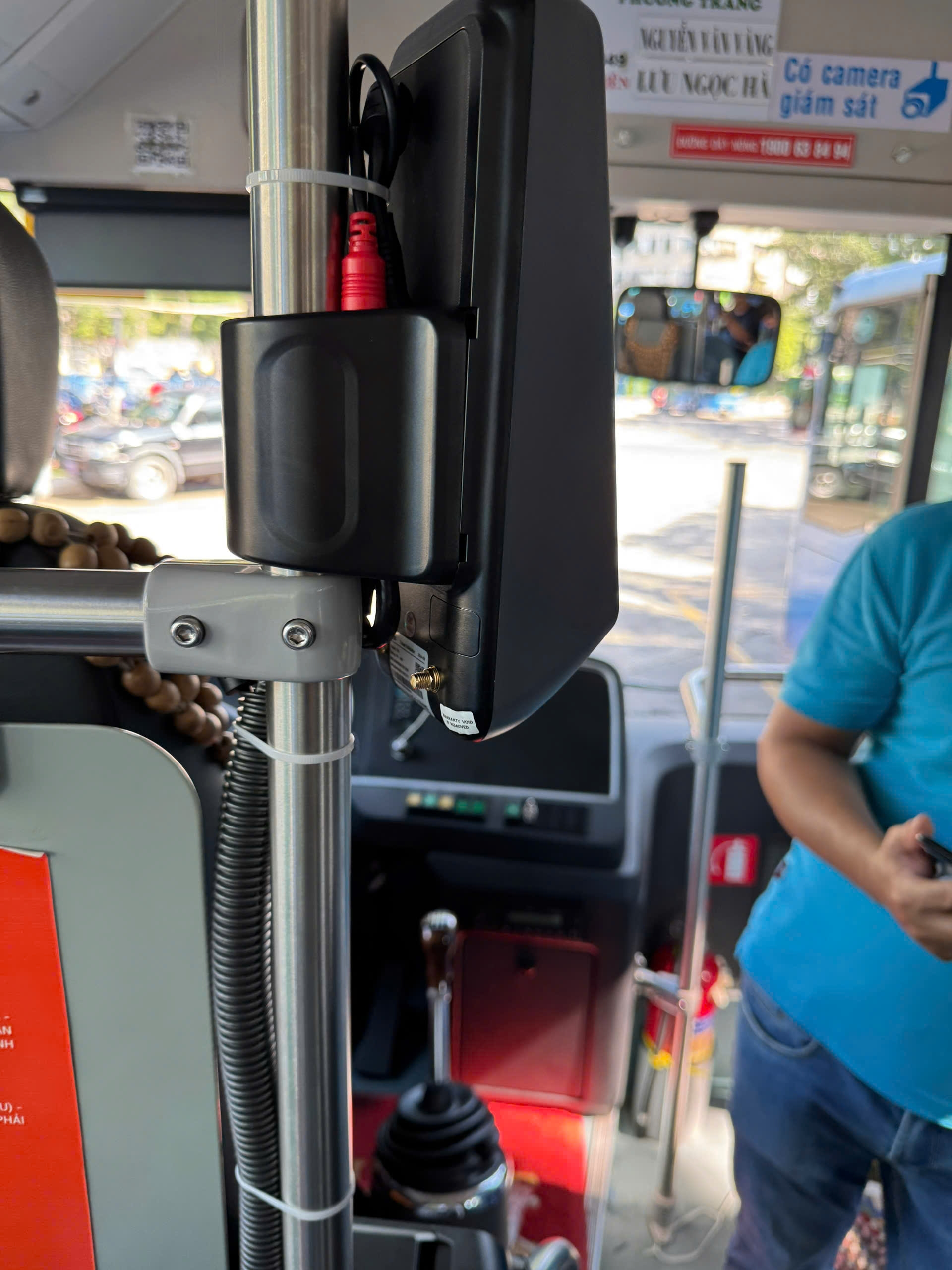
T10 — Germany: 2,000+ units for digitalized public transport ticketing
A German public transport deployment of more than 2,000 T10 units, running for over 3 years, digitalized ticketing across the network. The simplified and accelerated boarding process contributes measurably to timetable stability, and regular bus users have quickly internalized how to use the devices.
T20 — Argentina: 1,000+ units for bus fare collection
In Buenos Aires, more than 1,000 T20 validators were deployed for bus fare collection supporting SUBE cards, contactless bank cards and mobile payments. The rollout, running for over 2 years, expanded payment options and made public transit more accessible to locals and tourists. The IP65 and IK08 construction and the secure pole mount contributed to a safer commuting environment.

Comparison Table: T10 vs T20 Ticket Validator
| Specification | T10 Ticket Validator | T20 Ticket Validator |
|---|---|---|
| Primary deployment environment | Public transit, urban bus, metro, rail, event venues | Public transit, metro, tram, trolleybus, ferries, high-volume transit hubs |
| Display | 5.5-inch anti-glare LCD touchscreen, semi-outdoor design | 7-inch anti-glare touchscreen at 500 cd/m² |
| Operating system | Telpo OS (Android 12) | Telpo OS (Android 12); Linux optional |
| SAM card slots | 6 | 8 |
| Ingress protection | IP54 (optional) | IP65 |
| Impact resistance | IK07 | IK08 |
| Vibration | E24 certified | Covered by EN 50155:2017 electrical safety testing |
| Contactless card standards | ISO14443 A/B, Mifare, Cipurse, Calypso, Felica | ISO14443 A/B, Mifare, Cipurse, Calypso, Felica |
| Payment and ticketing media | EMV Contactless L1, Paywave, Paypass, QR, e-wallet, paper ticket | Open-loop and closed-loop NFC, EMV, QR, mobile payment, paper ticket |
| Barcode and QR scanning | QR, Aztec, 1D/2D barcodes with hardware decoding | QR, Aztec, 1D/2D barcodes with hardware decoding |
| Connectivity | 4G, dual-band Wi-Fi, Bluetooth | 4G (optional), dual-band Wi-Fi, Bluetooth |
| Positioning | Built-in GPS; optional external GNSS/4G/3G/2G antennas | Built-in GPS; optional external GNSS/4G/3G/2G antennas |
| Passenger feedback | Audio feedback plus four LED status indicators | Audio feedback |
| Mounting | Full-wrap pole mount with safety locks | Secure pole mount with lockable, tamper-resistant enclosure |
| Environmental and safety testing | EN 50155:2017 environmental durability; CE RED 2014/53/EU; IEC 60529 IP54; ECE R118 Annex 6/7/8; EN 45545-2 R22 & R23 | EN 50155:2017 electrical safety; IEC 60529 IP65; RoHS; ECE R118 Annex 6/7/8; EN 45545-2 R22 & R23 |
| Casing material | ABS+PC | ABS+PC |
Manufacturing and Customization Behind Both Validators
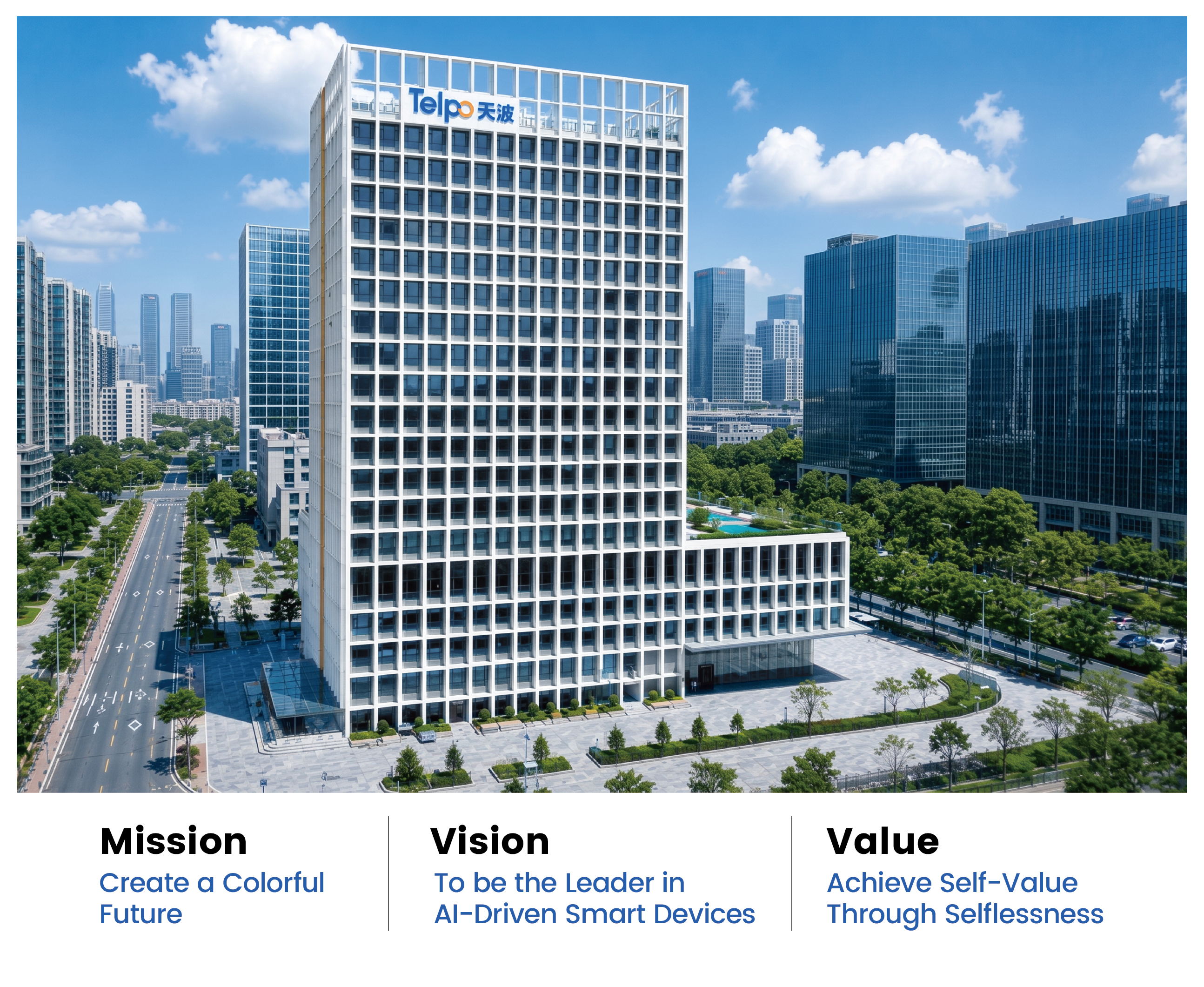
Telpo Technology Co., Ltd. was founded in 1999 and is headquartered in Foshan, China. The company operates an approximately 45,000 sqm factory with an annual output of 2,000,000 units and a CNAS-accredited laboratory of roughly 900 sqm across 12 testing zones, including an OTA darkroom and EMC chamber. Quality control combines ISO 9001 certification, the CNAS laboratory and 100% functional testing of all units.
For transit projects, customization spans the full chain: ID design, structural design, hardware module selection, packaging, private molds, and system-level development. Software services include device management platform development, application development, and deep OS customization based on Android, Linux or Windows. TelpoOS 2.0 exposes 101 features and 144 APIs for customer self-development, and branding customization — logo, boot animation, UI theme and custom color housing — can be applied to existing hardware.
FAQ
What certifications do the T10 and T20 ticket validators hold for transit deployment?
The T10 holds an EN 50155:2017 environmental durability test report (certificate 2502Z01905E-EE-02) covering salt spray, dry heat, low-temperature storage and operation, cyclic damp heat, and vibration and shock. It also holds a CE RED 2014/53/EU EU Type Examination Certificate (B2407051) and an IEC 60529 IP54 ingress protection report (2402S34482E-SF). The T20 holds an EN 50155:2017 electrical safety test report (SZ1221213-61253E-SF-01) and an IEC 60529 IP65 ingress protection report (SZ1221010-45981E-SF). Both models share EN 45545-2:2020+A1:2023 R22 and R23 fire safety classification for LCD touch screen glass (JRCC20260500595-EN) and ECE R118 Annex 6/7/8 flammability testing (2501Z35691E-SF). The T20 is also covered by a RoHS test report (SZ1221212-60641E).
Can the T10 and T20 be customized for OEM/ODM transit projects?
Yes. Telpo provides full-chain design and manufacturing covering ID design, structural design, hardware selection, packaging, molds, hardware modification and system development. Customization includes branding and cosmetic customization on existing hardware — logo, boot animation, UI theme, custom color housing, branded packaging and accessories — as well as software and application development such as device management platform development and deep operating system customization based on Android, Linux and Windows. TelpoOS 2.0 exposes 101 features and 144 APIs for customer self-development.
What are the minimum order quantities for a transit validator project?
MOQ is 2–50 units for samples or trial batches and 200+ units for OEM logo printing and custom packaging; specific MOQs depend on product type and should be confirmed with a sales representative. For standard mass production, the typical MOQ is 500–1,000 units, adjusted according to project complexity. Customized application development is reserved for major projects, which carry an MOQ of approximately 3,000 units.
Can operators validate a sample unit before committing to a full rollout?
Yes. Telpo supports sample and trial batches of 2–50 units, and branding and cosmetic customization can be delivered on stock orders within 3–7 working days. Field validation at scale is already documented: more than 2,000 T10 units have been deployed with public transport operators, commercial banks and payment networks, and more than 1,000 T20 units run in a bus fare collection network in Buenos Aires supporting SUBE cards, contactless bank cards and mobile payments.
What lead times and delivery terms apply?
Motherboard production takes 20 working days and structural work 10 working days; full-machine production requires a minimum of 45 working days, with a standard ODM cycle of 4–6 months and urgent projects negotiable. Mass production capacity is approximately 150,000–180,000 units per month against an annual output of about 2,000,000 units. Stock orders ship in 3–7 working days and bulk standard orders in 15–25 working days. Delivery terms are FOB, FCA, CPT or CIF, and 90% of clients pay in full before shipment, with the remainder operating on OA terms or via China Export & Credit Insurance Corporation (Sinosure) coverage. To request a T10 or T20 sample unit or a project quotation, contact Telpo at business@telpo.com.
Conclusion
The T10 and T20 are not competing products — they are two deployment answers within the same transit validation platform. The T10 answers the space-constrained, vibration-exposed case: buses, urban bus routes, light transit and event venues, with a 5.5-inch anti-glare touchscreen, 6 SAM slots, IK07 impact resistance and optional IP54 sealing. The T20 answers the throughput-and-exposure case: metro, tram, trolleybus, ferry terminals and high-volume hubs, with a 7-inch 500 cd/m² anti-glare touchscreen, 8 SAM slots, IP65 and IK08 protection, and an optional Linux operating system for ticketing software integration.
Both share the same contactless card coverage, EMV Contactless L1 support, multi-format barcode scanning, 4G/Wi-Fi/Bluetooth connectivity, built-in GPS and secure pole mounting — so interoperability across a network does not break when the two models are mixed. The decisive questions are environment, sealing, screen size, SAM capacity, operating system and certification coverage for the target market.
Plan Your Validator Rollout with Telpo
Compare the T10 and T20 against your route profile, ticketing scheme and certification requirements. Request sample units, a project quotation, or the full product catalog for payment, retail and transit terminals.
Download the Telpo Product BrochureTelpo Technology Co., Ltd. · www.telpo.com.cn · business@telpo.com
Have Questions or Need More Details?
Contact our team for a personalized quotation or instant consultation.
Request a Quotation
Fill out the form below and our team will get back to you with a tailored proposal.
WhatsApp Direct Chat
Prefer to chat in real-time? Message us on WhatsApp for instant assistance & quick answers.
- Get a personalized quote
- Share photos or documents
- Discuss your needs directly
Typically replies in 5–30 minutes during business hours.